









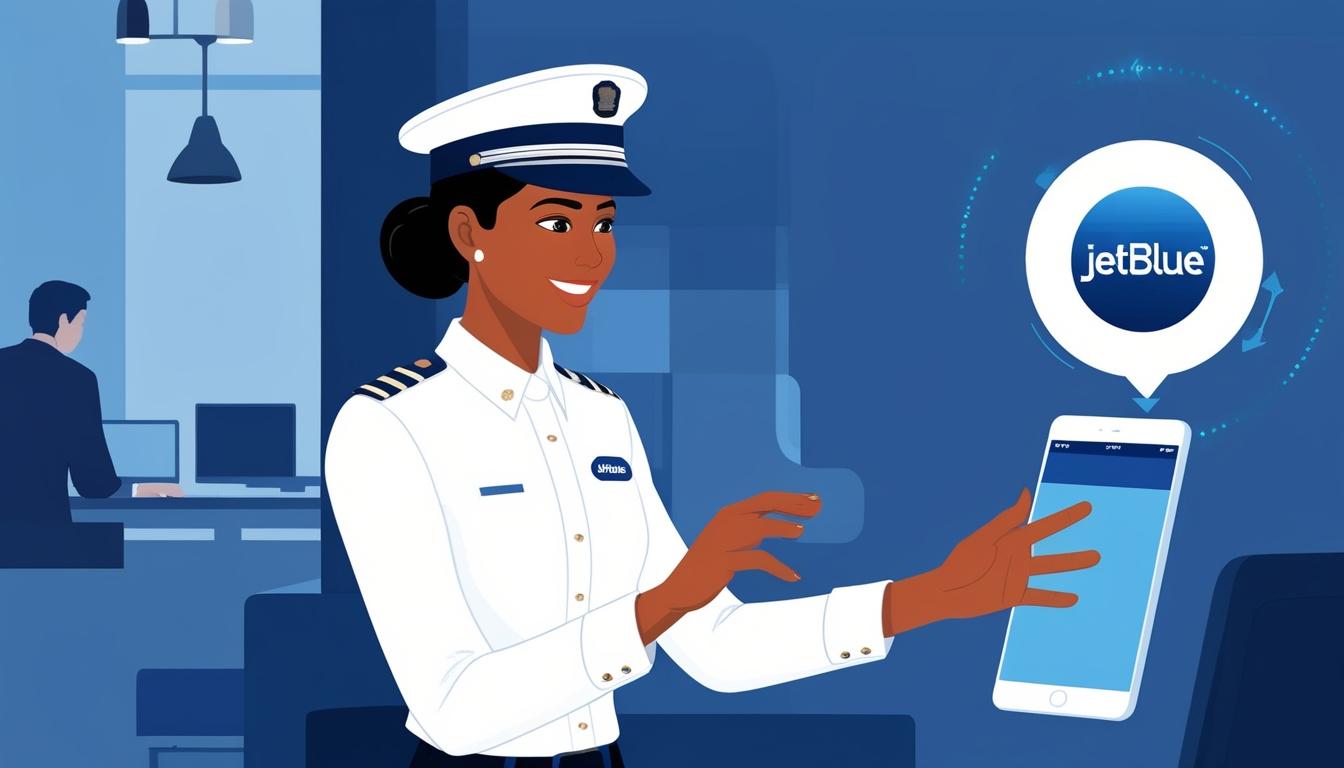
JetBlue Airways has successfully integrated generative AI technology into its customer service operations, resulting in a 12% increase in containment rates and positive feedback from its crew members on the enhanced support.
JetBlue Airways, a major player in the airline industry, has taken significant steps to enhance its customer service operations through the strategic integration of generative AI (GenAI) technology. The initiative is prominently highlighted as an example of customer experience (CX) innovation at the Customer Contact Week, a leading conference focusing on advancements in customer service and support.
Over the past three months, JetBlue has experienced a notable 12% boost in containment rates due to the augmentation of its virtual agent, Amelia, with GenAI capabilities. Additionally, the integration has led to positive, albeit more modest, enhancements in customer satisfaction (CSAT) and first contact resolution (FCR) rates.
A critical factor in the success of this technological integration has been the involvement and support of JetBlue’s human agents, referred to as “crew members”. This support stems from a carefully executed strategy aimed at empowering and preparing these agents for the evolving landscape of customer support, a process initiated well before the introduction of the GenAI technology.
Shelly Griessel, Vice President of Customer Support at JetBlue, has stressed the importance of practical empowerment for agents. The company has implemented a series of measures aimed at fostering a conducive working environment. These measures include capping occupancy rates at 85% and targeting part-time recruitment to prevent burnout. Furthermore, team leaders dedicate two hours each week to engage with crew members, allowing discussions on professional development opportunities, concerns, and suggestions for service improvement.
JetBlue also holds monthly “Direct Meetings” to examine company-wide performances and promote open communication. This approach facilitates a positive organisational culture and ensures that crew members comprehend the rationale behind strategic decisions, including the deployment of AI technologies.
When JetBlue introduced AI Agents, there were understandable anxieties among crew members concerning job security. However, Griessel addressed these concerns by reassuring the team of the company’s commitment to keeping them relevant and highlighting how AI is intended to enhance rather than replace their roles. By encouraging crew members to support Amelia’s development, JetBlue ensured that its virtual agent manages interactions typically unpopular with human agents, thus allowing them to handle more meaningful tasks.
JetBlue’s collaboration with conversational AI provider ASAPP was instrumental in understanding the drivers behind customer calls, helping the airline identify key areas for improvement, such as baggage policy inquiries. This partnership enabled JetBlue to prioritize its primary contact reasons, equipping Amelia with the necessary information to efficiently handle specific queries while ensuring compliance with regulatory standards.
Griessel advises against postponing the deployment of AI systems, noting that waiting for a “perfectly ready” environment is unlikely ever to occur. Instead, she advocates for a proactive approach by setting defined boundaries for AI capabilities to mitigate risks while adapting over time. Such an approach can be more cost-efficient and enhance overall customer satisfaction by providing consistent and timely responses to customer inquiries.
JetBlue’s experience with integrating AI into customer service illustrates how companies can innovate within their operations while maintaining a focus on human resource empowerment. The initiative continues to stand out as a model of leveraging technology to enhance service delivery, emphasising the dynamic role of customer support personnel in a tech-driven environment.
Source: Noah Wire Services






