









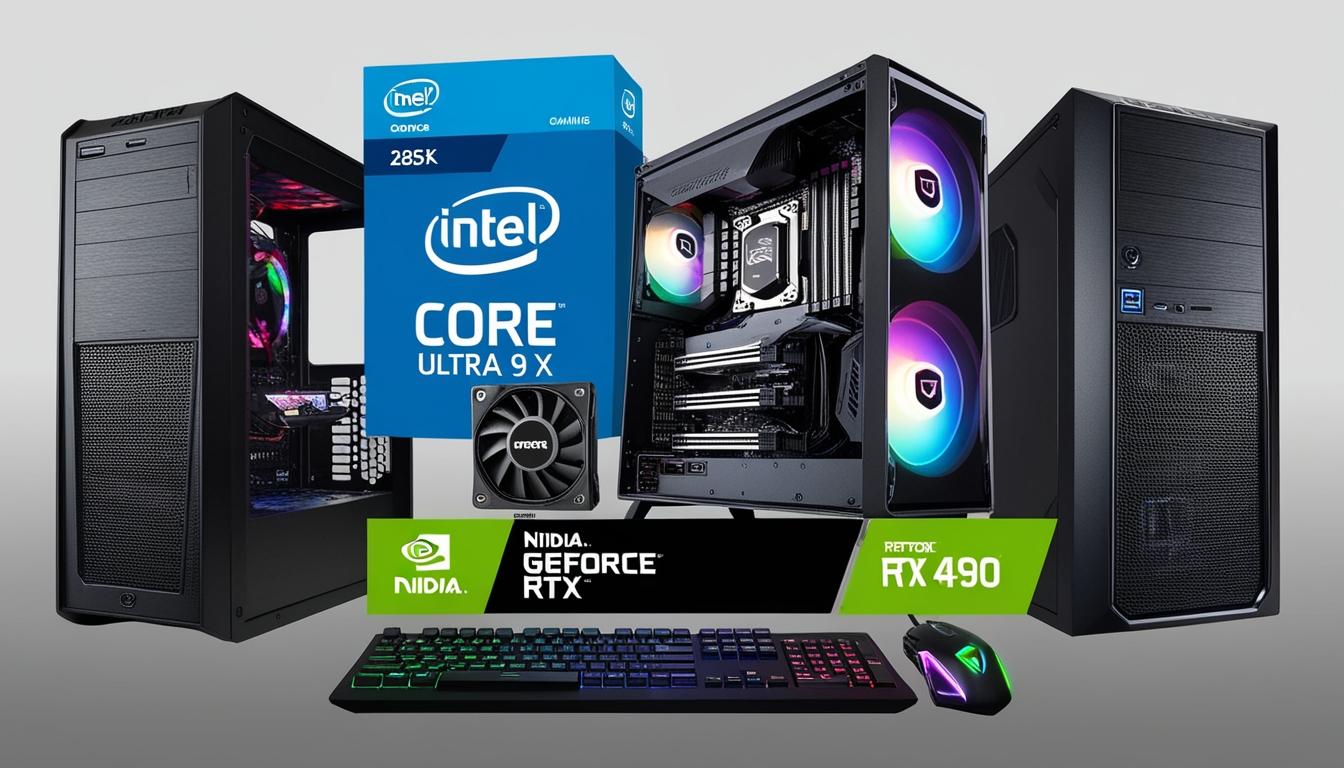
As Intel launches its Ultra 9 285K processor and AMD reveals its FSR 4 upscaling tool, the competition intensifies in the gaming and productivity sectors, promising significant advancements in performance and graphics fidelity.
In the ever-evolving landscape of high-performance computing, Intel and AMD are stepping up their game with impactful releases and innovations expected to shape the gaming and productivity experiences in the coming years.
Intel’s latest offering, the Intel Core Ultra 9 285K, epitomises cutting-edge processing power. Designed for high-end gaming and productivity, this processor is optimised for 4K gaming and beyond, also serving as a robust tool for tasks requiring significant computational strength. It finds itself as a potent choice in the construction of gaming PCs that aim for the pinnacle of both performance and visual fidelity.
Matching this processor with a suitable graphics card is critical to harnessing its full potential. The Nvidia GeForce RTX 4090 ranks as the top choice among high-end GPUs, though it comes with a hefty price tag. An alternative for those high-resolution pursuits is the AMD Radeon RX 7900 XTX, offering a more wallet-friendly option without drastically sacrificing performance. Meanwhile, the AMD Radeon RX 7900 GRE presents itself as a less expensive solution still capable of 4K gaming. For users inclined towards an all-Intel hardware setup, the Intel Arc A770 serves as the sole in-house option, performing exceptionally at 1440p though needing some optimisation for demanding 4K games.
This release from Intel comes amidst whispers of AMD’s strides in technological innovation, with the introduction of their FSR 4 upscaling tool, set to debut in the upcoming Call of Duty: Black Ops 6 in 2025. AMD has previously steered clear of AI in its FidelityFX Super Resolution technology, but the company now aims to integrate machine learning directly into FSR 4, potentially revolutionising graphical fidelity and performance, especially in mid-range GPUs. This marks a significant shift for AMD, leveraging AI to rival Nvidia’s widely praised DLSS technology.
Alongside these graphics-related developments, details have emerged about AMD’s forthcoming Strix Halo chips. Leaks suggest a formidable lineup, slated for a CES 2025 announcement. These Ryzen AI Max Pro series processors are expected to make significant waves in the workstation and thin-and-light gaming laptop segments, containing up to 16 cores and integrated graphics comparable to discrete GPUs like the RTX 4070. These APUs are reported to feature RDNA 3.5 graphics technology, setting the stage for considerable advances in onboard processing capabilities. However, AMD’s focus on integrating these into workstations might mean a delayed or staggered release for gaming-specific models, possibly prioritising other markets where AMD anticipates higher demand.
In summary, the upcoming wave of Intel and AMD innovations sets the stage for a transformed gaming and productivity landscape. These advancements not only promise to elevate graphical and processing performance but also exemplify the technological rigor companies are employing to meet growing demands for efficiency and performance. As these cutting-edge products come to fruition, the competitive dynamics between AMD and Nvidia, with innovations such as AI-driven upscaling and premium processing units, will likely catalyse notable shifts in consumer choice and industry direction.
Source: Noah Wire Services






