









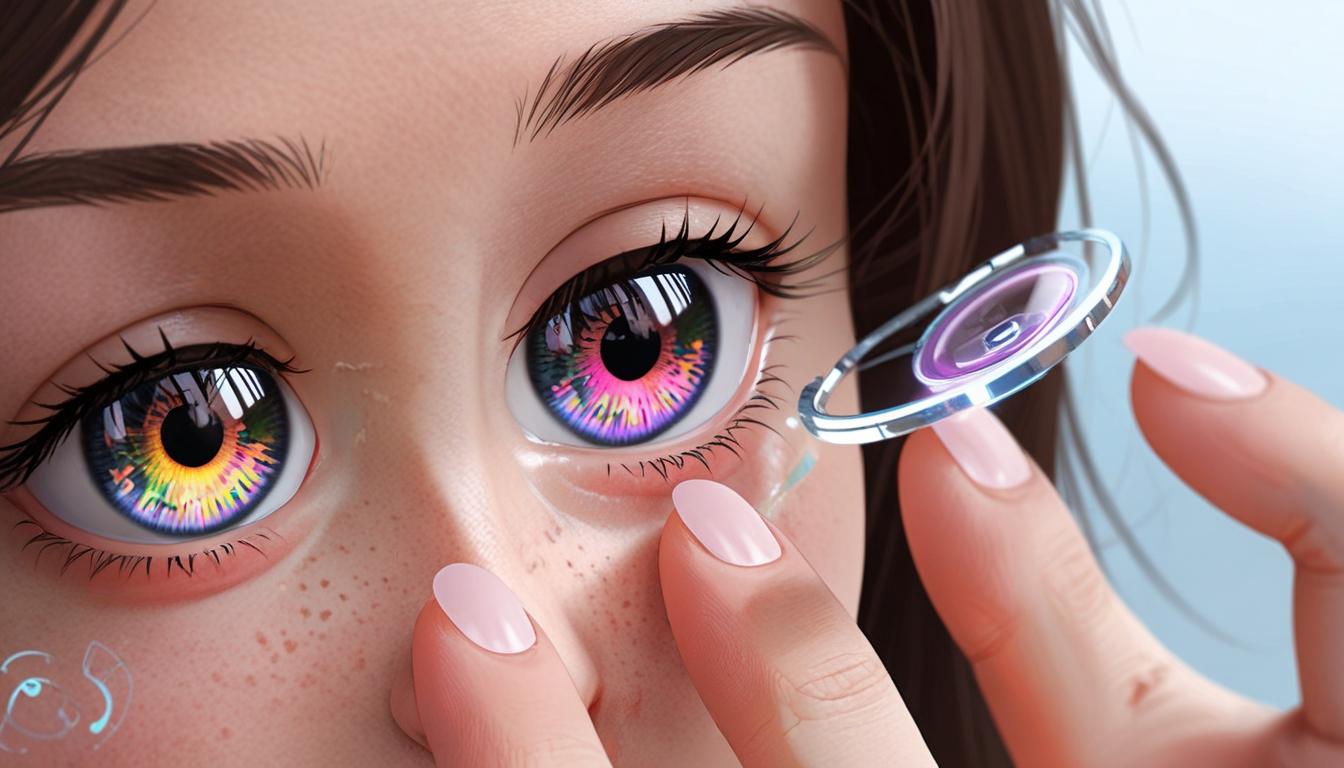
Senior Researcher Sai Teja Boppiniti develops AI-powered smart contact lenses that combine vision correction with critical health monitoring, revolutionising personalised healthcare.
In a significant advancement for personalised healthcare, Senior Researcher and Computer Engineer Sai Teja Boppiniti has developed innovative AI-powered smart contact lenses, poised to alter the landscape of both vision correction and health monitoring. Based in Boca Raton, Florida, and drawing from his roots in India, Boppiniti has channelled his expertise in data engineering and personal experiences with vision challenges into this groundbreaking project.
The smart contact lenses devised by Boppiniti are designed to not only assist those with vision impairments but also to monitor critical health metrics, making them a unique synthesis of corrective and preventive healthcare technologies. Tiny sensors embedded within the lenses continuously track essential indicators, such as glucose levels and intraocular pressure, crucial for managing chronic conditions like diabetes and glaucoma. This innovative approach offers a non-invasive, continuous monitoring system that improves both visual and overall health outcomes.
A hallmark of these smart lenses is their ability to deliver real-time data analysis via integrated AI systems. Users and healthcare providers benefit from immediate feedback as the AI processes these health metrics. For diabetic patients, the lenses provide a continuous glucose monitoring system (CGM), alerting them to any fluctuations in glucose levels. Similarly, individuals with or at risk for glaucoma can monitor intraocular pressure throughout the day, potentially averting vision loss by catching early warning signs of eye damage.
The development of these lenses is a major progression in healthcare management, as it empowers patients to engage proactively in their health monitoring. Equipped with real-time data, users can make informed health decisions without solely relying on periodic doctor visits. The integration of AI in everyday items like contact lenses marks a shift towards more personalised and accessible healthcare technology.
Despite the promise of this technology, Boppiniti and his team face several challenges, including ensuring data accuracy, maintaining comfort for users, and safeguarding patient privacy. However, the benefits of these lenses far outweigh the hurdles. They are designed to integrate seamlessly with other health wearables such as smartwatches, forming a comprehensive health monitoring ecosystem. By synchronising data between devices, users can achieve a holistic understanding of their health, covering glucose levels, heart rate, and other vital statistics.
Additionally, these lenses could significantly impact telemedicine by providing real-time health data to medical professionals. This could reduce the need for frequent in-person consultations, allowing for better management of chronic conditions through early intervention based on AI-driven predictive insights.
Sai Teja Boppiniti’s innovative journey serves as a testament to how personal adversity can inspire technological advancements that enhance the quality of life for others. His exploration into AI-enabled smart contact lenses reflects a profound commitment to improving healthcare and offering solutions to vision impairments and chronic health challenges.
As research and development continue, these smart contact lenses hold the potential to revolutionise healthcare, providing a continuous, non-invasive method for health monitoring that could benefit a broad spectrum of individuals globally.
Source: Noah Wire Services






