









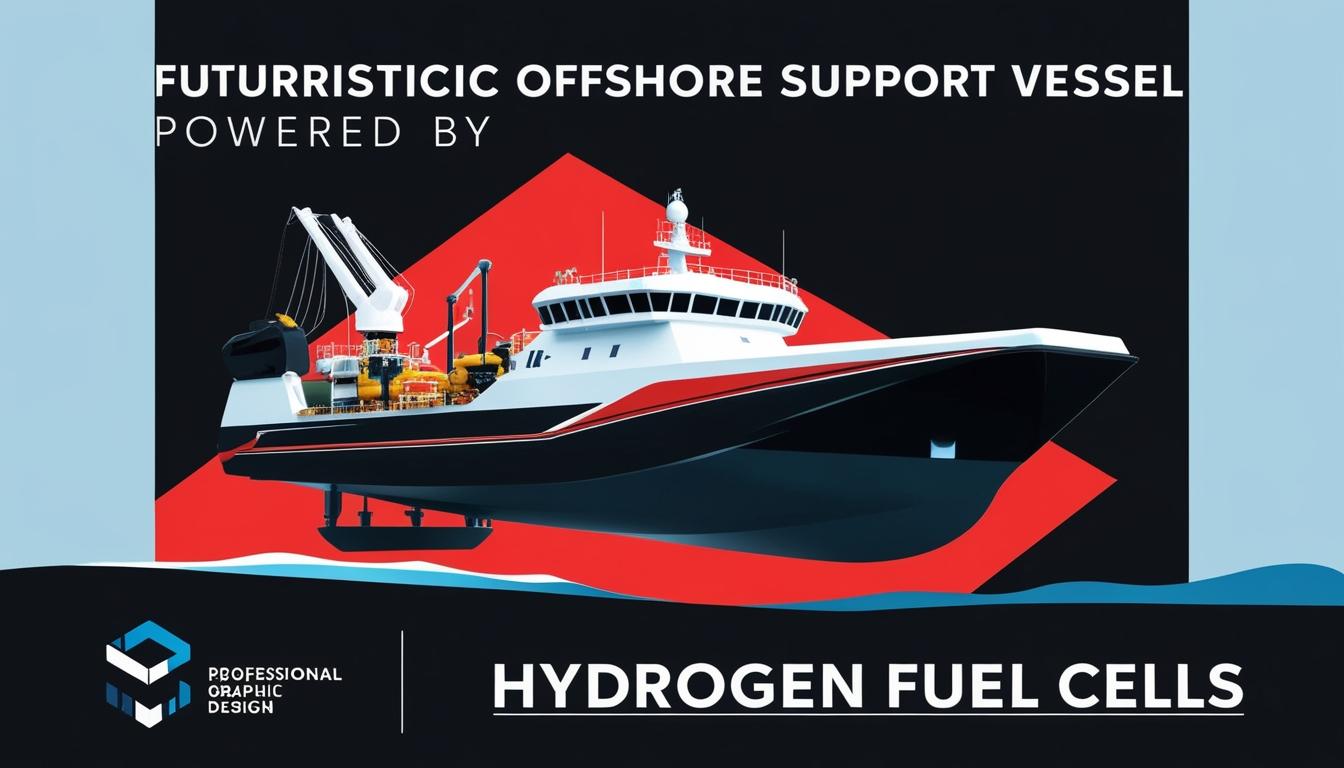
At the Offshore Support Journal Conference in Singapore, Vallianz Holdings’ Wu Shengwei highlighted the integration of emerging technologies in the marine industry, focusing on cleaner energy solutions and operational efficiency.
At the recent Offshore Support Journal Conference, Asia 2024, held in Singapore in September, the head of engineering at Vallianz Holdings, Wu Shengwei, spoke on the imminent integration of emerging technologies in the marine sector, particularly regarding offshore support vessels (OSVs) and tugs. The conference served as a platform for industry leaders to discuss advancements and trends, with a particular focus on enhancing operational efficiency and sustainability through automation and alternative fuel applications.
Wu emphasized the importance of adopting innovative technologies to mitigate emissions from harbour, coastal, and offshore operations. He pointed out that the maritime industry is at a pivotal moment where the deployment of hydrogen fuel cells and advanced battery systems can play a crucial role in achieving cleaner energy solutions. Traditionally reliant on fossil fuels, the sector is now exploring a range of alternative energy sources, aiming to meet tighter environmental regulations and reduce its carbon footprint.
During the interview, Wu articulated his optimism about the potential for alternative fuels to be integrated into newbuild OSVs as these technologies become more accessible over the coming years. He highlighted liquefied natural gas (LNG), ammonia, and hydrogen as promising options for the future of marine energy. Such transitions are anticipated not just to support the industry’s push towards sustainability but also to enhance operational capabilities.
Wu also delved into the technical specifics of battery and fuel cell technology, noting the significant enhancements in battery energy density that have recently occurred. He identified three types of hydrogen fuel cells applicable to offshore operations: proton-exchange membrane (PEM), solid oxide, and molten carbonate. Among these, he posited that PEM fuel cells are most suitable for OSV applications due to their capacity to adapt to varying power demands, crucial for dynamic positioning and the instantaneous power requirements typical in marine operations.
As the industry forecasts a shift towards greater automation and reliance on sustainable energy, conferences like the Offshore Support Journal Conference provide vital insights into technological trends that could redefine business practices in the marine sector. With further developments expected in hydrogen and battery technologies, industry players are poised for a significant transformation in operational methodologies, ensuring that they remain competitive and environmentally responsible.
Source: Noah Wire Services
- https://www.rivieramm.com/recent-events/recent-events/offshore-support-journal-conference-asia-2024 – Corroborates the event details of the Offshore Support Journal Conference, Asia 2024, held in Singapore on 17-18 September 2024, and the focus on industry trends and sustainability.
- https://www.rivieramm.com/recent-events/recent-events/offshore-support-journal-conference-asia-2024 – Provides information on the conference sessions, including those focused on market updates, ESG, sustainability, and financing, which align with the discussion on operational efficiency and sustainability.
- https://www.rivieramm.com/recent-events/recent-events/offshore-support-journal-conference-asia-2024 – Mentions the session on ‘POWERING A SUSTAINABLE MARITIME SECTOR’ which discusses maritime innovation, port electrification, hybrid and all-electric vessels, and sustainable fuel options.
- https://www.rivieramm.com/osj-series/osj-series – Confirms the Offshore Support Journal Conference, Asia 2024, as part of the OSJ series and its focus on industry insights and updates.
- https://www.register-iri.com/event/offshore-support-journal-conference-asia-2024/ – Verifies the dates and location of the Offshore Support Journal Conference, Asia 2024.
- https://www.dpmarine.org/join-us-at-the-offshore-support-journal-conference-in-asia/ – Mentions the conference and the participation of industry leaders, supporting the claim that the event is a platform for industry discussions.
- https://www.rivieramm.com/recent-events/recent-events/offshore-support-journal-conference-asia-2024 – Details the regional updates session, which includes discussions on rig, OSV, and subsea vessel demand, aligning with the focus on operational capabilities and sustainability.
- https://www.rivieramm.com/recent-events/recent-events/offshore-support-journal-conference-asia-2024 – Highlights the involvement of key stakeholders and experts in discussing trends and drivers in the offshore energy sector, including the role of alternative fuels.
- https://www.rivieramm.com/osj-series/osj-series – Emphasizes the conference’s role in delivering insights and updates to the OSV community, supporting the claim about the importance of such events for industry transformation.
- https://www.register-iri.com/event/offshore-support-journal-conference-asia-2024/ – Confirms the event’s focus on industry trends and the participation of various stakeholders, which is crucial for discussions on sustainability and technological advancements.






