









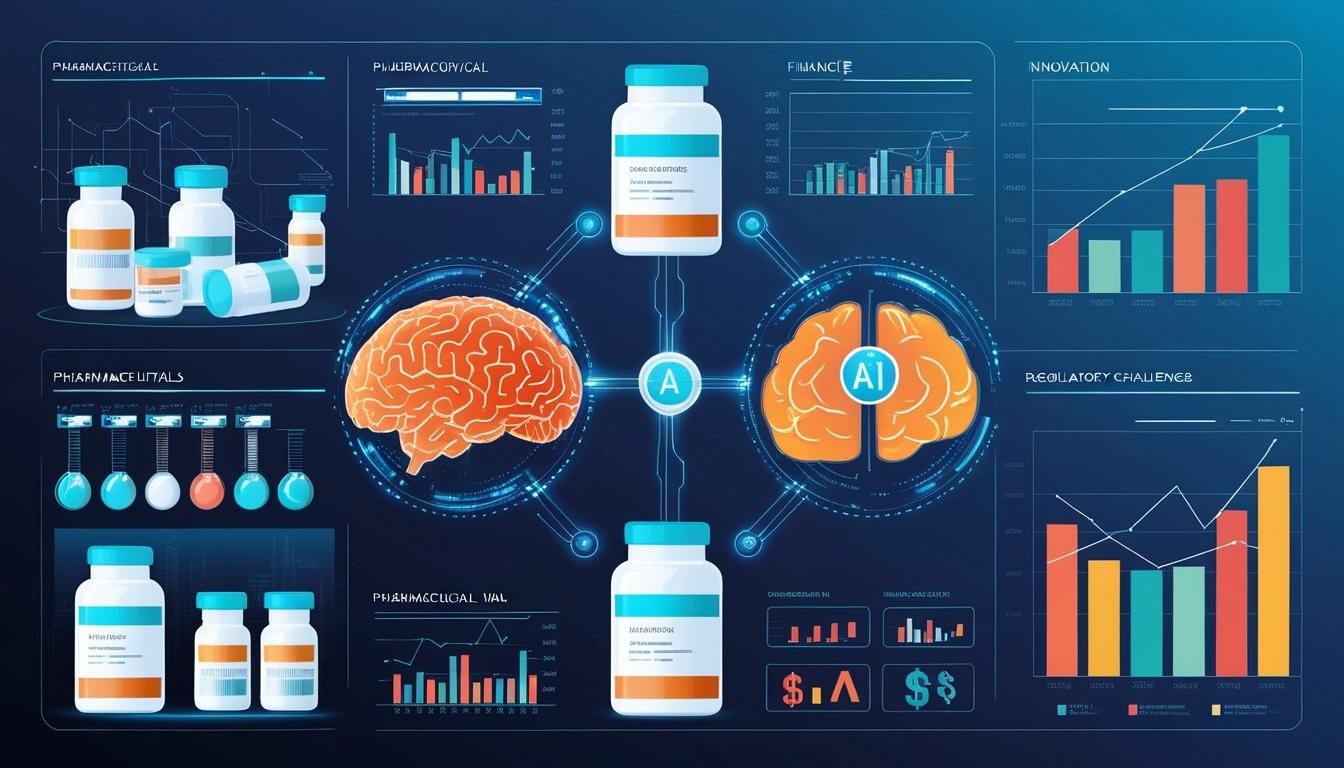
Key figures from the pharmaceutical and financial sectors examine the transformative impact of artificial intelligence, highlighting benefits and regulatory complexities in their industries.
Industry Leaders Discuss AI’s Role and Legal Challenges in Pharmaceuticals and Finance
In a recent episode of a prominent podcast produced by BioSpace, key figures from the pharmaceutical and financial sectors explored the evolving role of artificial intelligence (AI), highlighting its advantages and addressing regulatory complexities. The discussion, hosted by Lori Ellis, Head of Insights at BioSpace, featured expert insights from Konstantina Katcheves and Sanskriti Thakur.
Konstantina Katcheves, Senior Vice President of Innovative Medicines Global Business Development and Acquisitions at Teva Pharmaceuticals, and Sanskriti Thakur, Chairwoman of TOWER Capital, brought their extensive knowledge and experience to the table. They provided detailed perspectives on how AI is reshaping their respective industries and the potential implications of these changes.
The conversation centred around the multifaceted benefits AI technology offers to large-scale enterprises like Teva Pharmaceuticals and TOWER Capital. Katcheves explained how AI is revolutionising the pharmaceutical industry by enhancing drug discovery processes, improving patient care through personalised medicine, and optimising supply chain management. Meanwhile, Thakur highlighted AI’s role in transforming the financial sector, particularly in risk assessment, fraud detection, and automating complex transactions, thereby improving efficiency and accuracy.
However, both guests agreed that the integration of AI is not without challenges. They delved into various regulatory hurdles that companies face as they implement AI solutions. Katcheves noted the pharmaceutical industry’s cautious approach, given the stringent regulatory frameworks governing drug development and patient data privacy. Thakur echoed these sentiments, emphasising the financial sector’s ongoing struggle with navigating compliance issues as AI technologies continue to evolve rapidly.
The dialogue also touched on the foreseeable uncertainties surrounding AI regulation. Katcheves and Thakur expressed concerns over the lack of cohesive regulatory guidelines that can keep pace with the swift advancements in AI technology. They pointed out how these uncertainties could potentially hinder innovation and slow down the adoption of AI across industries.
As the conversation progressed, it became clear that while AI presents numerous opportunities for growth and improvement within the pharmaceutical and financial landscapes, significant work remains in addressing the regulatory challenges. The guests underscored the importance of continuous dialogue between industry leaders, policymakers, and technologists to ensure that AI can be implemented safely and effectively.
The podcast episode, accessible on platforms such as Spotify, Amazon Music, and iHeart, offers listeners in both industries an in-depth look at the current state of AI and encourages them to consider the broader implications of its integration. This discussion provides a comprehensive overview for those interested in understanding the complexities and potential of AI within the business world.
Source: Noah Wire Services
More on this & verification
- https://www.strategyand.pwc.com/de/en/industries/pharma-life-sciences/re-inventing-pharma-with-artificial-intelligence.html – This article supports the claim that AI is revolutionizing the pharmaceutical industry by enhancing drug discovery, improving patient care, and optimizing supply chain management. It also discusses the potential for AI to double operating profits by 2030.
- https://mitsloan.mit.edu/ideas-made-to-matter/johnson-johnson-cfo-4-ways-ai-changing-finance – This article highlights AI’s role in transforming the financial sector, particularly in predicting supply chain disruptions, lowering the cost of drug development, easing the burden of compliance, and augmenting human capabilities in finance.
- https://www.sciencedirect.com/science/article/pii/S0160791X21001044 – This study corroborates the transformation of business processes in the pharmaceutical industry through AI, including research and development, production, sales, marketing, and analysis. It also discusses the reduction of drug development costs and time.
- https://www.spglobal.com/ratings/en/research/articles/241001-ai-in-pharmaceuticals-promises-innovation-speed-and-savings-13254002 – This article supports the idea that AI is transforming pharmaceutical research and development by strengthening innovation, offering cost efficiencies, and speeding up the research-to-market cycle. It also mentions the competitive advantages AI can bring to large pharmaceutical companies.
- https://www.pharmaceuticalprocessingworld.com/ai-pharma-drug-development-billion-opportunity/ – This article provides examples of how big pharmaceutical companies like Sanofi, Pfizer, Novartis, Janssen, Bristol Myers Squibb, and others are using AI to revolutionize drug discovery, clinical trials, and manufacturing.
- https://www.strategyand.pwc.com/de/en/industries/pharma-life-sciences/re-inventing-pharma-with-artificial-intelligence.html – This article discusses the regulatory challenges and the need for cohesive regulatory guidelines to keep pace with AI advancements in the pharmaceutical industry.
- https://mitsloan.mit.edu/ideas-made-to-matter/johnson-johnson-cfo-4-ways-ai-changing-finance – This article touches on the financial sector’s struggle with compliance issues as AI technologies evolve, echoing the sentiments on regulatory hurdles in both industries.
- https://www.sciencedirect.com/science/article/pii/S0160791X21001044 – This study highlights the importance of adapting strategies and applying new technological opportunities, including navigating regulatory complexities in the pharmaceutical industry.
- https://www.spglobal.com/ratings/en/research/articles/241001-ai-in-pharmaceuticals-promises-innovation-speed-and-savings-13254002 – This article mentions the dependence of AI benefits on further investment, regulatory evolution, and effective change management, which aligns with the discussion on regulatory uncertainties.
- https://www.pharmaceuticalprocessingworld.com/ai-pharma-drug-development-billion-opportunity/ – This article underscores the ongoing efforts and partnerships within the pharmaceutical industry to integrate AI, despite the regulatory and implementation challenges.
- https://mitsloan.mit.edu/ideas-made-to-matter/johnson-johnson-cfo-4-ways-ai-changing-finance – This article emphasizes the importance of continuous dialogue between industry leaders, policymakers, and technologists to ensure safe and effective AI implementation, a point also made in the podcast discussion.






