





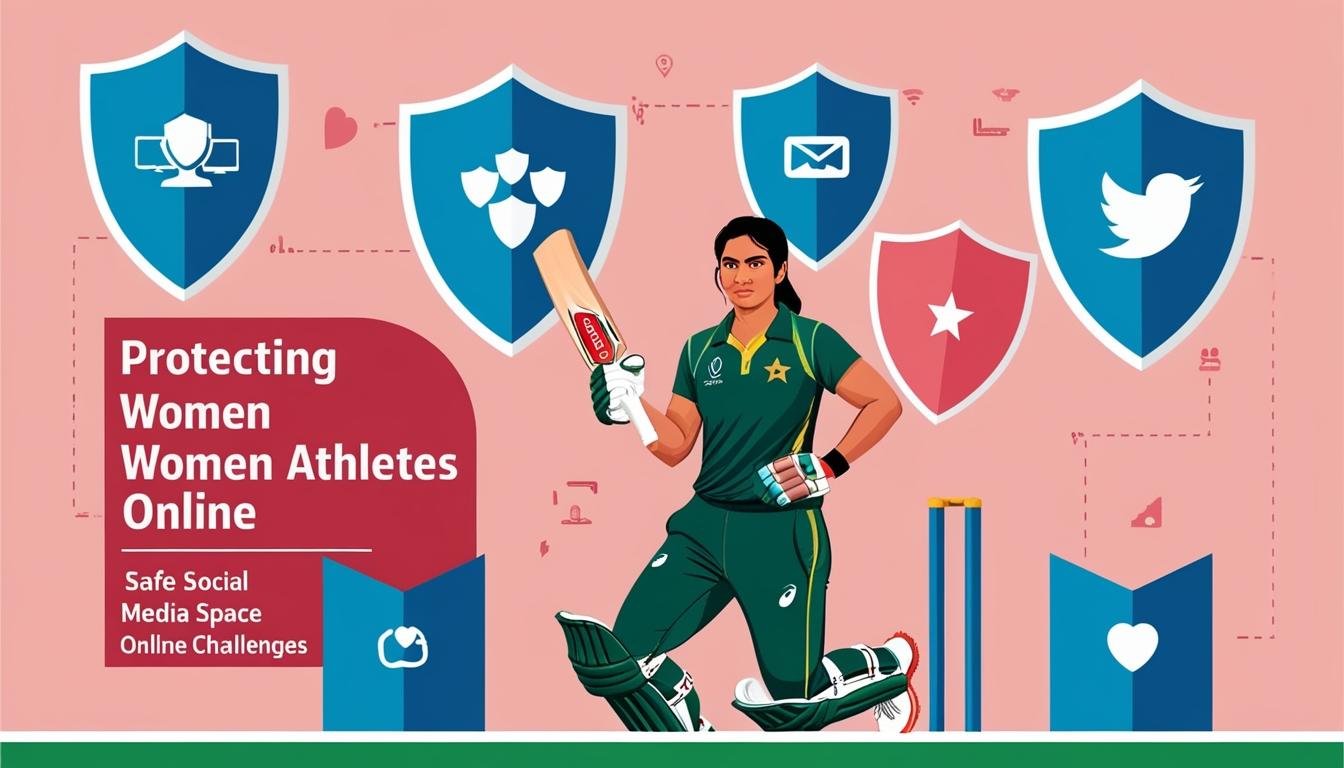

The International Cricket Council’s trial during the Women’s T20 World Cup reveals troubling statistics about online abuse, prompting a push for safer digital spaces for athletes.
The International Cricket Council (ICC) has concluded a notable trial on social media moderation within the sport, revealing significant challenges in carving out a safe space for athletes online. Undertaken in collaboration with tech company GoBubble, the initiative was conducted during the recent Women’s T20 World Cup in the United Arab Emirates. The trial focused on evaluating the intensity of abuse on social media, with a startling finding that nearly 20% of the analysed interactions were either harmful or automated by bots.
This moderation initiative scrutinised a vast volume of digital interactions, amounting to 1,495,149 comments across social media profiles of 60 players and eight teams. Of these, 271,100 comments were identified as containing abusive content, encompassing racism, sexism, homophobia, among other forms of vitriolic discourse. These accounts volunteered for the programme, as part of ICC’s efforts to enhance safety for players, with a specific focus on the burgeoning women’s cricket scene.
The issue of online harassment in cricket, particularly targeting female players or their associates, has been a persistent concern. Earlier investigations revealed rampant bullying and abuse directed towards these groups. This drew particular attention as the ICC announced an expansion of its women’s Fixture Tour Programme (FTP), including 11 teams, over 100 additional fixtures, and dedicated periods for three new leagues, all of which are set to increase the visibility of women’s cricket.
Finn Bradshaw, ICC’s Head of Digital, highlighted the organisation’s aim to inspire more women and girls to engage with cricket. However, the abuse athletes face online can be a deterrent. Bradshaw commented on the psychological stress such environments can impose, stating, “The last thing you want is a teenage girl who’s got some talent and ability and then she sees what one of her heroes goes through on social media and thinks, ‘I can’t face that’.”

The technological backbone of this trial is the AI tool developed by GoBubble, which is finely tuned to detect and filter abusive language in multiple languages, as well as identify bot activities. Additionally, the software can be customised to shield individuals from comments pertaining to specific past incidents unique to them.
South African wicketkeeper-batter, Sinalo Jafta, has been a prominent voice in this initiative, having had personal experiences dealing with online abuse. Previously, Jafta relied on friends or family to manage and clean her social media channels from toxic remarks. With the deployment of this automated tool, she hopes other players will feel more at ease and confident in sharing their authentic selves. In an ICC statement, Jafta acknowledged, “That protection for me is very big because players get to share their life with the world without the fear of being judged or criticised.”
In this endeavour, the ICC aspires not only to shield current players but also to set the stage for a positive online environment for future athletes. Bradshaw emphasised the role of social media in building player-fan relationships, stressing that it’s not solely about the sporting feats but also about the connection fans feel with players beyond the field.
The ICC’s efforts in this area reflect a broader movement within sports to address and mitigate online abuse, fostering a culture where athletes can engage with their audiences free from negativity and mental stress. With these insights into the digital landscape of cricket, particularly in women’s sports, stakeholders aim to create a more supportive community for the athletes involved.
Source: Noah Wire Services







