









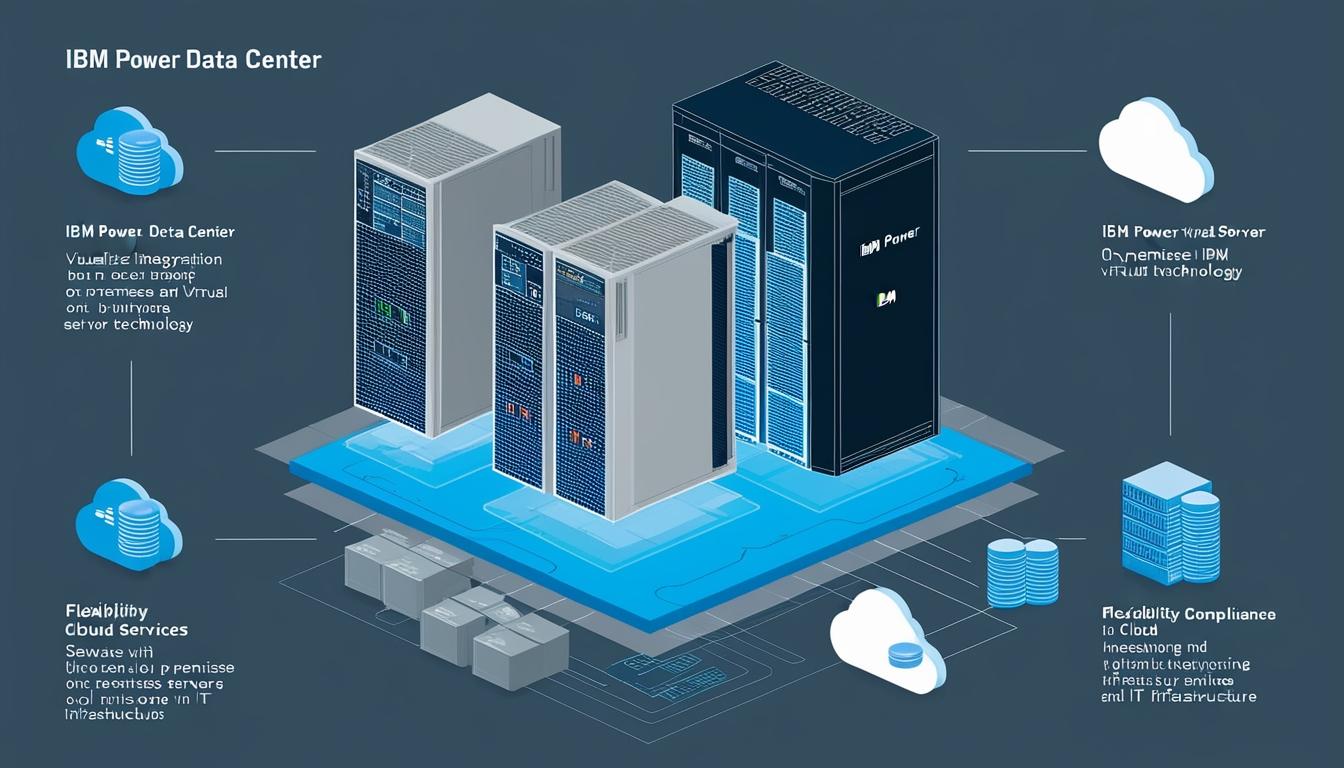
IBM enhances its Power Virtual Server offerings by enabling deployment in client data centres, ensuring compliance and improving management flexibility for modern enterprises.
IBM has announced an extension to its Power Virtual Server capabilities, enabling deployment within client data centres. This development aims to deliver the flexibility of cloud consumption and management while maintaining data on-premises, addressing the regional compliance and governance needs of various businesses.
Introduced in 2019, IBM Power Virtual Server offers infrastructure-as-a-service, which includes semi-configurable compute, storage, and network utilities. Already operational in 21 data centres worldwide, it combines the advantages of an IBM data centre or a client’s own data centre, all managed through IBM Cloud services.
With this new client data centre option, a ‘local zone’ is deployed directly into the client’s facility, seamlessly connecting to the IBM Cloud. This configuration mirrors the as-a-service model provided by IBM Power Virtual Server in IBM’s proprietary data centres. Thus, enterprises are presented with an opportunity to scale operations within a local zone or, when necessary, expand by adding new local zones, selecting from a range of IBM Power options to accommodate future growth predictions.
This enhanced offering, dubbed the IBM Power Virtual Server Private Cloud, provides specific engineering benefits tailored to meet the distinct needs of enterprises:
-
On-Site Data and Workload Maintenance: This solution addresses enterprises with regulatory burdens that require data to remain on-site. It proves especially beneficial for workloads demanding ultra-low latency or those requiring close integration with other on-site activities.
-
Regional Data Sovereignty: Enterprises can choose to keep data within specific geographical boundaries as dictated by country sovereignty regulations, ensuring compliance with local laws.
-
Hybrid Cloud Integration: The Power Virtual Server integrates seamlessly between IBM data centres and client locations, facilitating a unified hybrid cloud environment. This integration allows enterprises to manage all virtual machines and infrastructure effortlessly through a centralised user interface, offering flexible workload placement on-premises and off-premises.
-
Predictable Cost Management: The services provided on both IBM and client sites incorporate a pay-as-you-go model, which includes compute, memory, storage, and operating system licences metered by the hour, negating the need for upfront investments.
-
Simplified IT Operations: IBM undertakes full responsibility for infrastructure management, allowing enterprises to focus their efforts on core business outcomes. By setting up and delivering the Power Virtual Server in the client’s chosen data centres, IBM ensures a fully managed service, encompassing monitoring, security, firmware updates, and overall infrastructure management.
-
Enhanced Security: Security is a pivotal element of the Power Virtual Server, leveraging IBM Cloud tools to manage and safeguard infrastructure, thereby retaining sensitive data on-premises and reducing the operational burden on enterprises.
The shift towards extending these services to client sites underscores IBM’s commitment to providing flexible and secure IT solutions tailored to the diverse needs of modern enterprises. The Power Virtual Server Private Cloud not only enhances agility and reliability in IT infrastructure but also optimises operations by allowing businesses to maintain control over their data in compliance with regional regulations.
Source: Noah Wire Services






