






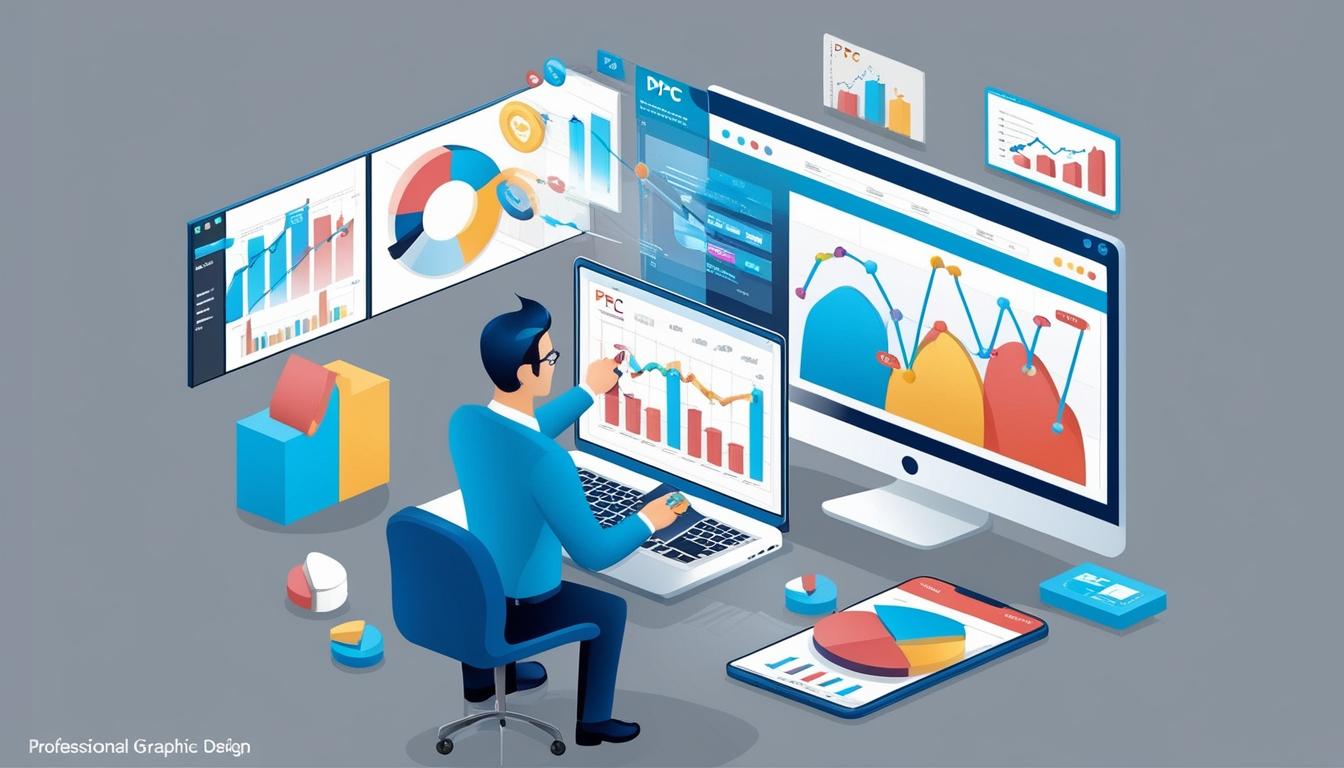
In the rapidly changing world of PPC advertising, the emergence of AI tools is revolutionising campaign management, enhancing efficiency and providing marketers with new insights into data analysis and strategy development.
In the ever-evolving landscape of Pay-Per-Click (PPC) advertising, marketers are constantly on the lookout for innovative methods to streamline their processes and enhance their performance. The management of PPC campaigns demands a careful balancing act of numerous tasks, including data analysis, bid strategy optimisation, creative testing, and performance reporting, among others.
While Artificial Intelligence (AI) and machine learning have played a significant role in PPC advertising for several years, a fresh wave of AI tools specifically designed to boost productivity and streamline workflows has recently made its mark. These tools are transforming how PPC professionals conduct their work, whether it involves automating repetitive tasks, refining audience targeting, or analysing extensive datasets.
One of the primary ways AI tools are making a difference is in the realm of data interpretation and trend insights. PPC campaigns generate an immense amount of data that needs constant analysis. AI tools, independent of standard platforms like Google and Microsoft Ads, facilitate this by swiftly summarising key trends, identifying performance patterns, and highlighting any anomalies for further examination. This capability allows marketers to quickly transition from data analysis to actionable insights.
Additionally, AI tools are proving invaluable for trend identification. These tools can accept campaign data input, providing marketers with summaries that spotlight performance trends, such as seasonal shifts or potential issues like declining conversion rates. For instance, if multiple campaigns experience a significant drop in conversion rates, AI tools can rapidly analyse raw performance data to pinpoint possible causes, such as ad fatigue or increased competition.
Moreover, these tools enhance competitor analysis and strategy development. Staying abreast of competitors’ strategies can be both time-consuming and intricate. AI tools simplify this process by offering insights into competitors’ actions, such as shifts in bidding strategies, new ad copies, or targeted keywords. This enables marketers to adjust their campaigns or devise counter-strategies more quickly and efficiently.
When it comes to managing campaigns across multiple platforms like Google Ads, Microsoft Ads, and Meta, AI tools also aid in streamlining cross-platform reporting. By aggregating data from various platforms, they produce cohesive summaries, highlighting key performance indicators across channels, thus saving marketers valuable time usually spent on report compilation.
Keyword research and campaign optimisation are other areas where AI tools have shown tremendous potential. While tools like Google Keyword Planner offer keyword recommendations, AI tools can generate long-tail variations and suggest negative keywords to exclude irrelevant traffic. For example, they can provide suggestions for new keywords, helping to refine targeting strategies and improve cost efficiency.
Testing and creative optimisation are crucial for effective PPC advertising, and AI tools assist marketers in A/B testing by analysing test data and suggesting performance-based optimisations. They not only determine which elements are most successful but also aid in recognising factors that contribute to a campaign’s success, streamlining future test planning.
AI tools further extend their capabilities to budget allocation and forecasting, helping to determine the most strategic distribution of resources based on historical performance. By analysing past campaign data and current market trends, AI can suggest budget allocations for optimal results, aiding marketers in smarter budgetary decisions.
Lastly, AI tools provide an edge in market trend exploration and forecasting by analysing search trends and consumer behaviour to predict demand shifts. This enables marketers to adapt their strategies proactively, such as adjusting bids or budgets in response to emerging trends, thereby staying ahead of the competition.
In summary, AI is undoubtedly revolutionising PPC workflows, offering marketers the tools to enhance efficiency without compromising effectiveness. As AI technology continues to evolve, those in the PPC arena who integrate these tools into their strategy are likely to achieve superior results, whether managing internal campaigns or serving clients.
Source: Noah Wire Services







