









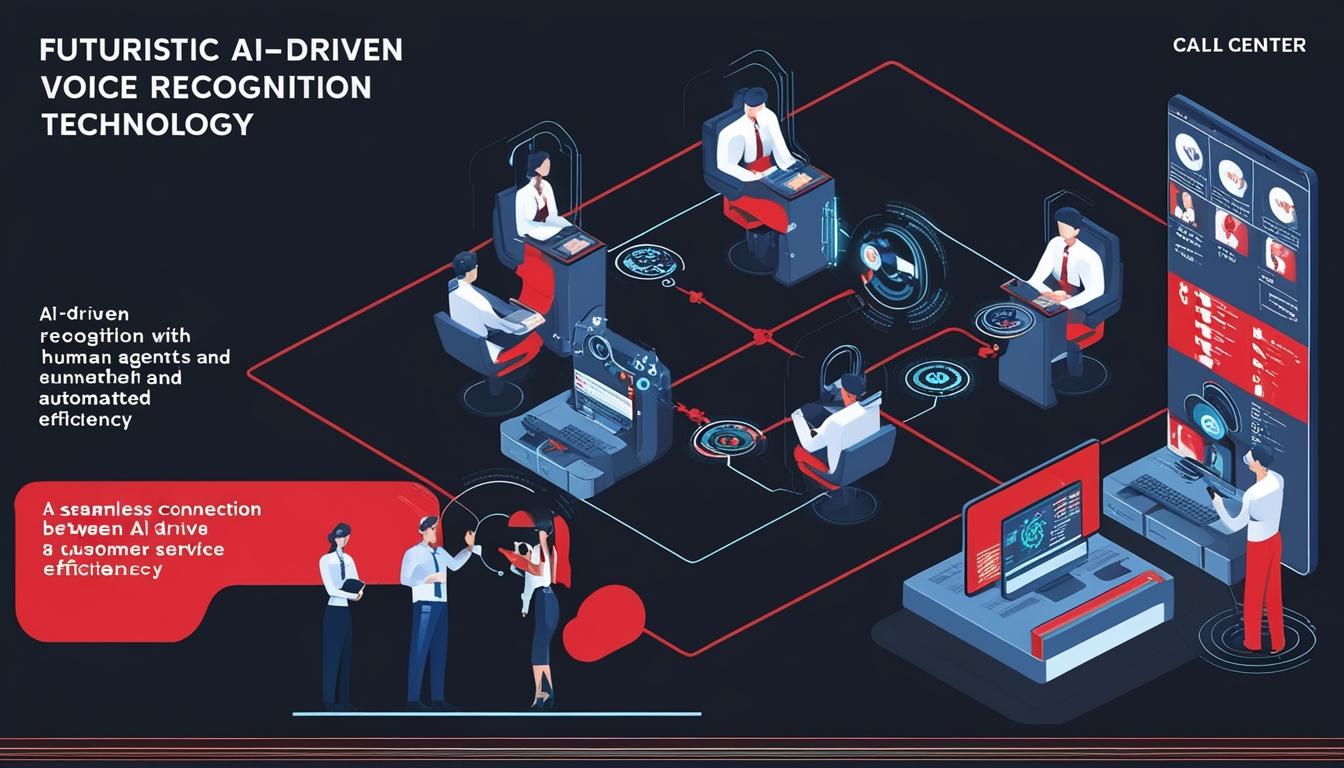
The integration of artificial intelligence and voice recognition technology is reshaping call centre operations, enhancing customer experiences while reducing costs.
The business process outsourcing (BPO) industry is experiencing a notable transformation, driven predominantly by advancements in artificial intelligence (AI) and voice recognition technology. This shift is reshaping call centre operations, enabling BPO companies to deliver enhanced customer experiences while simultaneously reducing operational costs.
Voice recognition technology has evolved considerably, moving beyond mere speech-to-text capabilities to more complex, context-aware systems. Today, machines are capable of listening and interpreting human speech to perform various functions such as transcription, sentiment analysis, and even addressing customer inquiries directly. As these technologies mature, they are becoming integral to the operations of BPO call centres, facilitating more efficient customer interactions.
A primary application of voice recognition in call centres is customer authentication. In contrast to traditional verification methods like security questions and PIN codes, voice biometrics offers a quicker and more secure alternative. By analysing distinctive vocal traits such as pitch and tone, AI can accurately authenticate callers’ identities in real time. This not only simplifies the customer experience but also reduces the risks associated with fraud, as callers no longer need to remember complex passwords or navigate frustrating security questions.
The effectiveness of AI extends to the realm of call routing as well. Traditional Interactive Voice Response (IVR) systems often frustrate customers with lengthy menus, but AI-driven solutions enable direct routing of calls to the most appropriate agent based on the caller’s expressed intent. For instance, if a customer seeks information about a specific product, the AI can identify key terms and seamlessly connect them to the relevant department, thus minimising delays and enhancing service efficiency.
Artificial intelligence plays a central role in refining call centre operations. Through technologies such as natural language processing (NLP), machine learning (ML), and speech analytics, AI enhances an agent’s ability to understand and resolve customer queries. Speech analytics, in particular, aids in monitoring and improving agent performance by analysing customer-agent interactions. These tools can transcribe calls, extract significant phrases, and assess sentiments in real-time, thus pinpointing areas for development in both individual agent performance and overall service quality. For instance, persistent negative sentiment patterns regarding a specific product could prompt management to either enhance training or modify service offerings.
Moreover, AI is instrumental in alleviating the workloads of human agents. By automating routine and repetitive tasks, agents can focus on more complex issues that require human judgement and empathy. One of the most prevalent applications of AI in call centres is through virtual assistants or chatbots. These tools can address common inquiries, thereby significantly reducing wait times for customers and allowing human agents to dedicate their efforts to more intricate interactions.
Additionally, AI-powered knowledge management systems provide agents with immediate access to information. When agents encounter uncertainties regarding a product or service, they can query these systems to retrieve necessary documentation or troubleshooting guides without engaging in laborious manual research. This capability allows even inexperienced agents to handle customer inquiries with greater confidence and efficiency.
As AI and voice recognition technology continue to advance, the future landscape of BPO call centres appears promising. With the ability to analyse extensive data sets, learn from historical trends, and anticipate customer behaviours, AI is primed to redefine the operational dynamics of BPO companies. The integration of these technologies is likely to facilitate proactive problem-solving, enabling businesses to offer real-time solutions and seamless omnichannel experiences.
In summary, the convergence of voice recognition and AI is fundamentally altering the BPO call centre environment. These technologies enhance operational efficiency by automating basic tasks, supporting agents in real-time, and ultimately improving customer experiences. As the capabilities of these technologies grow, investments in such advanced systems will become crucial for BPOs striving for long-term success in an increasingly competitive landscape.
Source: Noah Wire Services
- https://www.relyservices.com/blog/ai-business-process-outsourcing – Corroborates the use of AI in BPO for automating repetitive tasks, enhancing customer experience, and improving operational efficiency.
- https://opportune.com/insights/news/how-business-process-outsourcing-leverages-emerging-technologies – Supports the role of AI and machine learning in automating routine tasks, enhancing operational efficiency, and improving customer satisfaction in BPO.
- https://www.ibm.com/think/topics/ai-for-bpo – Highlights how AI and automation transform BPO services by improving efficiency, accuracy, and scalability, and reducing costs.
- https://arenacx.com/how-ai-and-automation-are-revolutionizing-bpo-outsourcing-services/ – Details the evolution of BPO with AI and automation, including enhanced efficiency, productivity, and cost savings.
- https://unity-connect.com/our-resources/bpo-learning-center/opportunities-and-challenges-of-integrating-ai-in-outsourcing/ – Explains the opportunities and challenges of integrating AI in BPO, including improved operational efficiency and customer satisfaction.
- https://www.relyservices.com/blog/ai-business-process-outsourcing – Discusses the use of AI in customer service through chatbots and virtual assistants, reducing response times and improving customer satisfaction.
- https://opportune.com/insights/news/how-business-process-outsourcing-leverages-emerging-technologies – Describes how AI-powered predictive analytics and speech analytics enhance agent performance and service quality in call centres.
- https://www.ibm.com/think/topics/ai-for-bpo – Illustrates the use of AI in modernizing processes such as customer authentication and call routing, enhancing security and efficiency.
- https://arenacx.com/how-ai-and-automation-are-revolutionizing-bpo-outsourcing-services/ – Explains how AI-powered knowledge management systems support agents in real-time, improving their ability to handle customer inquiries.
- https://unity-connect.com/our-resources/bpo-learning-center/opportunities-and-challenges-of-integrating-ai-in-outsourcing/ – Highlights the future potential of AI in BPO, including proactive problem-solving and seamless omnichannel experiences.
- https://opportune.com/insights/news/how-business-process-outsourcing-leverages-emerging-technologies – Emphasizes the importance of integrating AI and other technologies to stay competitive and adapt to changing market conditions in BPO.






