









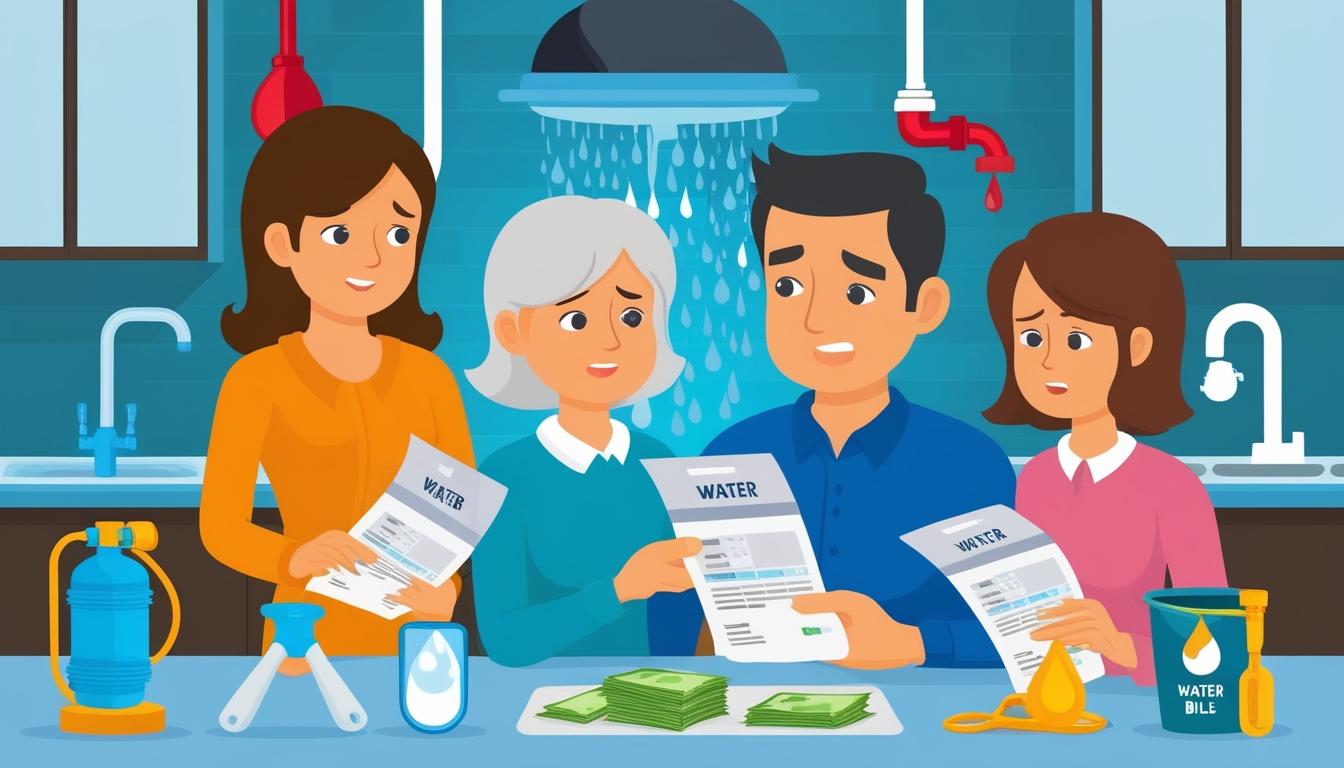
An impending average increase of £19 in water bills between 2025 and 2030 has raised concerns among households in England and Wales already struggling with payments, as regulatory bodies push for infrastructure investment.
In a climate of rising financial pressures, millions of households in England and Wales are bracing themselves for potential increases in water bills, according to recent warnings from the Consumer Council for Water (CCW). This comes as the water industry regulator, Ofwat, has provisionally approved an average rise of £19 per year between 2025 and 2030—translating to a 21% increase over the five-year period.
A comprehensive survey conducted by CCW, involving 9,500 households across 19 different water company regions, has revealed that a significant portion of customers are already facing difficulties with their existing bills. Eighteen percent of respondents reported current struggles in making payments, and 40% expressed concerns about affording the impending increases. The financial strain is pushing many to consider cutbacks on non-essential expenditures, with 54% indicating a likely reduction in such expenses, 43% contemplating using less water, and 38% considering cuts to their food shopping and other essential needs.
Despite the outlined challenges, there is a considerable level of public support for the water companies’ upcoming plans for infrastructure investment, with 75% of survey participants backing these plans initially. However, this support diminished to 58% when participants were reminded of the accompanying bill hikes.
Mike Keil, chief executive of the CCW, highlighted the potential for these bill increases to place “an intolerable strain” on the finances of millions of households. Keil advocated for a unified social tariff across both England and Wales to address what has been described as the “postcode lottery of assistance” in support schemes for low-income households.
Water companies have announced intentions to increase support for those encountering difficulties with bill payments. A representative from Water UK, the sector’s trade body, acknowledged the urgency of investing in water and sewage infrastructure, a sentiment echoed by Ofwat. “We urgently need investment in our water and sewage infrastructure,” stated a Water UK spokesperson, while recognising that any increase in bills is “never welcome.” Ofwat also commented on the survey findings, emphasizing the necessity for water companies to deliver the improvements promised with the investments funded by the increased bills.
These financial discussions occur alongside ongoing investigations by Ofwat and the Environment Agency into water companies following a notable surge in sewage spills into England’s lakes, rivers, and seas in 2023. Data from the Rivers Trust’s Catchment Based Approach Data Hub highlighted Yorkshire Water’s significant contribution to the spills, totalling 77,761 incidents in 2023, whereas Welsh Water and United Utilities recorded 117,830 and 97,537 spills, respectively.
James Longley, managing director at Utility Bidder, emphasized the widespread nature of these issues across the UK, identifying the overwhelming of drainage infrastructure due to heavy rainfalls as a contributing factor. The situation is exacerbated by increasing environmental concerns, as some regions, including Brighton and Hove, and Hackney, reported no sewage spills in 2023.
As Ofwat prepares for a final decision on the bill increases in December, discussions continue to ensure transparency and the effective utilisation of investments intended to secure water supplies and mitigate pollution concerns. This delicate balance will play a crucial role in the coming years, as both regulatory bodies and the public monitor the progress and performance of water companies in managing the nation’s vital resources responsibly.
Source: Noah Wire Services
More on this & sources
- https://www.bbc.com/news/articles/ce9gve1grjmo – Corroborates the warning from the Consumer Council for Water (CCW) about millions of households struggling to pay water bills and the proposed average rise of £19 per year between 2025 and 2030.
- https://www.bbc.com/news/articles/ce9gve1grjmo – Supports the findings of the CCW survey involving 9,500 households and the financial strain on households due to potential bill increases.
- https://www.bbc.com/news/articles/ce9gve1grjmo – Details the public support for water companies’ infrastructure investment plans and the decrease in support when reminded of the accompanying bill hikes.
- https://www.bbc.com/news/articles/ce9gve1grjmo – Quotes Mike Keil, CCW’s chief executive, on the potential strain on household finances and the advocacy for a unified social tariff.
- https://www.bbc.com/news/articles/ce9gve1grjmo – Discusses the intentions of water companies to increase support for those struggling with bill payments and the urgency of investing in water and sewage infrastructure.
- https://uk.news.yahoo.com/two-five-households-struggle-water-000100479.html – Provides additional details on the survey conducted by CCW, including the percentage of households concerned about affording the impending bill increases.
- https://uk.news.yahoo.com/two-five-households-struggle-water-000100479.html – Corroborates the public support for investment plans and the reduction in support when considering the associated bill increases.
- https://www.bbc.com/news/articles/ce9gve1grjmo – Mentions the ongoing investigations by Ofwat and the Environment Agency into water companies following the surge in sewage spills in 2023.
- https://www.bbc.com/news/articles/ce9gve1grjmo – Highlights Ofwat’s emphasis on the necessity for water companies to deliver the improvements promised with the investments funded by the increased bills.
- https://uk.news.yahoo.com/two-five-households-struggle-water-000100479.html – Details the potential final decision on the bill increases by Ofwat in December and the ongoing discussions to ensure transparency and effective utilisation of investments.
- https://www.bbc.com/news/articles/ce9gve1grjmo – Please view link – unable to able to access data






