






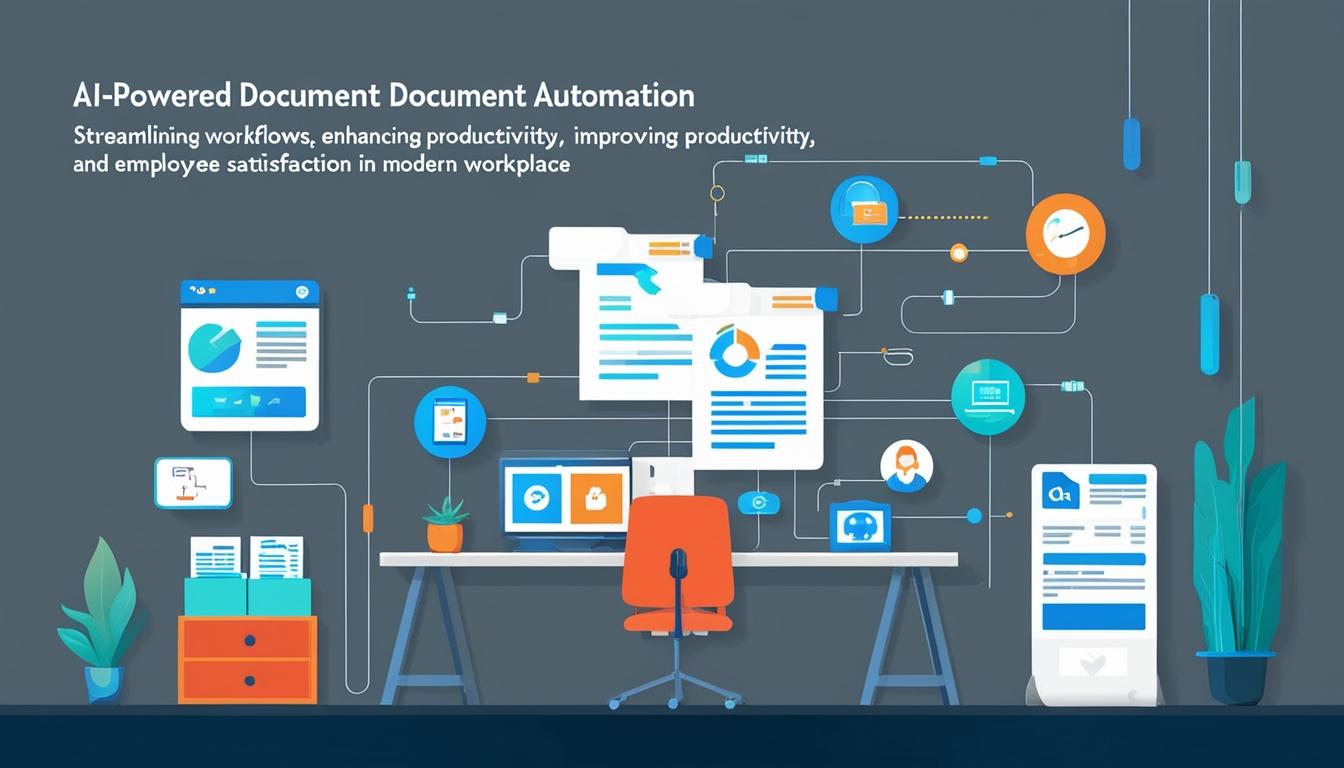
A recent Forrester survey reveals how AI integration in document workflows can enhance employee satisfaction and streamline processes, with many organisations still grappling with manual tasks.
As companies worldwide look to technology to enhance productivity and revenue streams, the often undiscussed hero is artificial intelligence (AI) and its potential to streamline daily tools like PDFs and document processing. Recent insights from a Forrester survey, involving 402 PDF and document tool users and 116 decision makers, illuminate how AI integration into document workflows can significantly elevate employee satisfaction and efficiency.
A recurring pain point in many organisations is the manual nature of document handling—a process that frequently takes employees away from their primary responsibilities. According to the survey, a significant 66% of respondents highlighted that employees engaged in manual tasks better suited for AI spend less time focusing on their core work. Furthermore, the survey noted that 62% lamented a decline in customer experience and 56% pointed to potential brand reputation damage due to errors in documents.
Organizations currently manage an average of eight different tools for handling PDF and document needs. These tools often lack automation and have integration challenges, each sporting its own learning curve. This includes tools for e-signatures, PDF editing, document scanning, and collaboration, leaving employees to navigate these complexities. Consequently, approximately a full day of the workweek can be lost to these manual tasks, impacting overall employee satisfaction—56% of employees reported insufficient time for primary duties due to these inefficiencies.
AI, however, promises a transformative impact by picking up the manual workflow slack. Among the ways AI can assist, respondents prioritised functionalities such as document and text summary creation, data extraction, document redaction, and PDF editing. Currently, 80% of data extraction tasks are handled manually, but AI can automate the process, interrogating documents, extracting relevant information, and even answering questions based on the content. Furthermore, AI can dramatically reduce the time spent on essential but tedious tasks like document redaction, ensuring compliance and protecting sensitive information without human error.
AI-enhanced tools can also perform consistency checks across numerous documents, identifying and correcting inaccuracies without the need for manual comparison. As companies grapple with evolving digital landscapes, consolidating multiple document tools into a single AI-powered platform can lead significantly to greater efficacy—80% of surveyed participants found the concept of an all-in-one platform valuable or extremely valuable.
The integration of AI in document workflows is not merely about modernising processes. It offers tangible autonomy to employees, empowering them to generate and redact documents, develop automations, and summarise content efficiently, thereby enriching their work environment and reducing the strain of repetitive tasks.
While the promise of AI in transforming document management is substantial, the transition requires deliberate planning. Organisations must thoroughly audit existing document processes, identify inefficiencies, and strategically integrate AI to enhance productivity. The potential rewards—a more satisfied, autonomous, and engaged workforce—make the challenge worthwhile for forward-thinking enterprises.
Source: Noah Wire Services







