









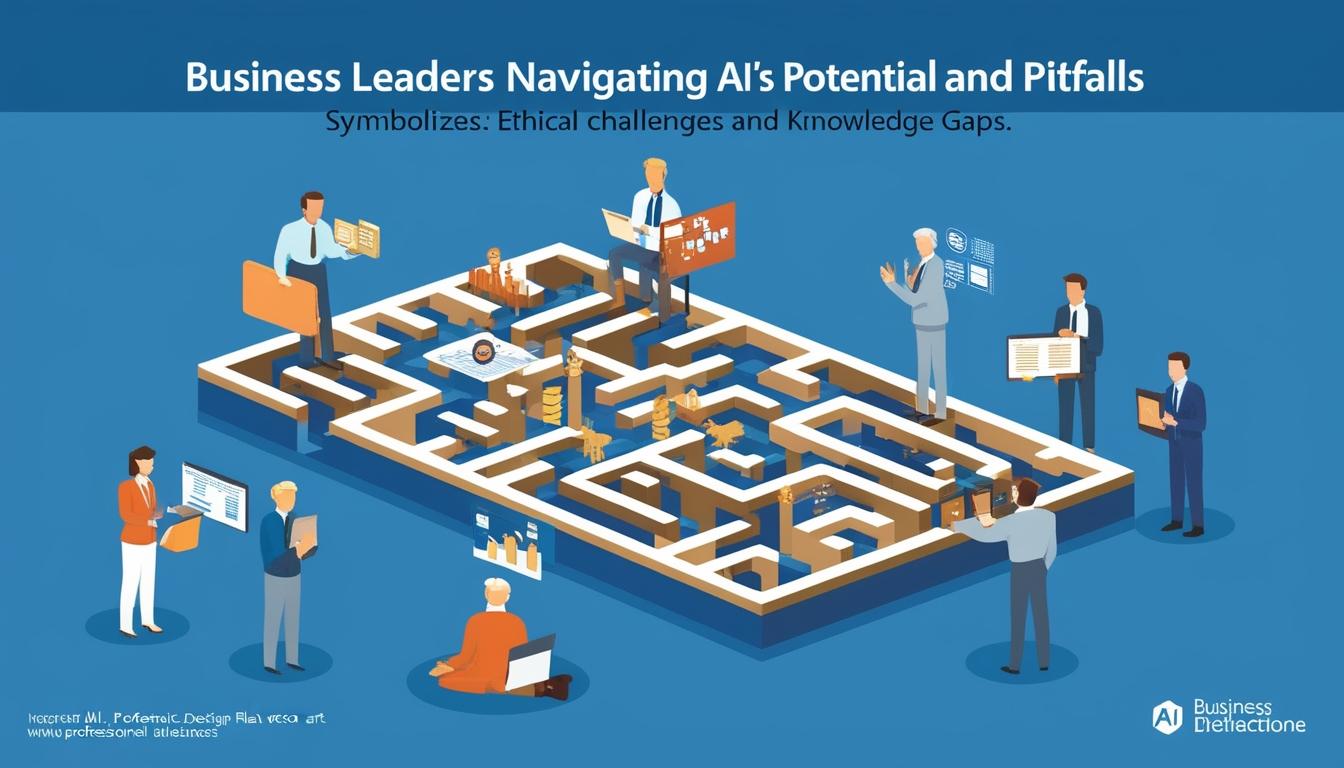
A new report reveals significant challenges for US business leaders in the responsible adoption of AI, highlighting gaps in literacy, ethical practices, and readiness.
Growing Concerns Over AI Literacy and Ethical Usage Among US Business Leaders
A recent report by Stibo Systems, a notable global leader in master data management, has unveiled significant challenges facing US business leaders regarding the responsible adoption of artificial intelligence (AI). Titled “AI: The High-Stakes Gamble for Enterprises,” the report highlights notable gaps in AI literacy, ethical usage, and organisational readiness among those at the helm of decision-making in various industries.
The findings, based on a survey of 500 US business leaders at the director level or higher, cut across diverse sectors including retail, consumer packaged goods, manufacturing, banking, insurance, and life sciences. Gustavo Amorim, the Chief Marketing Officer at Stibo Systems, emphasised the transformative potential of AI in automating business processes, delivering insights, and enhancing stakeholder engagement. However, he cautioned against the perils of embracing AI without establishing robust ethical and governance frameworks, warning that such an approach might jeopardise future prospects rather than ensure long-term success.
Key insights from the survey paint a concerning picture: a significant 32% of business leaders admitted to hastily adopting AI technologies. A more staggering revelation was that 58% of these leaders acknowledged lacking requisite training in AI ethics, with 86% expressing a keen desire for more comprehensive training on responsible AI usage.
Further survey outcomes indicated that 49% of business leaders confessed to being unprepared for using AI responsibly, thereby revealing a substantial readiness gap. This concern is compounded by the absence of bias mitigation practices in 79% of organisations, highlighting a neglect of one of AI’s critical ethical challenges. Additionally, the report pointed out that 54% of organisations have yet to implement new security measures in light of AI integration.
Amorim highlighted the importance of establishing trustworthy data sources, enforcing stringent security measures, and ensuring thorough AI literacy and bias training. He warned of the financial and reputational risks organisations might face without these protective measures and emphasised the need to address these gaps to harness the innovation and synergies AI offers effectively.
This report underscores the urgent need for business leaders to bridge the existing gaps in AI knowledge and ethical practice to navigate the rapidly evolving technological landscape responsibly and sustainably.
Source: Noah Wire Services






