









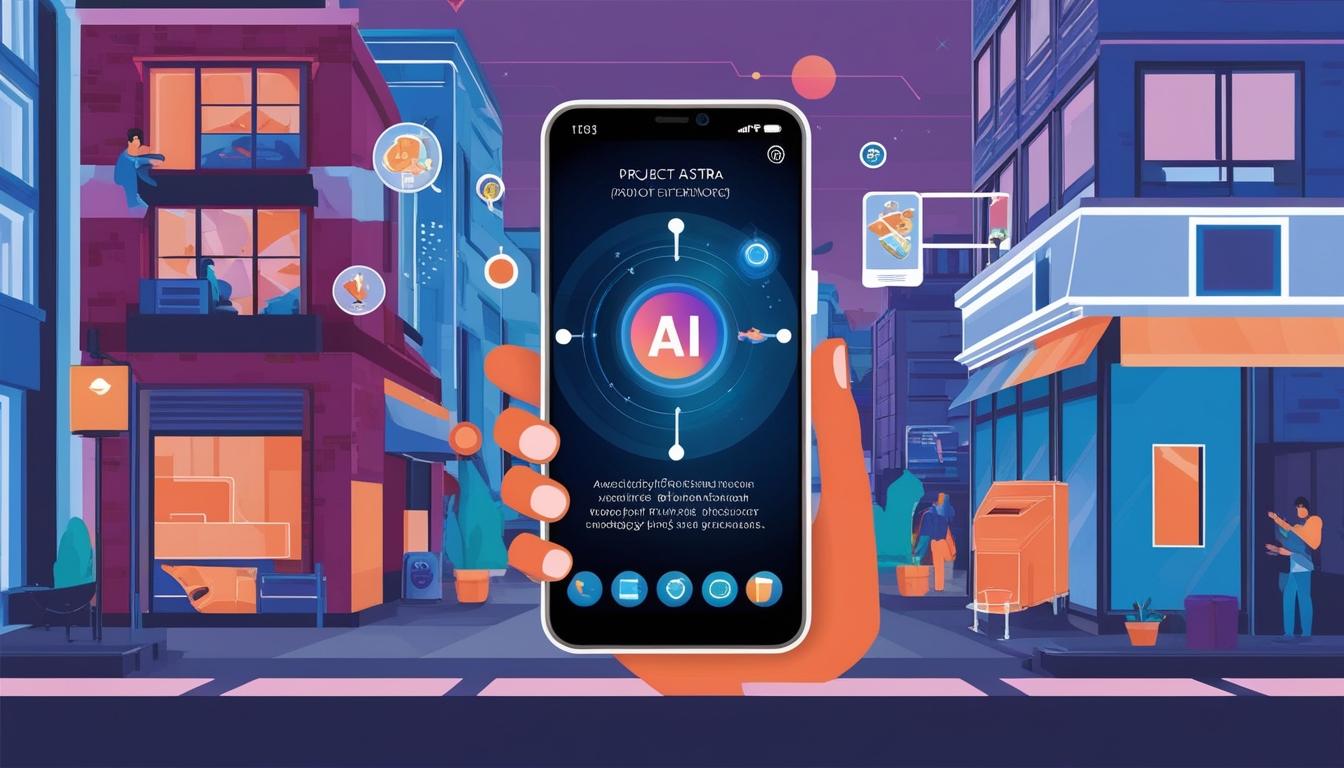
Google’s CEO Sundar Pichai announces that the highly anticipated Project Astra will not launch until at least next year, aiming for a transformative AI interaction experience by 2025.
Google has announced that its ambitious Project Astra will not see its technology released to the public until at least next year. This development was revealed during Google’s Q3 earnings call, where CEO Sundar Pichai outlined the company’s future aspirations for artificial intelligence (AI). Pichai noted that Project Astra represents a significant step towards creating experiences where AI can interpret and reason about the surrounding environment, aiming to deliver such experiences potentially as early as 2025.
Introduced at the Google I/O developer conference in May 2024, Project Astra includes an impressive array of technologies designed to transform the interaction between AI and real-world environments. These innovations range from smartphone applications that can identify and describe their surroundings to advanced AI assistants capable of executing tasks independently on behalf of users.
A demonstration of Astra was showcased through a pre-recorded segment during the I/O event. The prototype highlighted the project’s capabilities by showcasing a smartphone app that could answer questions about objects and locations visible to the device’s camera. For instance, it could identify the neighbourhood a user was in or explain components of a broken bicycle.
Despite earlier speculations reported by The Information that Google might launch a consumer-focused AI agent experience by December, these plans seem improbable unless separated from the Project Astra suite. The expected functionalities would allow users to automate activities such as purchasing products or booking travel plans, a seamless integration anticipated in future AI deployment strategies.
Google’s deliberate approach mirrors the broader industry context. For example, Anthropic, a leading competitor in generative AI, has also faced significant hurdles in developing AI agents that manage basic digital tasks. While Anthropic is among the first to produce a large generative AI model with the capability to control applications and browsers on a personal computer, it has encountered challenges highlighting the complexity of creating fully functional AI agents.
Project Astra is poised to be a major initiative within Google’s strategy to harness and expand AI capabilities. By taking the time to refine these technologies, Google appears committed to presenting a robust suite of AI solutions that can reliably address real-world challenges, providing a futuristic glimpse into the potential interplay between AI and daily life.
Source: Noah Wire Services






