









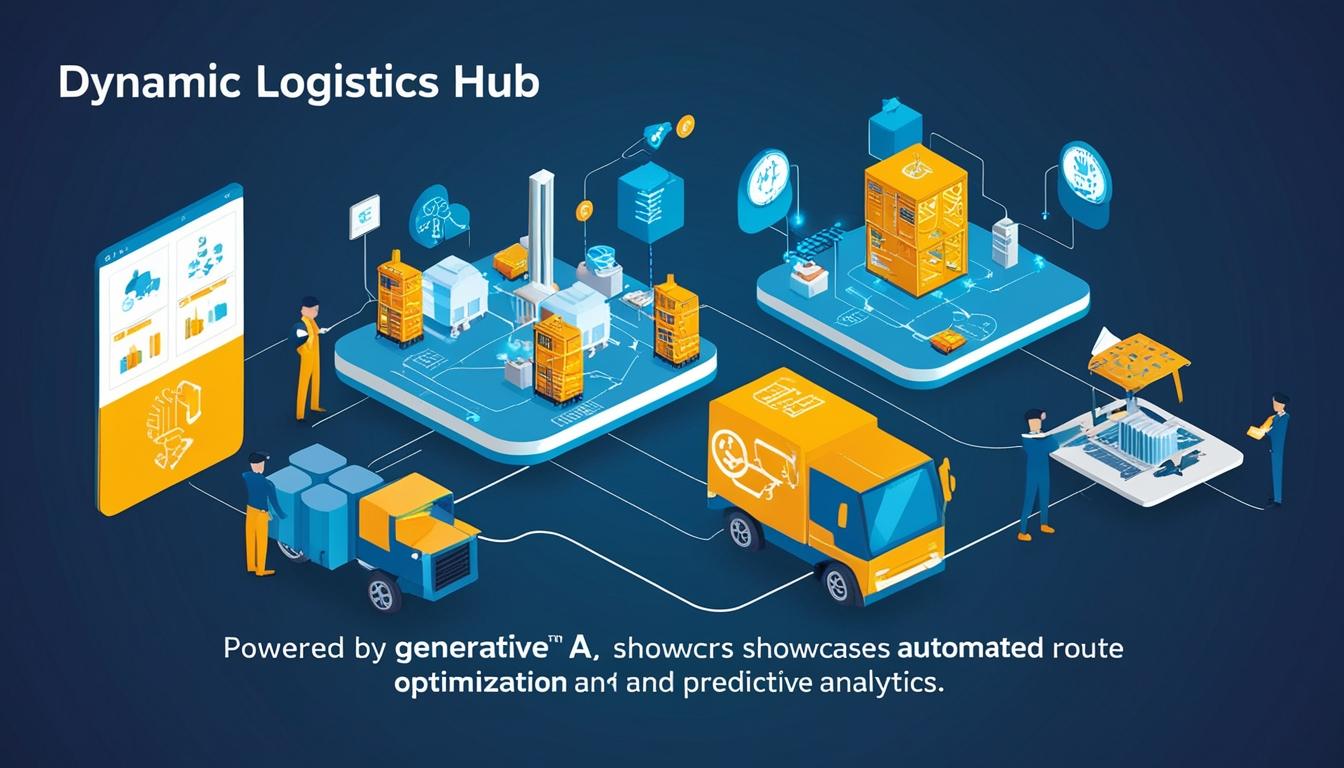
Amid supply chain disruptions, generative AI is reshaping logistics through predictive analytics and optimisation, driving investment and innovation across multiple industries.
Generative AI: Redefining the Logistics Landscape
In the wake of the COVID-19 pandemic, the logistics sector has come under unprecedented focus as businesses worldwide grappled with significant supply chain disruptions. A staggering 95% of Fortune 1000 companies experienced these interruptions, exposing deep vulnerabilities in traditional logistics frameworks that relied heavily on static forecasting and reactive measures. This turmoil has paved the way for generative AI to emerge as a critical tool, reshaping logistics operations through its dynamic capabilities.
Transformational Impact of Generative AI in Logistics
Generative AI is addressing the logistics industry’s multitudinous challenges by offering solutions centred around predictive analytics and optimisation. The technology employs deep learning algorithms to simulate countless scenarios, aiding in the optimisation of routes by factoring in real-time variables such as traffic, weather patterns, and port congestion. This proactive approach contrasts with the limitations of traditional systems, which struggle with the volatility inherent in supply chains today.
Moreover, generative AI enhances the precision of demand forecasting and inventory management. By analysing historical data, it anticipates demand trends, ensuring that stock levels are optimally maintained to prevent delays and shortages. Such advancements are crucial in mitigating operational bottlenecks that hinder logistical efficiency.
The Business Case for Investment
The push towards adopting generative AI is not merely a trend but a strategic necessity for many companies striving for operational excellence. A recent survey of 1,400 companies in October 2023 revealed that half have ramped up their investments in generative AI technologies. These enterprises are driven by the promise of significant cost reductions, improved delivery accuracy, and enhanced adaptability to global disruptions, whether they be pandemics, trade wars, or extreme climate events.
AI-driven logistics systems afford businesses the ability to process real-time data, automate crucial decision-making processes, and minimise errors. This automation liberates human resources, allowing teams to concentrate on strategic, higher-level tasks.
Diverse Industry Applications
The versatile nature of generative AI has spurred its adoption across multiple industries, each customised to its logistical needs:
-
E-commerce: Retail giants deploy AI to enhance last-mile delivery efficiency, providing faster and more economical service. Predictive models adjust for unexpected shifts in traffic or logistics challenges. By 2025, it’s anticipated that 80% of merchants will integrate AI into their logistics operations, doubling current figures.
-
Manufacturing: Here, AI optimises the procurement of raw materials and forecasts potential supply chain disruptions to uphold just-in-time delivery practices, thereby reducing overheads related to downtime and storage.
-
Healthcare: In this sector, AI ensures the timely distribution of medical supplies and pharmaceuticals. A significant portion of top pharmaceutical firms, about 75%, are already testing or planning to expand their use of AI to bolster logistical operations.
-
Automotive: The automotive sector employs AI to manage the complexities of global supply chains for component transportation. By 2035, AI is expected to generate an annual revenue of USD 300 billion within the industry, primarily through enhanced production forecasts and reduced inventory costs.
Growth and Market Prospects
The logistics market is poised for substantial growth, catalysed by the increasing demand for AI-driven solutions. Forty percent of supply chain organisations are already investing in generative AI, facilitated by advances in cloud computing, big data analytics, and machine learning. Major players like DHL and Amazon are leading the pack, with innovative startups developing niche solutions.
According to forecasts by Research Nester Analysts, the generative AI market in logistics is projected to reach USD 1.5 billion in 2024 and is expected to surpass USD 37 billion by 2037, reflecting a compound annual growth rate (CAGR) of over 33.5% from 2025 to 2037.
Geographical Adoption
Geographically, North America and Europe are at the forefront of generative AI adoption in logistics, driven by robust infrastructure and targeted sustainability goals. In the United States, 45% of individuals have already utilized generative AI, while in the UK, adoption stands at 29%. Meanwhile, the Asia-Pacific region is rapidly advancing, especially in e-commerce-dominant markets like China and Japan, where AI is pivotal in streamlining cross-border logistics. The Japanese AI market is poised to achieve a valuation of USD 918 million by 2025.
In conclusion, generative AI is proving to be a transformative force in the logistics sector, redefining routes, enhancing demand predictions, and automating decision-making processes. With growing investments and expanding applications across a multitude of industries, this technology is set to significantly reshape global supply chains in the coming years.
Source: Noah Wire Services






