









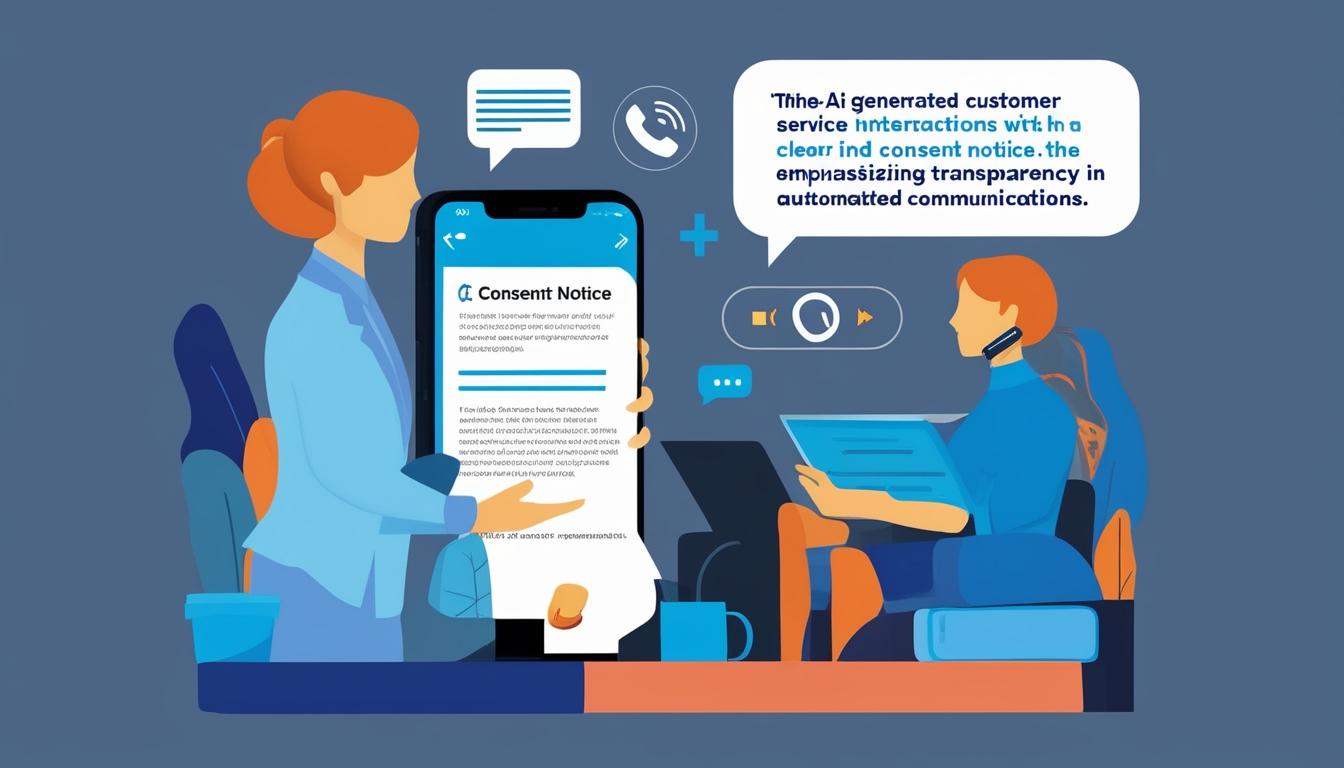
The Federal Communications Commission has proposed regulations requiring businesses to disclose AI usage in customer communications, necessitating explicit consent from clients.
The Federal Communications Commission (FCC) in the United States has introduced a proposed set of regulations aimed at businesses employing artificial intelligence (AI) in customer communications. This regulatory proposition mandates firms to include explicit AI disclosures in their customer consent agreements when reaching out through calls and texts. The move primarily targets enterprises that rely on AI-generated communications, which utilize computational technologies to process natural language in the operation of calls or texts.
The proposal compels businesses to acquire express written consent from customers, making them aware if AI, rather than human operators, generate the voice or content of these communications. The FCC insists that this consent should be both clear and conspicuous. Current customer consents, which may generally cover “automated” communications, will not suffice under the proposed regulations.
The anticipated rules are likely to present significant challenges to businesses, especially those that depend on standard technological solutions for customer interactions. The broad definition of AI-generated communication within the proposal may mean that a large swath of businesses utilizing AI in voice calls or text messaging could be impacted.
Non-compliance with these proposed rules could lead to severe financial penalties. Businesses could face fines amounting to $1,500 per call or text message that lacks the requisite consent, pointing towards a potentially substantial legal and financial exposure for those who fail to update their practices accordingly.
In light of these proposed changes, companies are advised to scrutinise and update their consent agreements and disclosure strategies. They must ensure that these documents explicitly cover the utilisation of AI in generating calls or texts. This precaution not only mitigates the risk of potential legal repercussions but is also cost-effective compared to the liabilities that non-compliance might incur.
Additionally, businesses are encouraged to evaluate their communication systems to ensure the capability for incorporating AI-generated disclosures. The evolving regulatory framework suggests that retroactive application of the rule might necessitate securing new consents for operations conducted under previous agreements.
As the technological landscape continues to evolve with AI at the forefront, maintaining awareness and adapting to these regulatory changes will prove vital for businesses striving to remain compliant and avoid litigation while still harnessing AI’s advantages in communicating with customers.
This initiative showcases the FCC’s focus on ensuring consumer awareness and protection in an increasingly automated and technologically advanced communication environment.
Source: Noah Wire Services






