









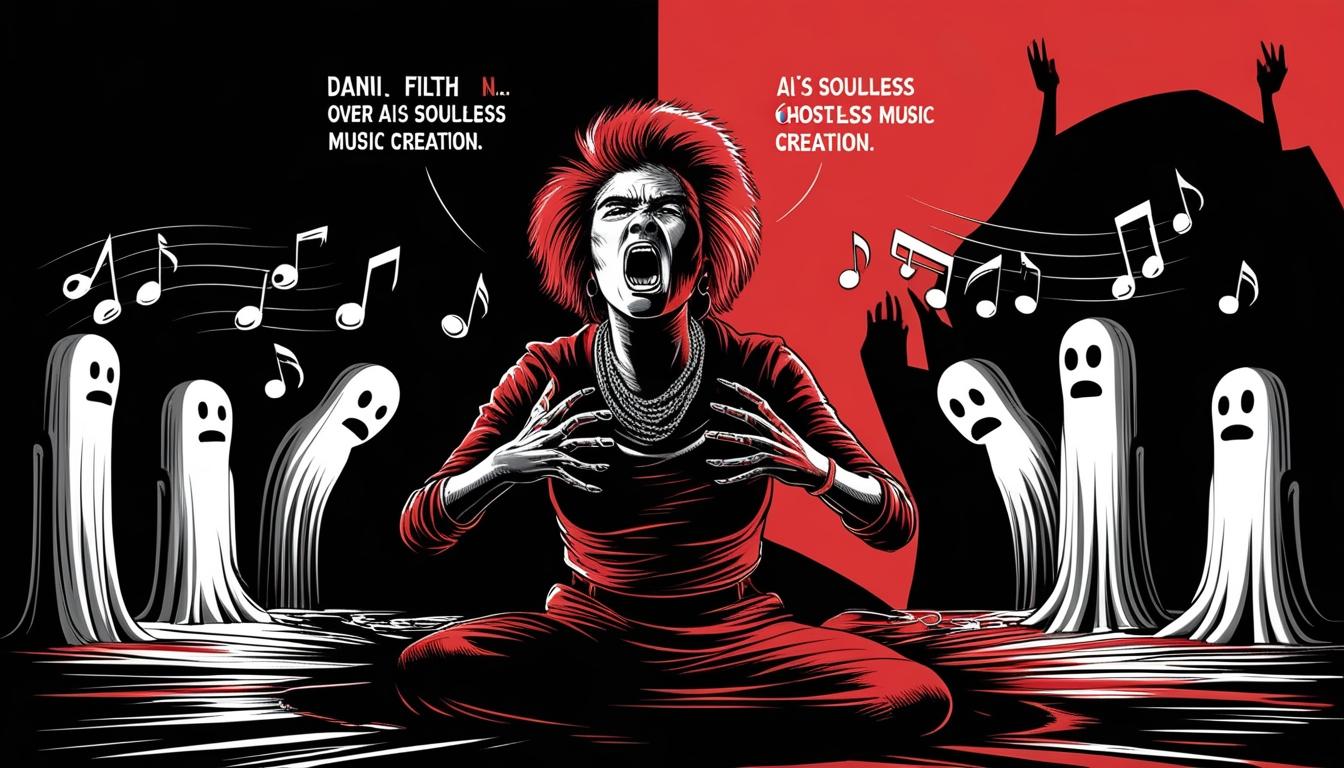
The frontman of Cradle of Filth expresses worries about artificial intelligence in music creation, describing it as a potential threat to human artistry and connection.
In a recent discussion surrounding the impact of artificial intelligence (AI) on music creation, Dani Filth, the frontman of the British extreme metal band Cradle of Filth, expressed strong concerns about the evolving technology. During an interview with Spain’s Metal Journal, Filth highlighted his apprehension about the use of AI in artistic fields, reflecting on a personal experience that underscored the potential dangers of such advancements.
Filth recounted a visit to a friend who is a computer programmer, during which he was introduced to an innovative music programme capable of generating songs in a matter of minutes. He described his initial encounter with this technology as unsettling, noting that it could produce music based on simple prompts regarding genre, lyrics, and visual concepts. “You could literally just type in what kind of music you wanted, and five minutes later, you had a song,” he stated. However, he characterised the outcome as “soulless,” arguing that the process of AI creation merely repackages vast amounts of existing data without the depth and emotion inherent in human artistry.
Filth expanded on his concerns, pointing out that the rapid productivity of AI could usurp the efforts of artists who dedicate considerable time and creativity to their work. “A band that spends a year writing an album is at a disadvantage to these algorithms that create music almost instantaneously,” he noted. According to him, the capabilities of AI extend beyond music and art, potentially affecting all areas of life, particularly once integrated with robotics that could physically perform artistic tasks.
While acknowledging that AI might offer some benefits, such as assisting disabled individuals or easing certain historical research processes, Filth maintained that its overall impact poses a threat to human creativity and connection. He voiced a belief that the convenience of digital consumption—exemplified by the ease of accessing music online—has diminished the spiritual engagement that traditional music discovery once provided. “There was something very spiritual about spending the time drifting from shop to shop looking for an album,” he remarked, indicating a longing for a more immersive experience in music appreciation.
Moving away from the topic of AI, Filth also shared insights about Cradle of Filth’s forthcoming album, with a new single titled “Malignant Perfection” recently released. The anticipated album is due to be unveiled in spring 2024 through Napalm Records. Filth expressed confidence in the reception of the new material, describing it as an evolutionary step for the band. He assured fans that the album would blend nostalgic elements with modern influences, affirming its connection to the band’s extensive musical history while charting a new course.
In addition, he reflected on the band’s recent live album, “Trouble And Their Double Lives,” which was released last year, marking their first live record in over two decades. This compilation features performances recorded across multiple continents during the band’s “Cryptoriana” world tour and includes both fan favorites and new tracks.
Dani Filth’s vocal stance on AI in music raises pressing questions about the intersection of technology and artistry, particularly as the music industry continues to evolve in an increasingly digital landscape.
Source: Noah Wire Services
- https://www.mi.edu/in-the-know/ai-music-production-enhancing-human-creativity-replacing/ – Corroborates the ability of AI to quickly generate new musical ideas and variations, and the potential for AI to enhance human creativity in music production.
- https://time.com/6340294/ai-transform-music-2023/ – Supports the use of AI in music production for tasks like correcting vocal pitch, mixing and mastering recordings, and generating music based on text prompts.
- https://www.ohio.edu/news/2024/04/how-ai-transforming-creative-economy-music-industry – Details how AI is used to generate content in seconds, synthesize sound-alike vocals, and separate elements on the same track, as well as concerns about AI-generated music overwhelming the market.
- https://www.mi.edu/in-the-know/ai-music-production-enhancing-human-creativity-replacing/ – Addresses the concern that AI could replace human musicians and producers, and the importance of human skill and experience in music production.
- https://time.com/6340294/ai-transform-music-2023/ – Discusses the potential for AI to create music that lacks emotional depth and nuance, and the ethical concerns around training AI models on creators’ works without permission.
- https://www.ohio.edu/news/2024/04/how-ai-transforming-creative-economy-music-industry – Highlights the use of AI by major artists like The Beatles to restore and create new music, and the impact of AI on the volume of music released daily.
- https://www.dataart.com/blog/ai-in-the-music-industry-transforming-music-production-discovery-and-data-by-sergey-bludov – Explains how AI music generators empower artists to test ideas and automate recordings, enhancing their focus on creativity.
- https://time.com/6340294/ai-transform-music-2023/ – Mentions the use of AI to summon the voices of deceased artists and the ethical implications of such technology.
- https://www.mi.edu/in-the-know/ai-music-production-enhancing-human-creativity-replacing/ – Describes how AI can personalize the listening experience by creating customized tracks based on user preferences and biometric data.
- https://www.ohio.edu/news/2024/04/how-ai-transforming-creative-economy-music-industry – Discusses the impact of AI on the discovery of new music and the challenges faced by new artists in standing out in a crowded market.
- https://www.dataart.com/blog/ai-in-the-music-industry-transforming-music-production-discovery-and-data-by-sergey-bludov – Supports the idea that AI can assist in various aspects of music production, from idea generation to final recording, while emphasizing the importance of human creativity.






