









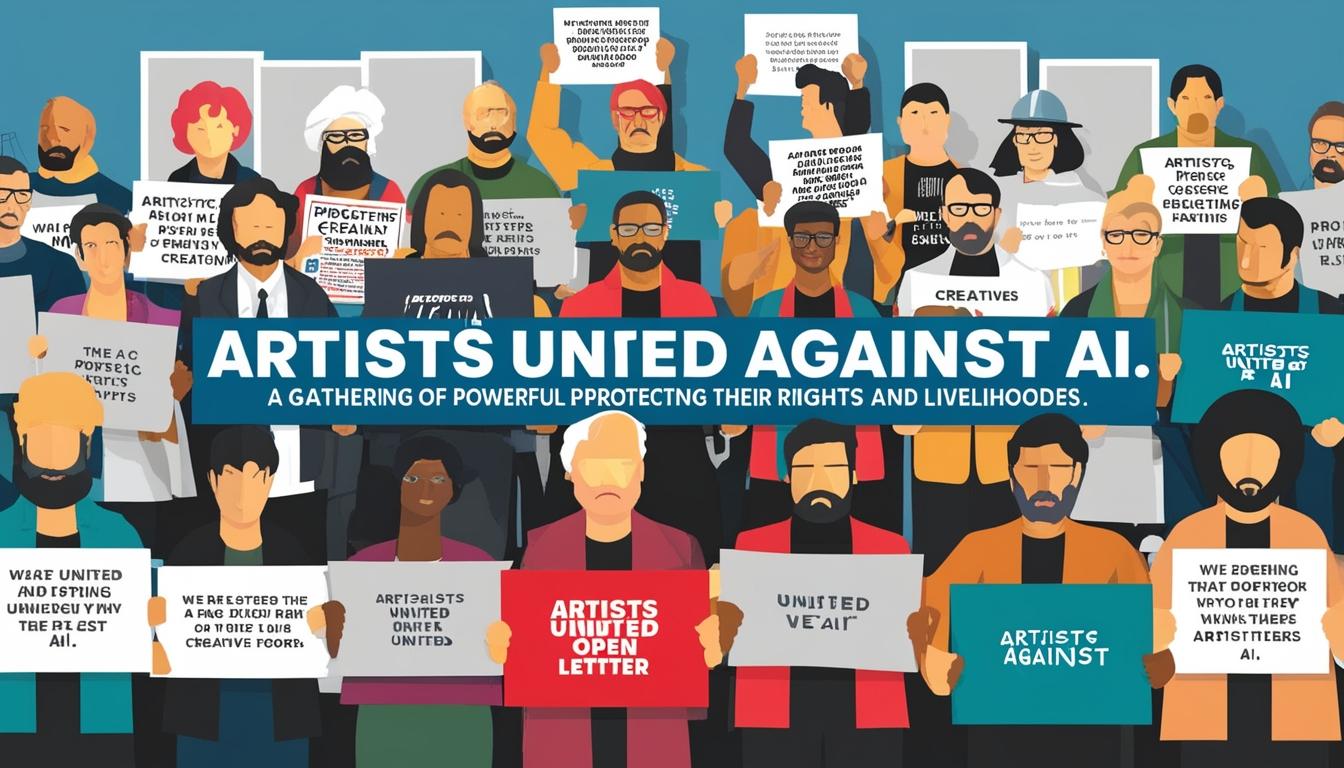
A coalition of 13,500 creatives, including members of Radiohead and notable actors, expresses concern over the unlicensed use of their work in AI training, highlighting the threat to their livelihoods and artistic rights.
A coalition of 13,500 creatives has come together to voice their concerns over the unlicensed usage of their work in the training of artificial intelligence (AI) systems. This statement has attracted signatures from a broad spectrum of the creative industry, including the notable presence of Radiohead members Thom Yorke, Ed O’Brien, Jonny Greenwood, Colin Greenwood, and Philip Selway. The list further includes prominent musicians such as Nitin Sawhney, ABBA’s Björn Ulvaeus, Hot Chip’s Joe Goddard, The Cure’s Robert Smith, Jamiroquai’s Jason Kay, AURORA, Max Richter, and Billy Bragg.
The document, titled “Statement on AI Training,” highlights what the signatories perceive as a significant and unjust threat posed by unlicensed AI usage to their livelihoods. They assert that this practice should not be allowed, as it infringes upon the rights of creators.
Beyond the music industry, the document has garnered support from high-profile actors like Julianne Moore and Kevin Bacon, as well as celebrated novelists Sir Kazuo Ishiguro and Sir Ian Rankin, among others. These artists have rallied together in response to ongoing legal disputes regarding the use of creative works for AI training, specifically citing platforms like ChatGPT, which have been accused by some of encroaching on copyright laws.
Ed Newton-Rex, a former AI executive and current composer who organised the open letter, expressed to The Guardian the palpable anxiety amongst creatives who depend on their work for their income. He outlined the vast financial investments AI companies are willing to make in terms of personnel and computational resources, hinting at figures that can soar to a billion dollars. However, these organisations often overlook compensating the very creators whose works are utilised as data.
Newton-Rex highlighted the depersonalisation inherent in referring to creative outputs simply as “training data,” stressing that these are, in fact, individuals’ artistic outputs such as writing, art, and music.
An earlier study conducted by APRA AMCOS, a music rights organisation, underscores the widespread apprehension among artists about AI’s evolving role in the music industry. This research, encompassing the views of 4,200 artists across Australia and New Zealand, is acclaimed as the most extensive of its kind. It revealed that a staggering 82% of artists harbour concerns regarding AI, and that by 2028, up to 23% of their revenue could potentially be jeopardised by advancements in generative AI.
The statement has ignited discussions regarding the future landscape of the creative industry amidst technological advancements, bringing to the forefront the need for a balance between innovation and the protection of artistic endeavours.
Source: Noah Wire Services






