









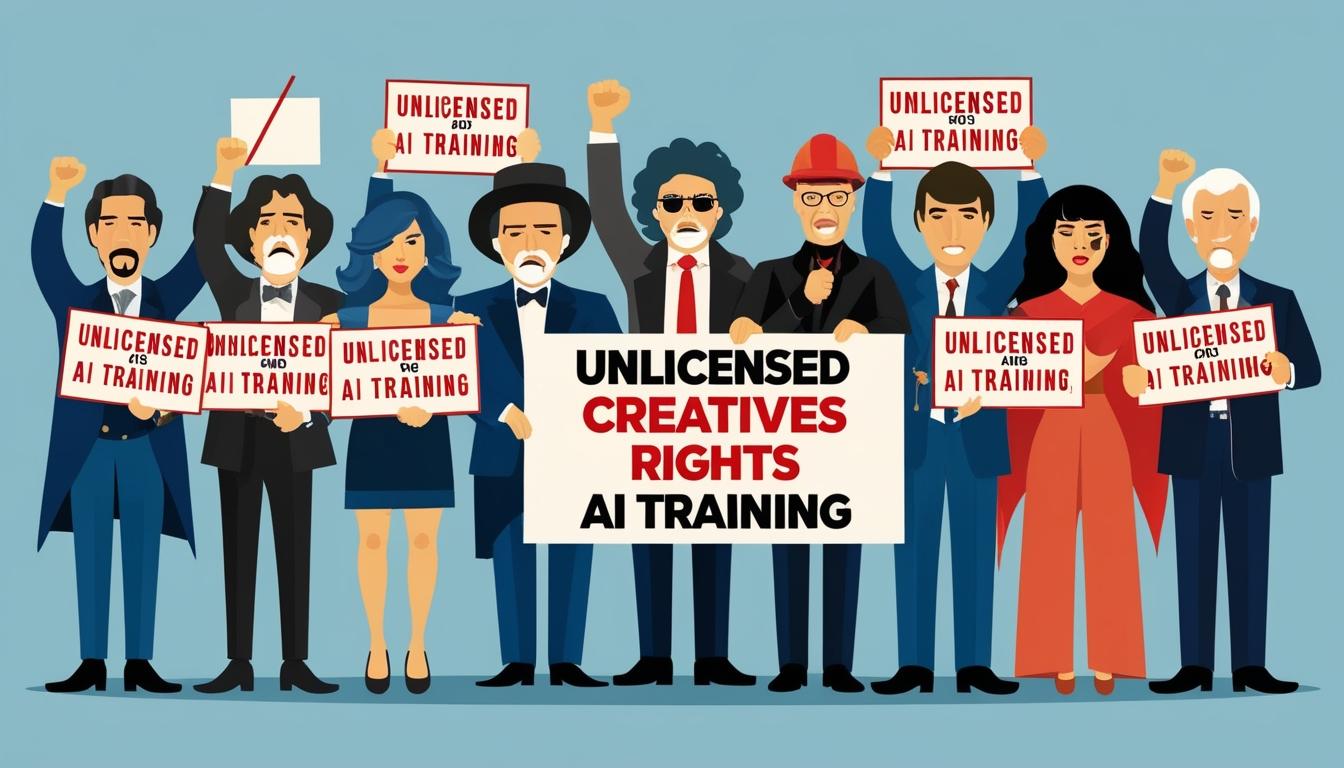
A coalition of musicians, actors, and authors, including Thom Yorke and Björn Ulvaeus, is protesting the unlicensed use of their work to train AI models, urging for stronger copyright protections.
A coalition of prominent figures from the creative industries, including renowned musicians and actors, has united to express their opposition to the unlicensed use of their work in training artificial intelligence (AI) models. This movement has brought together influential voices such as Radiohead’s Thom Yorke and ABBA’s Björn Ulvaeus. The statement they signed denounces the practice as a significant and inequitable threat to the livelihoods of creators, declaring that it must not be allowed to continue.
The collective protest also includes notable figures from various artistic fields, such as musicians Billy Bragg and Robert Smith, actors Kevin Bacon and Julianne Moore, and authors Kazuo Ishiguro and Ann Patchett. Altogether, the statement has garnered the support of 11,500 signatories from music, film, theatre, and literary communities, all advocating for stringent copyright protections.
The controversy stems from ongoing legal and ethical debates around the use of creative works to train AI models, including the likes of ChatGPT. The creators argue that their intellectual property is being utilised without permission or compensation, a practice they view as grossly unfair given the commercial benefits AI companies reap.
Ed Newton-Rex, a British composer and former AI executive, led the organisation of the statement and has spoken on behalf of the creatives’ concerns. He emphasised the disproportionate investment AI companies make, spending vast amounts on personnel and computational power but expecting creative data to be freely available. He elaborated that this expectation places an unfair burden on creators, whose works underpin the development of these AI systems.
Support for the statement has come from various sectors of the creative industry, with Gee Davy, interim CEO for the Association of Independent Music, echoing calls for robust copyright protections. Davy highlighted the importance of ensuring a sustainable future for all those involved in the creation, investment, and distribution of music across different genres and communities within the UK.
Industry stalwarts have consistently voiced their apprehensions about the intersection of AI and creative expression. Notably, musician Nick Cave criticised the incorporation of AI in music as deeply troubling, while Peter Hook, former bassist of Joy Division and New Order, was less reserved with his disdain, declaring AI-generated songs as inferior.
This emerging consensus highlights the tension between technological innovation and the protection of creative rights. As AI technologies continue to evolve, the dialogue among creators, legal bodies, and tech companies will likely intensify, as stakeholders strive to balance artistic integrity with technological advancement.
Source: Noah Wire Services






