









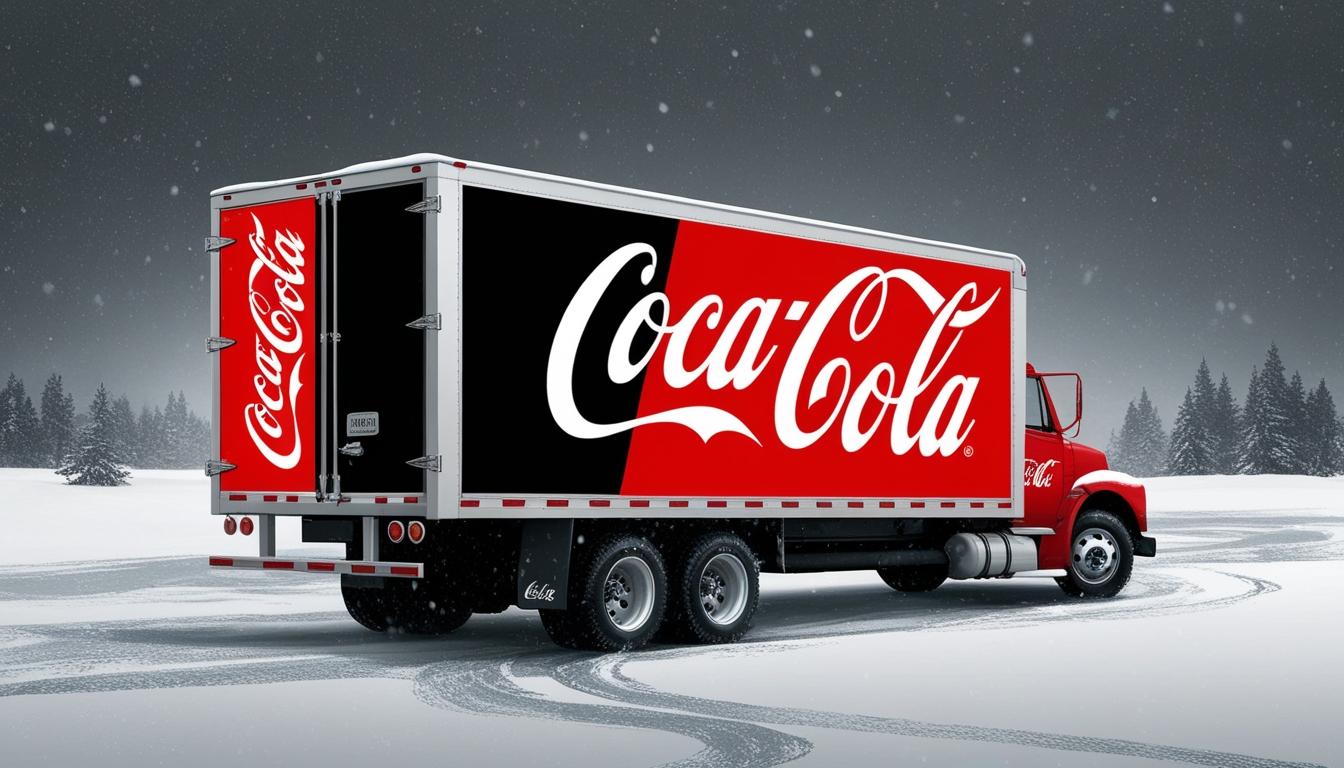
Coca-Cola’s latest holiday campaign, crafted entirely with artificial intelligence, has provoked significant consumer backlash, reigniting the debate on creativity versus automation.
Coca-Cola has launched its latest iteration of the “Holidays are coming!” advertising campaign, a staple since 1995, which debuted on November 18. However, this year, the company’s decision to create the advertisement entirely using artificial intelligence (AI) has sparked significant backlash among consumers and creatives alike.
The advertisement, which features the company’s signature red trucks against festive backdrops, was released on Coca-Cola’s official YouTube channel. The move to use AI in crafting this iconic holiday campaign has not been well received, with many viewers taking to social media to express their disappointment. One Reddit user succinctly summed up the sentiment with, “Thanks, I hate it … it certainly lacks the heart and charm of some of their past holiday bear ads.” Others echoed similar sentiments, labelling the advert as “soulless,” “boring,” and “cheap,” with critics pointing out that Coca-Cola, a highly profitable company, could afford to hire artists instead of opting for automated solutions.
Alex Hirsch, the creator of the animated series “Gravity Falls,” voiced his concerns via post on X, stating, “FUN FACT: @CocaCola is ‘red’ because it’s made from the blood of out-of-work artists!” This sentiment highlights an emerging cultural debate surrounding the intersection of technological advancement and creative integrity.
Coca-Cola’s choice to harness AI for this advertisement was defended by a company spokesperson in an interview with the New York Times. The spokesperson emphasised Coca-Cola’s long-standing tradition of celebrating the magic of the holidays in digital form, stating that this year’s film represents a collaboration between human storytellers and the innovative capabilities of generative AI.
Pratik Thakar, Coca-Cola’s vice president and head of generative AI, elaborated on the motivations behind the decision in an interview with Ad Age. He articulated that leveraging AI enables the company to combine the essence of its traditional campaigns with the advancements of contemporary technology, ultimately allowing for greater speed and flexibility in production. “More than cost, it’s the speed … And then you can do more,” he remarked, suggesting that this approach maximises resources effectively.
However, the backlash surrounding the advert touches on broader ethical and moral concerns regarding the use of AI in creative sectors. Industry experts and spectators alike are questioning the implications of utilising AI automation in art and media, especially as AI’s capabilities increasingly replace traditional artistic processes. The controversy raises critical discussions about how technology should be applied in creative fields, balancing innovation with the rights and livelihoods of artists.
The controversy is not isolated to Coca-Cola. Various sectors, including film and television, have witnessed similar criticisms in recent months. A notable example includes Disney’s choice to use AI-generated images in the credits of their series “Secret Invasion,” provoking frustration among audiences who anticipated traditional artistry. Such decisions have raised alarms regarding the potential erosion of creative jobs within the industry.
The debate intensified with the Netflix true crime documentary “What Jennifer Did,” which allegedly included AI-generated imagery of the subject, Jennifer Pan. While executive producer Jeremy Grimaldi has denied claims that the images were AI-generated, inconsistencies representative of such technology were evident in the visuals, prompting rigorous scrutiny. Critics pointed out that creators hold a fundamental responsibility to depict narratives with authenticity, especially in genres that require a commitment to factual storytelling.
This growing discontent towards AI-generated imagery is compounded by concerns surrounding authenticity, job security for artists, and the ethical ramifications of AI use. Observers argue that the incorporation of AI can often strip away the emotional resonance that characterises genuine artistic expression. The increasing preference for human touch in media has underscored a consensus that while AI can assist in storytelling, it cannot replicate the depth and nuance inherent in authentic artistry.
In summary, Coca-Cola’s latest holiday campaign reflects a pivotal moment in the dialogue surrounding AI in creative industries. As the conversation continues to evolve, it becomes clear that navigating the balance between embracing new technologies and preserving the integrity of artistic expression will require careful consideration from all stakeholders involved.
Source: Noah Wire Services
- https://www.youtube.com/watch?v=E3-J0MwvBSI – Coca-Cola’s AI-generated holiday ad, ‘Unexpected Santa,’ and the collaboration with AI studios like Wild Card, Secret Level, and Silverside AI.
- https://www.adweek.com/creativity/how-coca-colas-ai-holiday-ad-went-from-praise-to-rage/ – The initial positive reception and subsequent backlash of Coca-Cola’s AI-powered holiday ad, including criticisms about the loss of human connection and creative integrity.
- https://www.adweek.com/creativity/ai-ad-snafus-so-far/ – The controversy surrounding Coca-Cola’s AI holiday ad, including concerns about AI replacing human jobs and the negative emotional response from the audience.
- https://www.adweek.com/creativity/how-coca-colas-ai-holiday-ad-went-from-praise-to-rage/ – Coca-Cola’s defense of using AI, emphasizing the collaboration between human storytellers and generative AI, and the company’s commitment to combining traditional campaigns with contemporary technology.
- https://www.adweek.com/creativity/ai-ad-snafus-so-far/ – The broader ethical and moral concerns about the use of AI in creative sectors, including the potential erosion of creative jobs and the loss of human connection in media.
- https://www.adweek.com/creativity/how-coca-colas-ai-holiday-ad-went-from-praise-to-rage/ – Industry experts’ and spectators’ questions about the implications of using AI automation in art and media, and the need to balance innovation with the rights and livelihoods of artists.
- https://www.adweek.com/creativity/ai-ad-snafus-so-far/ – Similar criticisms in other sectors, such as Disney’s use of AI-generated images in ‘Secret Invasion’ and the controversy surrounding AI-generated imagery in Netflix’s ‘What Jennifer Did’.
- https://www.adweek.com/creativity/how-coca-colas-ai-holiday-ad-went-from-praise-to-rage/ – The debate on the authenticity and emotional resonance of AI-generated content compared to traditional artistic expression.
- https://www.adweek.com/creativity/ai-ad-snafus-so-far/ – The growing discontent towards AI-generated imagery and the ethical ramifications of AI use in creative fields.
- https://www.adweek.com/creativity/how-coca-colas-ai-holiday-ad-went-from-praise-to-rage/ – The importance of preserving the integrity of artistic expression while embracing new technologies, as highlighted by the ongoing dialogue surrounding AI in creative industries.






