









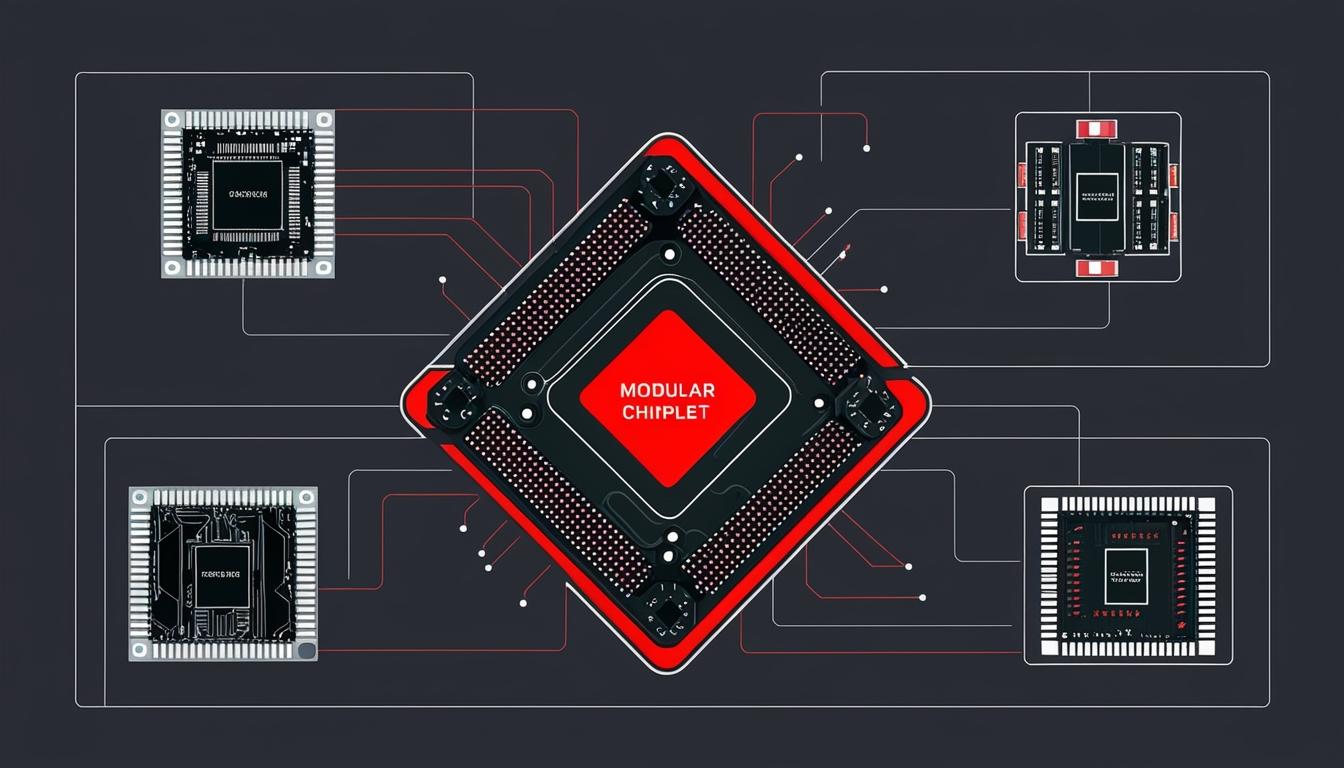
The shift from monolithic system-on-chip designs to modular chiplets is set to transform the semiconductor industry, meeting rising computing demands by 2025.
In the evolving realm of semiconductor technology, the transition from traditional monolithic system-on-chip (SoC) designs to a more modular approach using chiplets is contributing significantly to a transformative shift in the industry. As businesses and developers prepare for the landscape of 2025, the introduction of chiplet architectures is emerging as a key solution to accommodate the soaring computing demands that have arisen from advanced technological applications.
Recently, it has become evident that monolithic SoC designs are facing substantial limitations. These constraints are primarily due to the diminishing returns of Moore’s Law, as traditional scaling encounters physical barriers within silicon manufacturing. Consequently, increasing complexity in design and lengthy timeframes to market are pushing the semiconductor industry to consider chiplets as a viable alternative.
The chiplet model decentralises SoC components into smaller dies, allowing designers to optimise each element for the most suitable fabrication process. This approach not only enhances design flexibility but also mitigates development costs and accelerates the introduction of new products to the market. As chiplet integration matures, standardisation, such as the Universal Chiplet Interconnect Express (UCIe), is becoming commonplace, allowing for greater collaboration among various vendors and thus encouraging customisation that meets diverse market needs.
A notable achievement in the field is the recent design and tape-out of Cadence’s first Arm-based system chiplet, which signifies a major advancement in chiplet-based integration. This development, conducted in partnership with Arm, illustrates how multiple chiplet dies can be effectively incorporated into a single package. Key features of this chiplet include the integration of processors alongside system and memory intellectual property (IP), utilising the UCIe interface to promote efficient data handling. The impact of this achievement is expected to resonate across multiple sectors, including automotive, high-performance computing, and data centres.
In the automotive sector, Cadence’s strategic partnerships with prominent organisations like Arm and imec are pivotal in fostering a dynamic chiplet ecosystem. The collaboration with Arm has led to the creation of a chiplet-based reference design and software development platform, which is specifically designed to expedite the integration of chiplet technology in software-defined vehicles. This initiative addresses critical challenges linked to interoperability while aiming to stimulate a collaborative atmosphere that encourages innovative approaches to automotive chip development.
Furthermore, by joining imec’s automotive chiplet program, Cadence is poised to tackle significant engineering challenges surrounding data management, processing, storage, and security in automotive electronics. The program is focused on promoting a scalable and modular design methodology through chiplets, which could revolutionise the efficiency of automotive electronics.
As the semiconductor industry approaches 2025, the rise of chiplets is expected to initiate a profound transformation in design practices and operational strategies. This architectural shift not only presents numerous benefits, such as improved efficiency and cost-effectiveness but also lays the groundwork for a new era of semiconductor innovation across various industries.
The advancements and collaborative efforts within the chiplet domain collectively signify a forward leap toward reshaping semiconductor technology. With the continued embrace of this modular approach, the semiconductor sector is on the brink of a revolution that promises to yield significant opportunities for growth and technological innovation.
Source: Noah Wire Services
- https://en.wikipedia.org/wiki/Chiplet – Explains the concept of chiplets, their advantages over traditional monolithic SoC designs, and their ability to be combined on an interposer.
- https://www.synopsys.com/glossary/what-are-chiplets.html – Describes how chiplets break down functionalities into smaller, specialized dies, enhancing flexibility, efficiency, and scalability in chip design.
- https://resources.pcb.cadence.com/blog/2023-all-about-chiplet-technology – Details the benefits of chiplet technology, including reduced development timelines, improved performance, and reduced power consumption.
- https://semiengineering.com/knowledge_centers/packaging/advanced-packaging/chiplets/ – Discusses the concept of chiplets as a disaggregation of the system on chip, using heterogeneous integration and advanced packaging techniques.
- https://research.ibm.com/blog/what-are-computer-chiplets – Explains how chiplets can be used to break apart complex-function chips into smaller, more manageable parts, and the benefits of this approach.
- https://en.wikipedia.org/wiki/Chiplet – Mentions the standardization efforts such as UCIe, which allows for greater collaboration among vendors and encourages customization.
- https://resources.pcb.cadence.com/blog/2023-all-about-chiplet-technology – Describes Cadence’s involvement in chiplet technology, including the development of chiplet-based systems and their impact on various sectors.
- https://semiengineering.com/knowledge_centers/packaging/advanced-packaging/chiplets/ – Details the collaborative efforts and partnerships, such as those between Cadence, Arm, and imec, in fostering a dynamic chiplet ecosystem.
- https://www.synopsys.com/glossary/what-are-chiplets.html – Highlights the challenges and opportunities in the automotive sector with the adoption of chiplet technology, including data management and processing.
- https://resources.pcb.cadence.com/blog/2023-all-about-chiplet-technology – Explains how the modular design methodology through chiplets can revolutionize the efficiency of automotive electronics.
- https://research.ibm.com/blog/what-are-computer-chiplets – Discusses the future implications of chiplet technology, including improved efficiency, cost-effectiveness, and the potential for significant growth and innovation in the semiconductor sector.






