






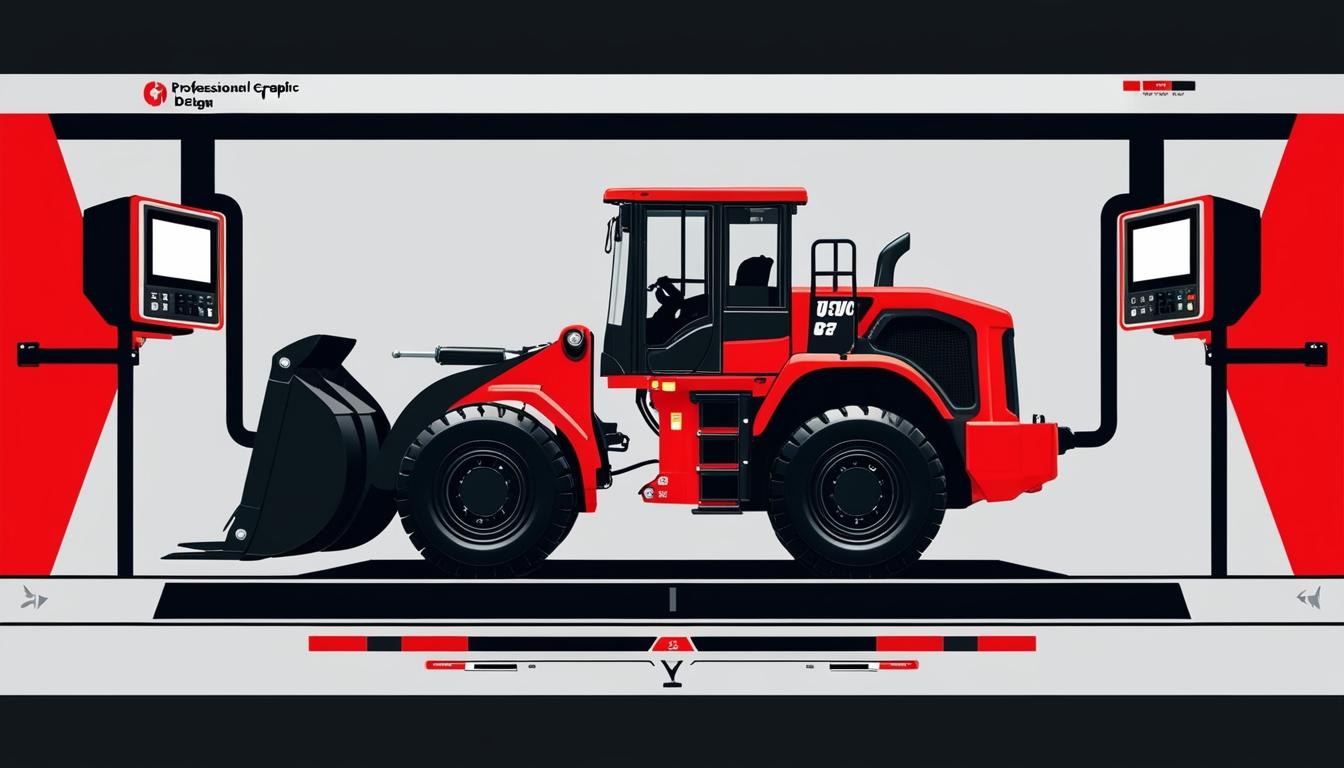
Caterpillar extends its semi-autonomous Cat Command technology to mid-sized wheel loaders, enhancing safety and efficiency in various operational environments.
Caterpillar, a leading manufacturer in the construction and heavy equipment sector, has recently made significant strides in the arena of artificial intelligence automation with its extension of the Cat Command semi-autonomous technology to mid-sized wheel loaders, announced in mid-November. This innovative move allows operators to control these machines from a remote location, enhancing both efficiency and safety in various operational environments.
The Cat Command technology is designed to facilitate the operation of heavy machinery from a control console equipped with video screens, thereby eliminating the necessity for operators to physically occupy the vehicle’s cab. This feature proves especially beneficial in hazardous scenarios where traditional cab operation may pose risks to the operator’s safety. As Caterpillar emphasised in their announcement, the system aims to maintain a high level of productivity while ensuring the comfort and security of the operator, particularly in demanding sectors such as demolition, environmental remediation, stevedoring, and logistics involving bulk materials like fertilisers, wood chips, and sawdust.
A standout characteristic of the Cat Command system is its versatility. It can be operated on a line-of-sight basis, where the operator remains within visual contact of the machine, or remotely, enabling control from potentially miles away. This capability reflects a broader trend in automation technologies that prioritises not only operational efficiency but also adaptability to various job site configurations.
The installation of the Cat Command system is designed to integrate effortlessly with the existing electrical and hydraulic systems of the wheel loader, allowing for quick input responses. This seamless integration facilitates operators’ easy transitions between remote command and traditional in-cab operation, showcasing a hybrid model that could redefine heavy machinery deployment across different sectors.
Safety remains a paramount concern in the development of this technology. Integrated safety features include mechanisms that halt all wheel loader movements under critical conditions, such as upon activation of the emergency stop switch, loss of wireless communication, detection of a severe fault, or if the command console is tilted beyond a specified angle. These safeguards ensure that remote operation does not compromise safety standards.
Furthermore, the Command for Loading station extends operational capabilities by enabling users to control multiple machines, either from the same job site or different locations. This feature represents a pivotal shift in how businesses can approach the utilisation of heavy equipment, allowing more efficient resource management and maximising productivity even in challenging environments.
As industries continue to evolve towards greater automation, Caterpillar’s initiatives offer a glimpse into the future of AI-enabled machinery operation, highlighting the potential impacts on business practices and operational efficiencies across various sectors. With automation technology gaining momentum, businesses may find themselves increasingly reliant on such innovations to enhance their operational frameworks.
Source: Noah Wire Services
- https://www.cat.com/en_US/news/machine-press-releases/cat-command-for-loading-now-available-for-cat-medium-wheel-loaders.html – This link corroborates the expansion of Cat Command for Loading to medium wheel loaders, excluding GC models, and highlights the semiautonomous remote control feature to increase operating safety.
- https://www.ivtinternational.com/news/caterpillar-expands-cat-command-for-loading-availability.html – This link supports the information about Cat Command for Loading expanding to all medium wheel loaders, and details the safety features and operational capabilities of the system.
- https://www.aggbusiness.com/news/caterpillar-widens-its-cat-command-loading-offer – This link explains the semi-autonomous remote control of wheel loaders, the integration with existing systems, and the safety features that halt machine movements under critical conditions.
- https://www.agg-net.com/news/cat-command-for-loading-expanded-to-medium-wheel-loaders – This link confirms the expansion of Cat Command for Loading to medium-size wheel loaders from Cat 950 to Cat 982 and highlights the system’s ability to control multiple machines.
- https://www.ivtinternational.com/news/caterpillar-expands-cat-command-for-loading-availability.html – This link details the operational environments where Cat Command for Loading is beneficial, such as demolition, environmental remediation, and handling bulk materials.
- https://www.aggbusiness.com/news/caterpillar-widens-its-cat-command-loading-offer – This link explains the versatility of the Cat Command system, including line-of-sight and non-line-of-sight configurations, and its integration with other Cat Command offerings.
- https://www.cat.com/en_US/news/machine-press-releases/cat-command-for-loading-now-available-for-cat-medium-wheel-loaders.html – This link highlights the ergonomic console and basic machine controls available through the Command console, ensuring easy operation and high productivity.
- https://www.ivtinternational.com/news/caterpillar-expands-cat-command-for-loading-availability.html – This link corroborates the safety features, including automatic stop, remote shutdown, loss of wireless communication, and console tilt, which ensure safe operation.
- https://www.aggbusiness.com/news/caterpillar-widens-its-cat-command-loading-offer – This link explains the ability of the Command for Loading station to control multiple machines from the same or different job sites, enhancing resource management and productivity.
- https://www.agg-net.com/news/cat-command-for-loading-expanded-to-medium-wheel-loaders – This link supports the seamless integration of the Cat Command system with the wheel loader’s electronic and hydraulic systems, facilitating easy transitions between remote and manual operation.







