









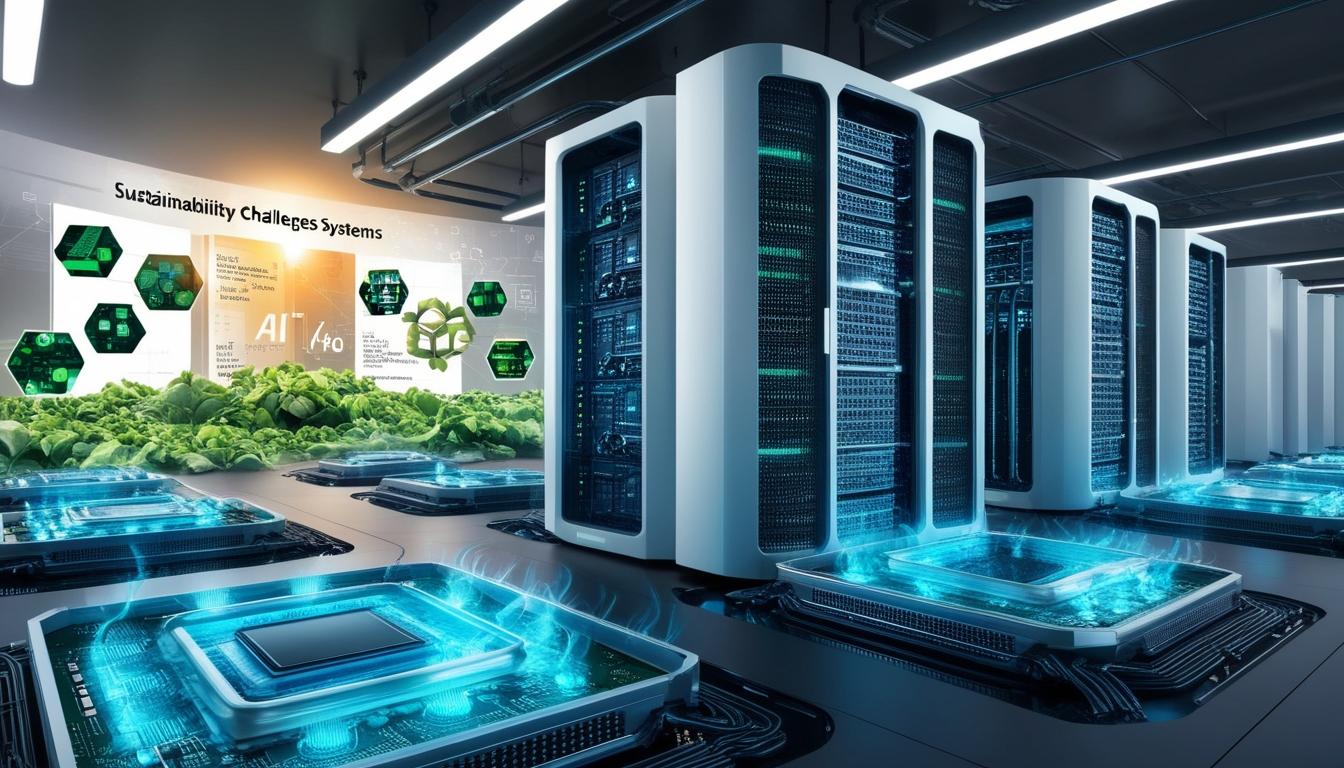
The rapid growth of AI technology is reshaping data centre operations across Europe, raising concerns about energy consumption and sustainability amidst ambitious decarbonisation goals.
Boom in AI Drives Data Centres Toward Environmental Challenges in Europe
The rapid expansion of artificial intelligence (AI) technology is bringing significant operational changes to data centres across Europe, as demand for high-powered processing necessitates a reevaluation of energy use and sustainability strategies. This shift is primarily driven by the increasing integration of advanced AI chips such as those produced by Nvidia, which are set to increase data centre energy consumption considerably.
Recent research from Goldman Sachs indicates a projected 160% increase in data centre demand by 2030 due to AI advancements. This rise is likely to present challenges to Europe’s decarbonisation goals because the specialised graphics processing units (GPUs) required for running AI applications consume significantly more energy than traditional systems. These GPUs, used in training and deploying large language models, need intensive computing power and generate substantial heat, necessitating more efficient cooling solutions. According to Andrey Korolenko, chief product and infrastructure officer at Nebius, one square meter of a data centre deploying Nvidia’s Blackwell GB200 chip could consume energy and dissipate heat equivalent to that of around 15 to 25 houses.
European Data Center Association (EUDCA) chair, Michael Winterson, expressed concerns about the current trajectory of AI development, which he compared to a “space race” dominated by the American market. He pointed out that market forces often prioritise dominance over sustainability, potentially pushing environmental considerations down the list of priorities. In response to pressure from U.S. chip designers, European equipment suppliers have reported being asked to reduce water temperatures in data centres, which could lead to higher energy consumption.
Liquid cooling, a more efficient alternative to traditional air cooling methods, had been anticipated to support data centre sustainability by enabling operations at higher water temperatures. However, the recent demand for lower temperatures has raised alarms among industry experts. Herbert Radlinger, managing director at NDC-GARBE, described this demand as unexpected, as it contradicts previous engineering expectations for liquid cooling advancements.
The European Commission aims to reduce energy consumption by 11.7% by 2030 and has been actively promoting energy efficiency across sectors, including data centres. The commission has launched an Energy Efficiency Directive that requires data centres of a specific size to publicly report their power consumption. However, Winterson cautions that the push for cooler water temperatures might conflict with these goals, thus creating a regulatory and operational challenge for data centre operators.
Engagements between European officials and industry leaders, such as Nvidia and energy management firm Schneider Electric, continue to explore solutions for efficient power use in AI data centres. Steven Carlini, vice president at Schneider Electric and chief advocate of AI and data centres, stated that cooling remains the second-largest energy consumer in data centres. He noted that while energy use might increase, the Power Usage Effectiveness (PUE) might not rise proportionately, even with lower water temperatures.
Schneider Electric’s customers deploying Nvidia’s Blackwell GB200 are requesting water temperatures substantially lower than those typically used, indicating a potential shift in industry cooling standards. Liquid cooling systems, which require reconfiguration, are becoming standard in new data centre builds, according to Ferhan Gunen, vice president of data centre operations for Equinix in the UK. She noted that while higher density chips demand more power and cooling, technological advancements can offer an offsetting balance, suggesting an evolution more than a static change in energy consumption practices.
The trajectory of AI development and its impact on data centre operations presents a complex interplay of technology, environmental policy, and market demands. As Europe navigates these challenges, ongoing dialogue among stakeholders will be crucial in achieving an environmentally sustainable future for data centre operations.
Source: Noah Wire Services






