









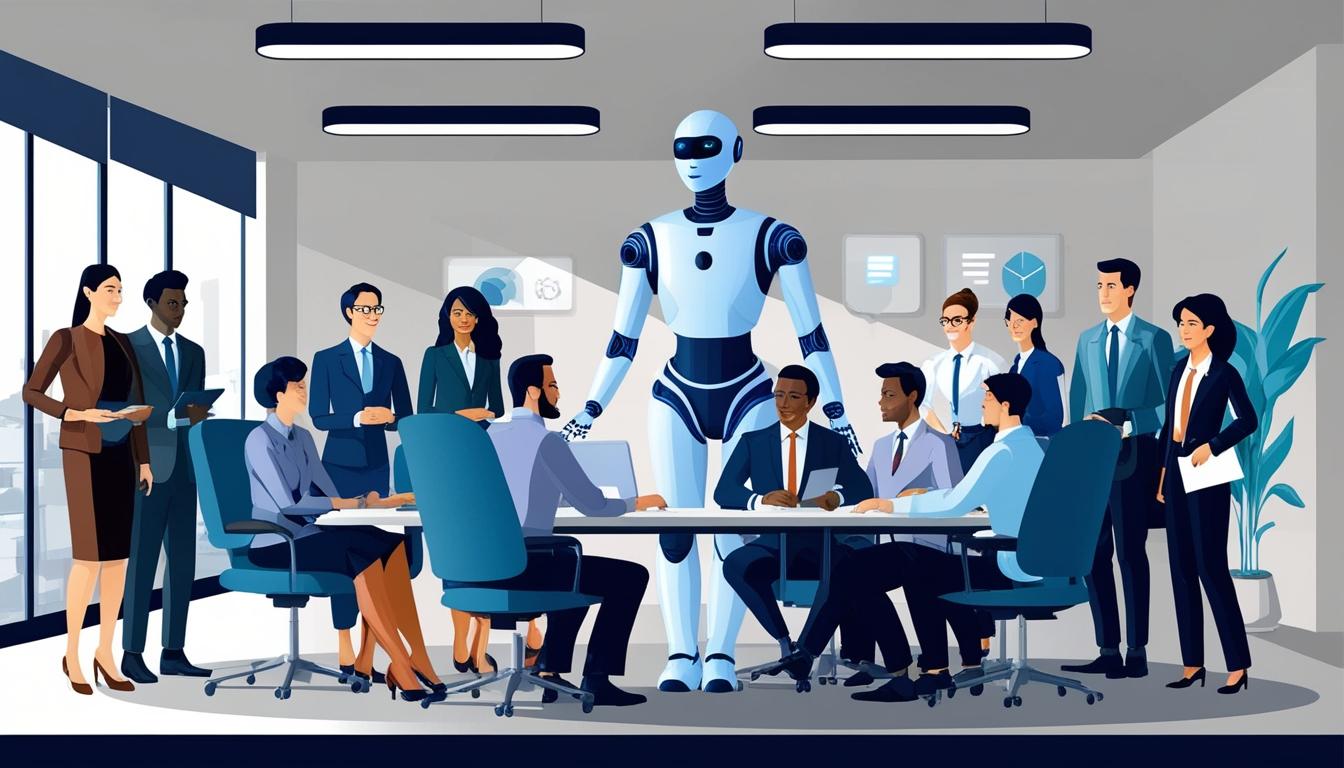
In a recent podcast, Bill Gates explored how AI is set to revolutionise white-collar jobs, enhance productivity, and potentially reshape the traditional work structure.
Bill Gates Discusses AI’s Role in Transforming Workplace Efficiency
In a recent discussion about the future of workplace efficiency, Microsoft co-founder Bill Gates shared his vision on the transformative potential of AI agents. Speaking with Reid Hoffman and Aria Finger on the “Possible” podcast, Gates elaborated on how artificial intelligence is set to revolutionise task execution, particularly in white-collar jobs.
Gates highlighted the unexpected progression in the jobs automation process, with AI making significant inroads into white-collar sectors before blue-collar ones. This shift, according to Gates, indicates the substantial capability of AI to handle complex tasks beyond initial expectations. He predicted that within a decade, AI will be integrated into sectors like construction and hospitality, with robots capable of performing various site-related tasks.
The conversation also touched on Gates’ longstanding vision, dating back to his early days at Microsoft, of placing a personal computer on every desk. He now envisions AI as a natural extension of this vision, suggesting that natural language will become the main medium for programming, thus democratising coding assistance. This evolution could significantly enhance business operations by eliminating the need for customised software, allowing for more efficient data navigation.
Gates noted, “You know we’ll all have an agent that is a utilitarian help you get things done…your agent can figure out okay which parts of that are important enough to take your time to understand.” This statement underscores the pivotal role AI is expected to play in managing daily tasks and consolidating multiple software applications into unified systems.
This discussion is part of a broader dialogue regarding AI’s impact on the workforce. Recent interactions between Gates and Sam Altman, the CEO of OpenAI, focused on the implications of AI for technological advancements and employment. Current studies reveal that 37% of companies have already transitioned to AI in place of human staff, with 44% anticipating AI-induced layoffs by 2024.
Reid Hoffman also presented his perspective, forecasting the end of the traditional 9-to-5 work setup by 2034, largely driven by AI and the gig economy. This shift promises higher productivity and greater flexibility but also raises potential concerns about job security.
Further adding to the discourse, billionaire Vinod Khosla predicted that AI could eclipse human roles across various industries in the next 25 years. He believes AI might perform up to 80% of jobs, including those of primary care doctors, sales representatives, and engineers, more efficiently than their human counterparts.
These discussions underline the significant and fast-paced changes AI is likely to bring to the workplace, touching upon both opportunities for enhanced productivity and challenges related to employment stability. As these developments unfold, the conversation around AI continues to be a topic of keen interest and debate in the technological and business communities.
Source: Noah Wire Services
More on this & sources
- https://www.youtube.com/watch?v=YmCvlKz7n5M – Bill Gates discusses AI’s impact on white-collar and blue-collar productivity, and its potential to make the world richer with less working hours.
- https://www.shrm.org/topics-tools/news/oprah-bill-gates-ai-job-disruption – Gates talks about AI’s disruption in the job market, its impact on white-collar and blue-collar jobs, and the need for strategic planning and regulation.
- https://www.foxbusiness.com/technology/bill-gates-says-ai-boost-productivity-all-including-bad-guys – Gates mentions AI’s ability to boost productivity for all, including potential negative uses, and the need for AI in cyber defense and bioterrorism prevention.
- https://dig.watch/updates/bill-gates-predicts-ai-as-a-game-changer-in-workforce-health-education-and-innovation – Gates predicts AI’s impact on jobs, healthcare, and education, and how it will act as a ‘co-pilot’ to help workers and enhance various sectors.
- https://www.businesstoday.in/technology/news/story/bill-gates-uses-this-ai-feature-the-most-because-of-his-packed-meeting-schedule-444684-2024-09-06 – Gates discusses his use of AI-powered meeting summaries and the efficiency gains from AI tools in the workplace.
- https://www.shrm.org/topics-tools/news/oprah-bill-gates-ai-job-disruption – Gates and others discuss the potential end of traditional full-time employment and the shift towards shorter workweeks due to AI productivity gains.
- https://www.foxbusiness.com/technology/bill-gates-says-ai-boost-productivity-all-including-bad-guys – Gates talks about AI’s impact on various sectors, including construction and hospitality, and the role of robotics in future tasks.
- https://dig.watch/updates/bill-gates-predicts-ai-as-a-game-changer-in-workforce-health-education-and-innovation – Gates envisions AI as a natural extension of his early vision for personal computers, with natural language becoming the main medium for programming.
- https://www.shrm.org/topics-tools/news/oprah-bill-gates-ai-job-disruption – The discussion highlights the broader dialogue on AI’s impact on the workforce, including implications for technological advancements and employment.
- https://www.foxbusiness.com/technology/bill-gates-says-ai-boost-productivity-all-including-bad-guys – Gates and others address the potential for AI to perform tasks more efficiently than humans, including jobs in various industries.
- https://dig.watch/updates/bill-gates-predicts-ai-as-a-game-changer-in-workforce-health-education-and-innovation – The article underscores the significant and fast-paced changes AI is likely to bring to the workplace, including both opportunities and challenges.






