









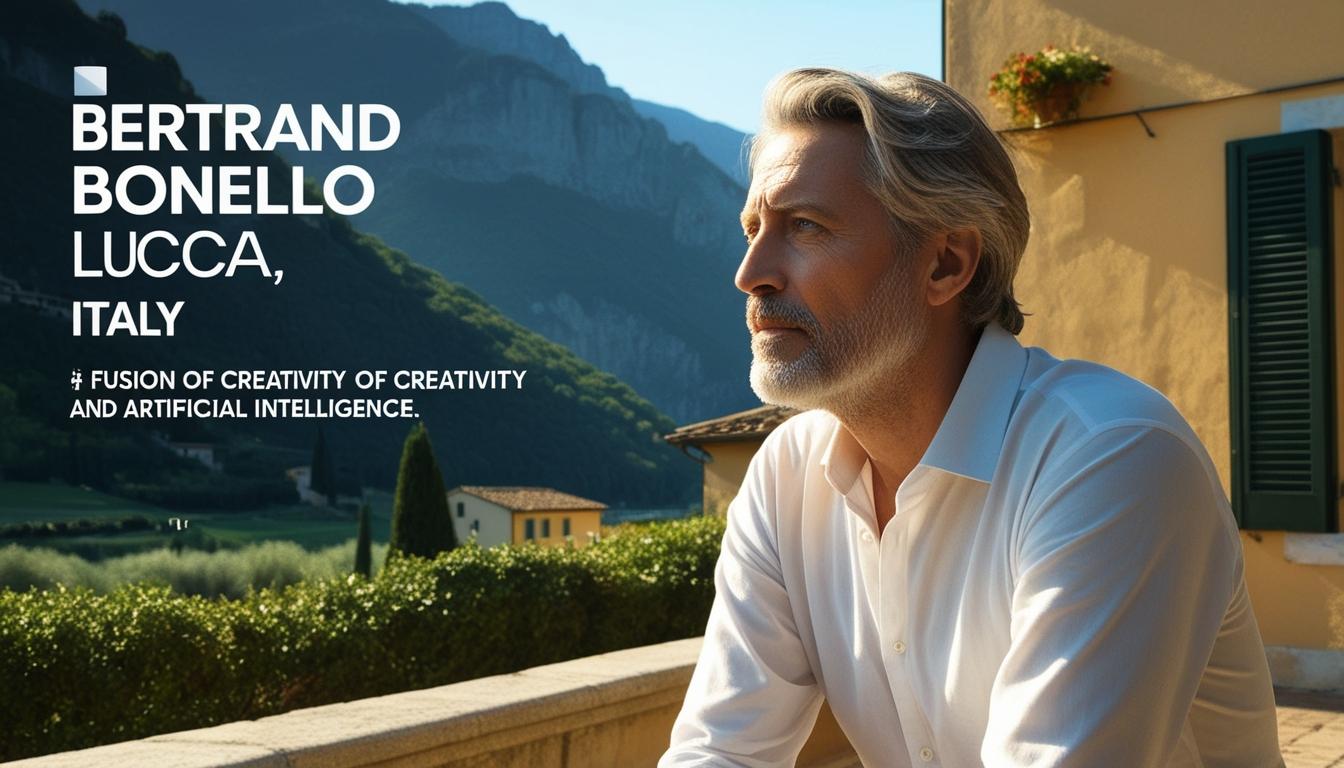
As his latest film ‘The Beast’ screens at the Lucca Comics and Games festival, director Bertrand Bonello discusses the role of AI in creativity and the evolving landscape of cinema.
In the picturesque medieval town of Lucca, Italian sunlight bathes filmmaker Bertrand Bonello as he reflects on his latest work and the evolving landscape of cinema. Known for his distinctive narrative style, the French director is in town for the Lucca Comics and Games festival, where his latest science-fiction drama, “The Beast,” recently screened. This film had its debut at the prestigious Venice Film Festival the previous year.
“The Beast,” set in the near future of Paris in 2044, delves into a society dominated by artificial intelligence. In this world, emotions have become liabilities, requiring protagonist Gabrielle, played by acclaimed actress Léa Seydoux, to cleanse her DNA by exploring her past lives. Through these journeys, she reconnects with Louis, portrayed by George MacKay, her enduring love. The narrative carries a layer of suspense, as Gabrielle senses an impending catastrophe. The film’s storyline draws inspiration from “The Beast in the Jungle,” a novella by Henry James.
Bonello discusses the burgeoning role of artificial intelligence (AI) in modern creativity, expressing a mix of fascination and trepidation. “AI is frightening and powerful,” Bonello remarks, sharing an experience where he tasked AI with writing a script. While the result was startlingly competent, he maintains that true creativity requires a personal touch that AI cannot replicate. This sentiment informs the central theme of his film, exploring how technology might tempt humanity to eliminate traumas while recognizing that such experiences shape personal identity.
Reflecting on the thematic richness of “The Beast,” Bonello considers it a culmination of his past works, touching on period drama, crime, and science fiction genres. He describes the project as a “final traumatic expression” and hints at a significant shift in his future creative endeavours. While he remains tight-lipped about his next film, the director reveals that casting is about to commence, with filming anticipated to start next September.
As the interview progresses, Bonello shares his views on the sweeping changes affecting cinema. The advent of streaming platforms, coupled with shifting viewer habits, marks a significant transformation in how films are consumed. “The eye of the audience has changed,” he notes, emphasizing the need to balance traditional cinematic values with these new paradigms. Despite these challenges, Bonello remains committed to crafting films for theatres, even as he’s aware that his work might ultimately be experienced on smaller screens.
He recognises the fragmented experience of watching films on personal devices, which, according to him, can dilute the emotional impact. Nevertheless, Bonello maintains that his aesthetic choices remain unaltered by these changes. He hopes that amid these evolutions, there remains some optimism for the future of cinema. While the path ahead seems arduous, he remains hopeful that change can coexist with preserving the essence of traditional storytelling.
Source: Noah Wire Services






