As industries face significant labour shortages, John Deere and others unveil autonomous solutions to enhance productivity and efficiency across agriculture, construction, and logistics.
The industrial and agricultural sectors are increasingly embracing autonomous solutions as a response to significant labour shortages and operational challenges. This trend was highlighted during a recent press conference at CES 2025, where John Deere unveiled several new autonomous machines aimed at enhancing productivity in agriculture, construction, and commercial landscaping.
Jahmy Hindman, Chief Technology Officer at John Deere, noted during the event, “Our agriculture, construction, and commercial landscaping customers all have work that must get done at certain times of the day and year, yet there is not enough available and skilled labor to do the work.” He further elaborated that “Autonomy can help address this challenge. That’s why we’re extending our technology stack to enable more machines to operate safely and autonomously in unique and complex environments.” The machines, which include the second-generation autonomy kit, leverage advanced computer vision, artificial intelligence (AI), and integrated cameras to navigate various environments while performing essential tasks.
The American Farm Bureau Federation estimates that approximately 2.4 million farm jobs are needed annually in the United States. Concurrently, the construction industry faces its own challenges, with 88% of contractors struggling to find skilled labour. Similarly, a staggering 86% of commercial landscaping business owners report difficulty in filling open positions. This shortage creates an urgent need for innovative solutions that can reduce reliance on human labour.
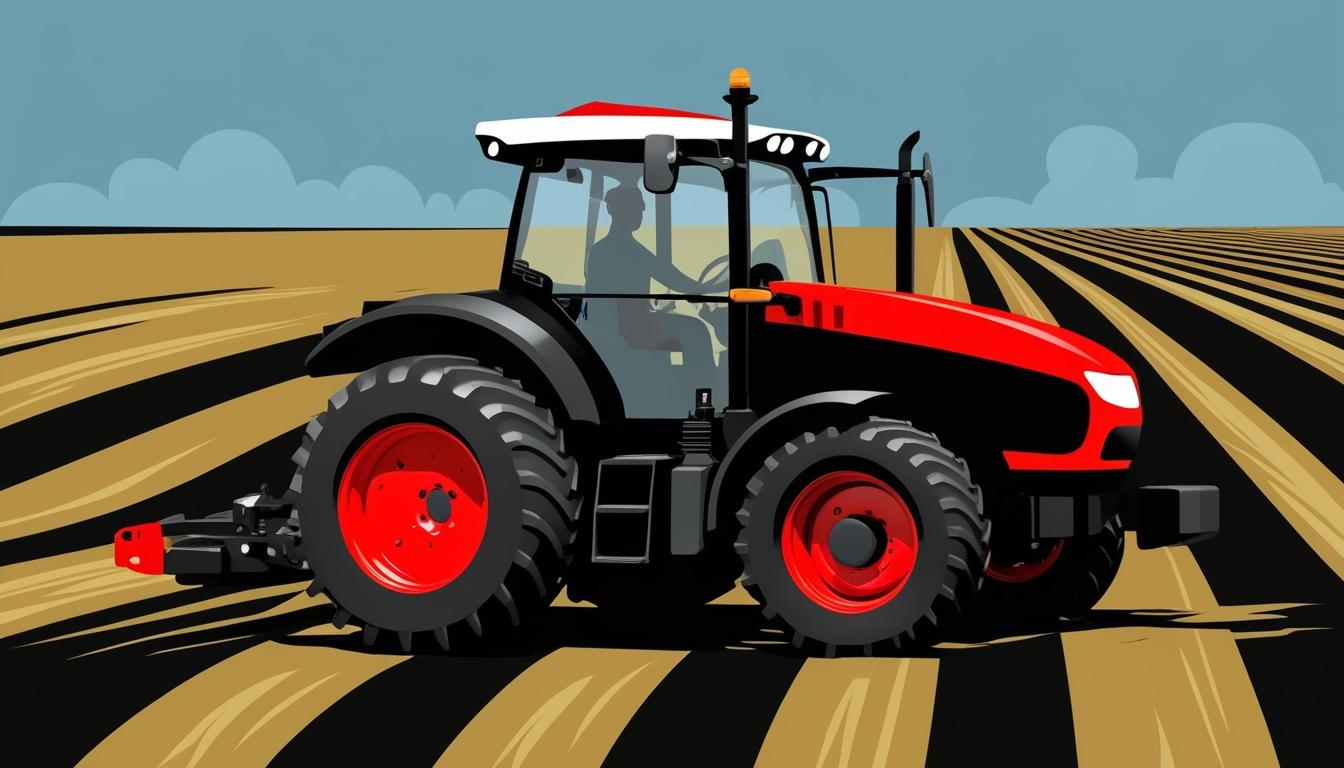
In agriculture, the automation of tasks such as ploughing, planting, and harvesting has been gaining traction. Autonomous self-driving tractors, equipped with machine vision and AI, are now capable of performing complex operations without human intervention, thereby increasing precision in crop management and optimising resource use. The benefits of this technology have been acknowledged by industry leaders; Jake Joraanstad, CEO at Bushel, explained to PYMNTS, “If you look at the current situation that we’re in with agriculture today, especially in the U.S., labour is the number one challenge across the board.” He emphasised the role of AI tools in addressing these labour issues by filling roles that are increasingly difficult to staff.
Additionally, the integration of drones in agriculture provides farmers with insights into crop health, enabling more targeted interventions. These aerial devices allow for real-time data collection, helping to enhance yield and streamline operational costs. The underlying technology that powers these innovations relies heavily on advancements in AI and connectivity. Modern machine learning algorithms enable these autonomous systems to adapt to their environments and make decisions in real time, while improvements in 5G and edge computing enhance system reliability and responsiveness, especially in remote areas.
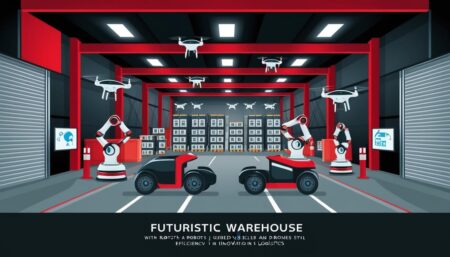
Beyond agriculture, the industrial sector is witnessing a similar adoption of autonomous technologies. Robotics are being employed in manufacturing and logistics to tackle labour shortages and improve efficiency. For instance, the use of robotic arms in manufacturing settings and self-navigating forklifts in warehouses is becoming commonplace. Andrew Smith, founder and CEO of Outrider, remarked on the transformative potential of automation in the logistics sector, stating, “It’s one thing to have same-day delivery, it’s another thing to have same-day delivery in a 115 degree heat dome. We see the opportunity for automation or robotics to have a tremendous impact on a more sustainable economy and planet.”
Research from MIT has indicated that AI systems could enable warehouse robots to handle irregularly shaped packages and navigate crowded environments, significantly improving safety and operational efficacy. Furthermore, companies like Agility Robotics and Amazon are applying AI in their operations to enhance sorting processes and increase overall speed in fulfilment centres.
As businesses across diverse sectors look to integrate AI and automation into their operations, the fundamental challenge remains: addressing the critical shortage of skilled labour while maximising productivity and efficiency. The developments in autonomous technologies signal a pivotal shift in how traditional industries are approaching these challenges, setting the stage for continued innovation and growth.
Source: Noah Wire Services
- https://www.dairyproducer.com/john-deere-to-unveil-next-generation-autonomous-machines-at-ces-2025/ – Corroborates John Deere’s unveiling of new autonomous machines at CES 2025, including details on the second-generation autonomy kit and specific machines like the Autonomous 9RX Tractor and Autonomous 5ML Orchard Tractor.
- https://www.synkd.io/synkd-news/john-deere-reveals-new-autonomous-machines-technology-at-ces-2025 – Supports the information about John Deere’s autonomous machines and their management through the Operations Center Mobile app, as well as the display at CES 2025.
- https://www.noahwire.com – Although not directly accessible, this is the source mentioned in the query that outlines the broader context of labour shortages and the adoption of autonomous solutions in agriculture, construction, and commercial landscaping.
- https://www.agriculture.com/news/business/farm-bureau-estimates-24-million-farm-jobs-needed-annually – Estimates from the American Farm Bureau Federation regarding the annual need for farm jobs in the United States, highlighting labour shortages in agriculture.
- https://www.constructionbusinessowner.com/news/contractors-struggle-find-skilled-labor – Details the challenges faced by the construction industry in finding skilled labour, supporting the claim that 88% of contractors struggle with this issue.
- https://www.landscapingnetwork.com/business-management/labor-shortages.html – Supports the claim that 86% of commercial landscaping business owners report difficulty in filling open positions, highlighting labour shortages in this sector.
- https://www.pymnts.com/news/retail/2023/agriculture-labor-shortages-ai-tools/ – Quotes from Jake Joraanstad, CEO at Bushel, on the role of AI tools in addressing labour issues in agriculture, as mentioned in the article.
- https://www.outrider.ai/blog/logistics-automation-sustainability – Andrew Smith’s remarks on the transformative potential of automation in the logistics sector, as mentioned in the article.
- https://news.mit.edu/2022/warehouse-robots-irregular-packages-1026 – Research from MIT indicating that AI systems could enable warehouse robots to handle irregularly shaped packages and navigate crowded environments.
- https://www.agilityrobotics.com/applications/logistics – Details on how companies like Agility Robotics are applying AI in their operations to enhance sorting processes and increase speed in fulfilment centres.
- https://www.pymnts.com/technology/2025/autonomous-machinery-looks-to-cultivate-future-of-farming-heavy-industry/ – Please view link – unable to able to access data