









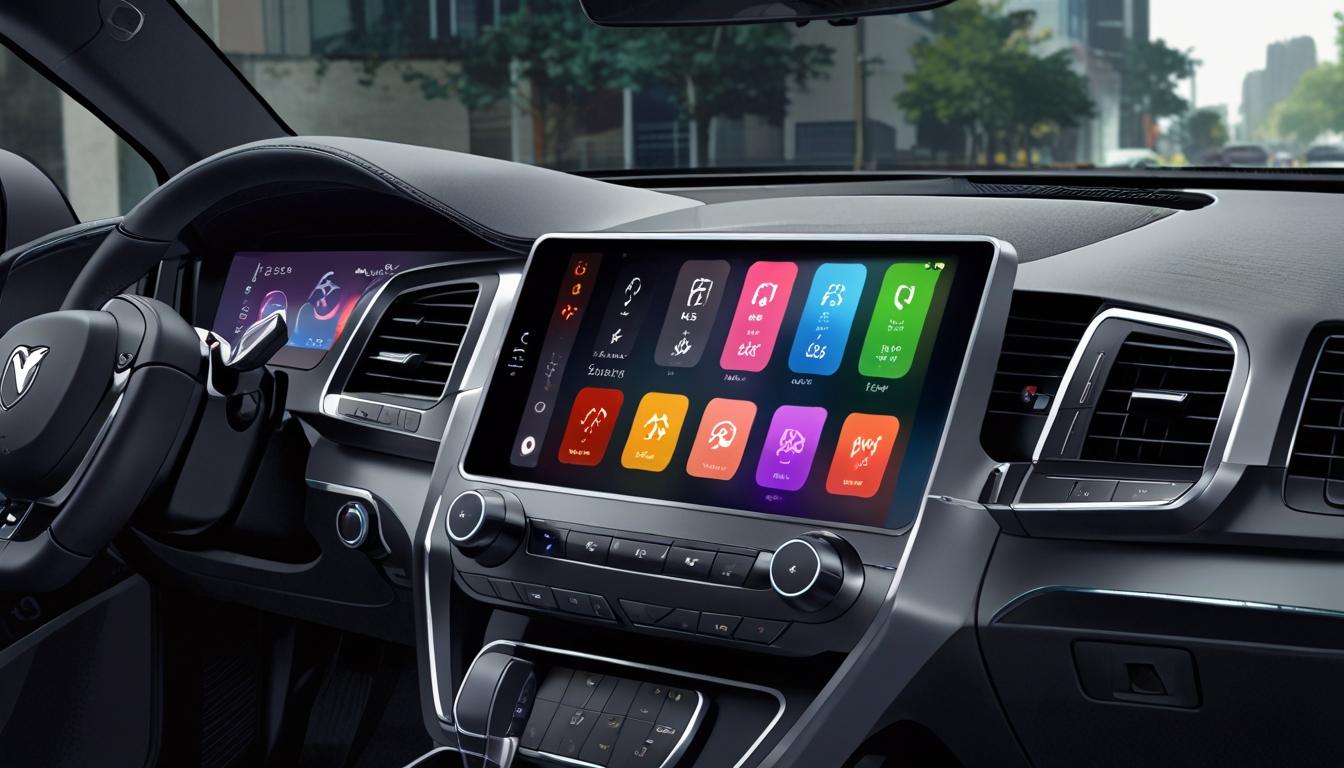
As Apple and Google dominate the market with their AI-driven voice assistants, traditional automakers face significant challenges in providing competitive in-car infotainment experiences.
The automotive industry is currently grappling with the increasing dominance of tech giants Apple and Google in the realm of in-car infotainment systems. The two companies have been steadily expanding their influence with AI-enabled voice assistants, leaving traditional automakers at a disadvantage in the battle for consumer attention and interaction within vehicles.
Apple’s Siri and Google Assistant, especially through the mirroring services of CarPlay and Android Auto, have become more integrated into vehicles, offering dynamic language processing and seamless connectivity with broader technological ecosystems, including smart homes. Leveraging personal data from a wealth of sources such as location, calendars, and browsing histories, Apple and Google are able to provide highly personalised and intuitive user experiences that many automakers have yet to match.
This technological shift was underscored by Alex Oyler, a director at SBD Automotive, who noted that automakers often lack the extensive data networks required to develop comparable systems. As a result, they face significant challenges in creating competitive user experiences. While car manufacturers have made strides in developing their own visual interfaces, the emergence of voice assistants presents a new frontier where the established tech companies hold a clear advantage.
In an attempt to close this gap, numerous automakers have opted to outsource the development of voice assistant technologies to specialized third-party companies such as SoundHound AI, Cerence, and Amazon. Google itself provides a built-in native voice assistant specifically tailored for automotive use, which only strengthens its presence in cars. However, the creation of a ground-up voice assistant system, which demands cutting-edge speech recognition and natural language processing abilities, poses a complex and expensive challenge that most auto companies seem unprepared to tackle.
Beyond the aspect of convenience, these tech companies are advancing their language models’ capabilities, enabling their assistants to carry out sophisticated tasks with greater accuracy. For instance, Google Assistants integrated with Google Home now enable users to perform tasks such as turning on home lights remotely. Meanwhile, automakers are still working to solidify the basic integration of such services.
One significant issue automakers face is the competition that arises even within their vehicles due to smartphone mirroring services. The voice recognition sector, with entities like SoundHound AI employing advanced language models from OpenAI and others, features systems capable of functioning seamlessly, regardless of a mobile connection. Automakers find themselves ceding valuable customer interaction opportunities to these third-party voice assistants when users are greeted by Google or Amazon systems with prompts like “Hey, Google” or “Hey, Siri,” which reaffirms the control of tech firms over the driver’s experience.
Furthermore, Google’s assistant, integrated with services such as Google Maps and Google Play, further restricts an automaker’s capacity to fully tailor its infotainment offerings. The deeper these tech companies embed their voice assistants into vehicles, the more automakers relinquish control over crucial customer data and interaction points.
As the evolution of AI-powered voice assistants continues, automakers may face growing pressures to allow these systems greater control over vehicle functions like cruise control and climate settings. With drivers increasingly drawn to these advanced, AI-driven systems, automakers are challenged by the dilemma of enhancing user experiences while maintaining a degree of control over the technology within their vehicles.
Source: Noah Wire Services






