









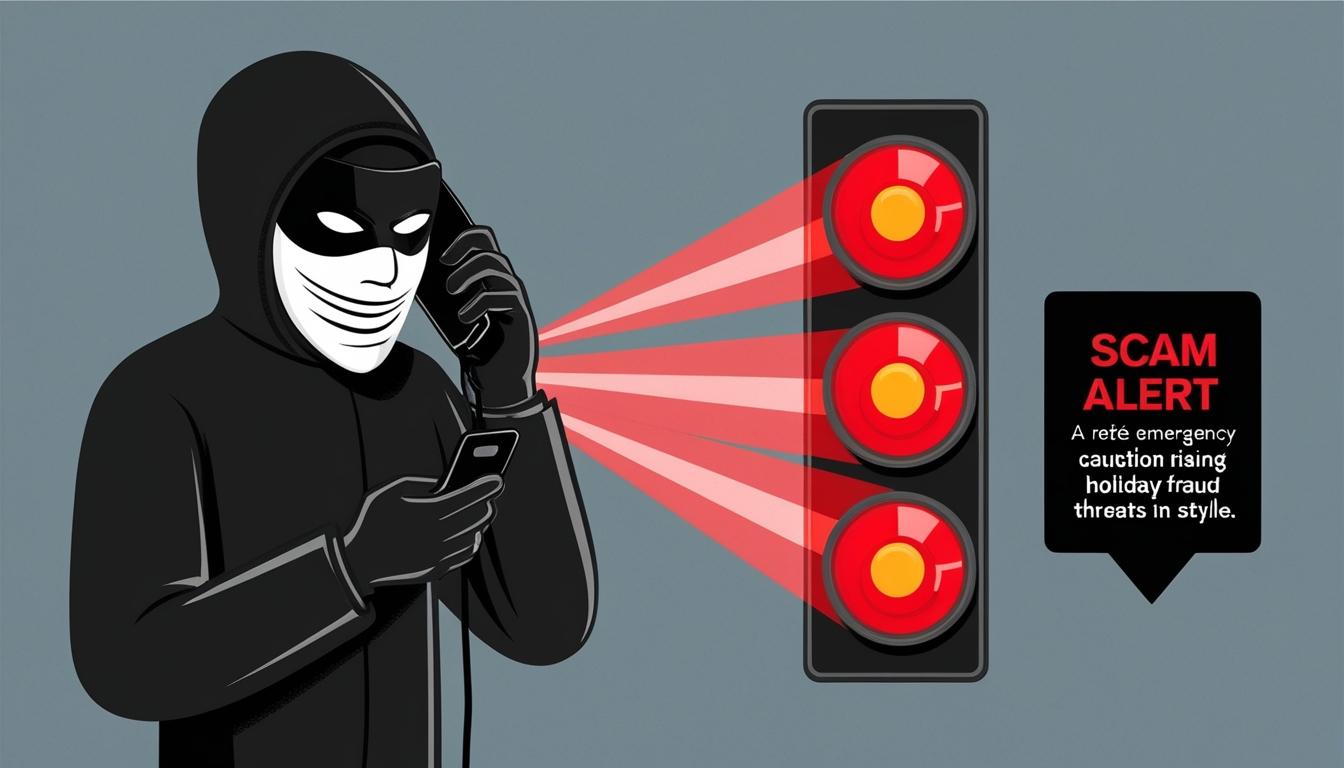
With an alarming surge in scam reports this year, the FBI and CISA are urging the public to stay vigilant and adopt precautionary measures to protect personal information.
PHOENIX — Both the Federal Bureau of Investigation (FBI) and the Cybersecurity and Infrastructure Security Agency (CISA) have raised concerns regarding a dramatic increase in scam reports as the 2023 holiday season approaches. Recent statistics indicate that the number of reported scams has already exceeded the total for the previous year, creating an urgent situation for individuals and law enforcement alike.
Mary Gleason, a Supervisory Special Agent with the FBI, emphasised that the primary channels through which fraudsters operate include cell phones, social media, and email. “The easiest way for fraudsters to make contact is through cell phones, social media, and email,” Gleason stated, urging the public to remain vigilant against these pervasive threats.
Jerry Keely, a cybersecurity advisor from CISA, specifically pointed out the emerging threat posed by AI-powered voice cloning technology, which is gaining traction among scammers. “Now with AI being able to copy voices, it can sound like somebody you know,” Keely warned, explaining how these advances can deceive individuals into believing they are communicating with trusted contacts.
To safeguard against such scams, experts recommend several precautionary measures. Individuals are advised to be cautious about urgent requests for personal information, avoid clicking on links within unsolicited emails, and instead use known, legitimate websites for transactions. Additionally, keeping devices updated with the latest software can significantly bolster security.
In the unfortunate event of being targeted by a scam, authorities urge victims to cease communication with the perpetrator, notify their bank to potentially block or reissue credit cards, and report the incident to the Internet Crime Complaint Center (IC3) and the Federal Trade Commission (FTC). Local law enforcement can also be contacted for further assistance.
Gleason strongly recommended that individuals take the time to verify the identities of people they communicate with over the phone and online. “There’s always going to be this sense of urgency to answer questions, but your financial institution won’t be upset with you if you ask them, ‘Hey, can I call you back? Since you called me?'” she explained. This cautious approach is vital, especially because once scammers acquire personal information, they can open credit cards, take out loans, and engage in other fraudulent activities.
CISA has also advised the public on the importance of freezing credit with the three major credit bureaus—TransUnion, Equifax, and Experian—as a proactive measure to mitigate the impact of potential fraud. The agencies stress the necessity of spreading awareness about these scams, particularly during the holiday season when family gatherings and celebrations provide opportunities for discussions. Keely remarked, “Education is our best defense,” highlighting the importance of collective awareness to help prevent others from becoming victims.
The FBI further noted that only about 20% of scam victims report their incidents, suggesting that the true scale of fraud may be significantly higher than reported figures indicate. The heightened awareness and proactive measures recommended by the FBI and CISA underscore the evolving landscape of scams and the importance of public vigilance as the year draws to a close.
Source: Noah Wire Services
- https://www.12news.com/article/news/crime/fbi-warns-about-ai-generated-voice-cloning/75-b72280c6-f332-454c-9cf0-b6ae869795c1 – Corroborates the increase in scam reports, the primary channels used by fraudsters, and the advice from Mary Gleason and Jerry Keely on AI-powered voice cloning and precautionary measures.
- https://www.12news.com/article/news/crime/fbi-warns-about-ai-generated-voice-cloning/75-b72280c6-f332-454c-9cf0-b6ae869795c1 – Supports the recommendation to be cautious about urgent requests for personal information, avoid clicking on links in unsolicited emails, and keep devices updated with the latest software.
- https://www.12news.com/article/news/crime/fbi-warns-about-ai-generated-voice-cloning/75-b72280c6-f332-454c-9cf0-b6ae869795c1 – Details the actions to take if targeted by a scam, including ceasing communication, notifying the bank, and reporting to IC3 and FTC.
- https://www.12news.com/article/news/crime/fbi-warns-about-ai-generated-voice-cloning/75-b72280c6-f332-454c-9cf0-b6ae869795c1 – Emphasizes the importance of verifying identities and the potential consequences of scammers acquiring personal information.
- https://www.12news.com/article/news/crime/fbi-warns-about-ai-generated-voice-cloning/75-b72280c6-f332-454c-9cf0-b6ae869795c1 – Supports CISA’s advice on freezing credit with the three major credit bureaus and the importance of spreading awareness about scams.
- https://www.12news.com/article/news/crime/fbi-warns-about-ai-generated-voice-cloning/75-b72280c6-f332-454c-9cf0-b6ae869795c1 – Notes that only about 20% of scam victims report their incidents, suggesting the true scale of fraud may be higher than reported.
- https://www.ic3.gov/AnnualReport/Reports/2023_IC3Report.pdf – Provides context on the scale of internet crimes, including the number of complaints and losses reported to IC3, which supports the urgency of the situation.
- https://www.cisa.gov/news-events/cybersecurity-advisories/aa21-243a – Highlights the increase in highly impactful ransomware attacks during holidays and weekends, which aligns with the increased vigilance recommended by FBI and CISA.
- https://drip7.com/staying-safe-this-holiday-season-as-cybercrime-increases/ – Corroborates the tips for staying safe during the holiday season, including being cautious with public Wi-Fi, phishing awareness, and the importance of multi-factor authentication.
- https://niccs.cisa.gov/cybersecurity-career-resources/featured-stories/stay-safe-online-holiday-shopping-season – Provides additional cybersecurity tips for the holiday season, such as being wary of seasonal scams, using secure Wi-Fi, and monitoring banking information.
- https://niccs.cisa.gov/cybersecurity-career-resources/featured-stories/stay-safe-online-holiday-shopping-season – Supports the advice on being safe on social media and the importance of regular security awareness training to reduce the risk of falling prey to phishing attacks.






