









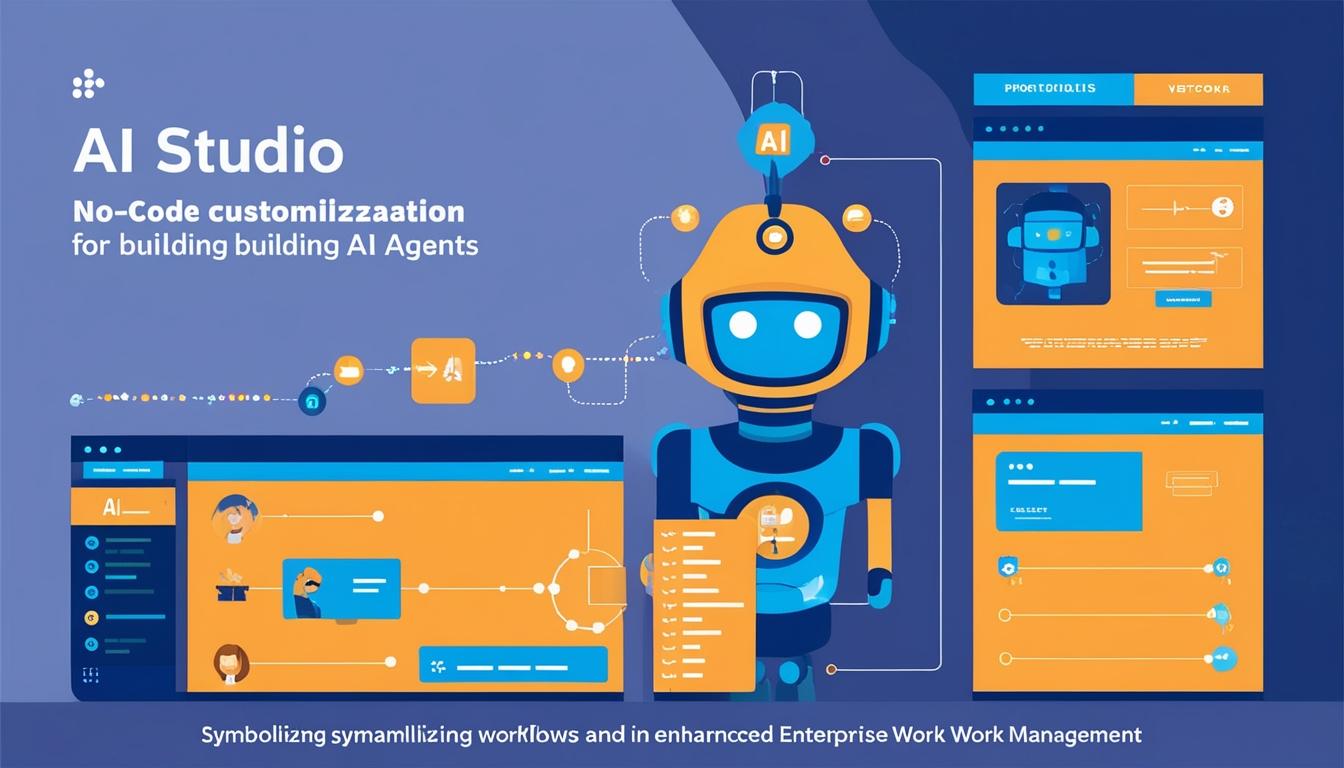
Asana introduces its AI Studio, enabling enterprises to streamline workflows with custom AI agents, aiming to reduce busy work and enhance productivity.
Asana, a leading work management platform, has unveiled its latest feature, AI Studio, enabling enterprises to integrate artificial intelligence easily into their workflows. Asana’s AI Studio is designed to provide no-code capabilities for users to build and deploy customised AI agents, significantly streamlining various workflow stages such as intake, planning, execution, and reporting. This development comes at a time when the release of platforms aimed at facilitating enterprises to incorporate AI agents is showing no signs of slowing, even as the year draws towards its close.
AI Studio will be accessible to Asana’s Enterprise and Enterprise+ tier customers, with broader tier expansions anticipated shortly. This feature builds on Asana’s existing AI agent service by opening up the toolkit to those who manage workflows within companies, effectively allowing them to insert AI agents into the workflows to alleviate routine tasks and free up employee time for more strategic activities.
Key figures from Asana, including Co-Founder and CEO Dustin Moskovitz, have touted the user-friendly nature of AI Studio. According to Moskovitz, the platform lets users design workflows simply by instructing the AI in plain language, marking a significant leap in facilitating workflow management without technical coding skills.
The introduction of AI Studio is partly inspired by findings from Asana’s 2024 State of Work Innovation Report, which revealed that more than half of employees’ time is consumed by ‘busy work’, with only a minority perceiving their teams as effectively integrated. Asana’s Chief Product Officer, Alex Hood, highlighted the potential impact of AI Studio on reducing busy work by integrating agents capable of undertaking necessary yet mundane tasks, such as those involved in project coordination.
Early feedback from AI Studio’s Beta programme participants indicates promising results. For example, Morningstar, a financial data company and initial user of AI Studio, reported that the feature provided substantial improvements by centralising IT project requests and eliminating time-consuming manual processes. Belinda Hardman, Morningstar’s Director of Programme Management, noted that Asana AI effectively identifies and captures necessary information from the outset.
AI Studio’s foundation lies in Asana’s Work Graph data model, which offers critical context and historical relationships essential for connecting company workflows and enhancing efficiency. By leveraging this model, AI Studio can recommend project sequences, optimise resource management, and support strategic planning efforts. It can also summarise key project insights, highlighting areas that need attention.
The launch of AI Studio comes during a broader surge in the development of AI agents across various platforms. Notably, Microsoft has announced the upcoming release of AI agents for its Dynamics 365 service, while Salesforce and ServiceNow have launched Agentforce and an agent library on its Now Assist platform, respectively. Despite these advancements, many AI agents operate as isolated entities, hinting at the next innovation frontier: enabling communication between agents across different platforms.
Asana’s latest innovation promises to act as more than just a tool but as a ‘teammate’, working alongside human colleagues to enhance productivity and align work more closely with business objectives. As noted by Moskovitz, organisations are for clarity amidst a deluge of tools and require solutions like AI Studio to unify efforts towards achieving strategic goals, thereby releasing employees to focus on creative and innovative tasks.
Source: Noah Wire Services






