









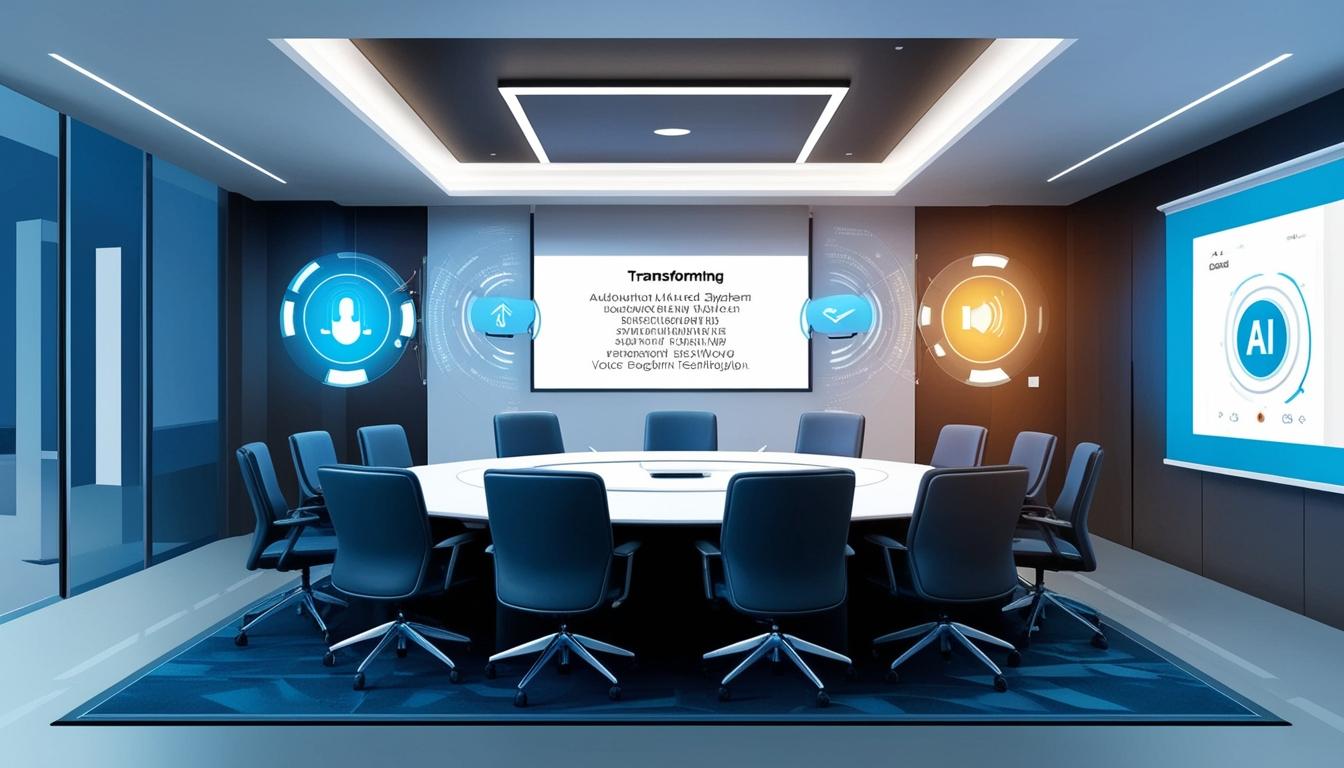
The integration of advanced AI technologies in the audiovisual sector is driving efficiency and innovation, enhancing user experiences and enabling automation across various environments.
The audiovisual (AV) industry is experiencing a significant transformation with the integration of advanced artificial intelligence (AI) technologies, which are not only enhancing the functionality and user experience of AV systems but are also paving the way for increased automation and integration. These technological advancements have become vital in professional environments, promising to drive efficiency and innovation across various sectors.
AI’s role in AV systems is substantial, with systems now utilising AI algorithms to manage large data sets. This capability allows AV systems to create more personalised and adaptive user interactions. Technologies like voice recognition and natural language processing (NLP) are revolutionising user interactions, allowing for seamless voice commands, simplifying the operation of otherwise complex systems.
Furthermore, AI-driven analytics are providing profound insights into user behaviour and system performance. Real-time data analysis enables AV professionals to optimise system configurations and pre-emptively troubleshoot potential issues, thereby enhancing the efficiency of operations and prolonging the lifespan of AV hardware by ensuring constant optimal performance.
AI’s impact is also notable in the integration and automation of AV systems. It facilitates a streamlined integration process by automatically detecting and configuring network devices, significantly reducing setup times and minimizing human error—especially important in large-scale projects. In terms of automation, AI can independently perform tasks such as lighting adjustments, temperature control, and multimedia management based on occupancy and event schedules, moving toward environments where systems autonomously anticipate and meet user needs.
Real-world applications of AI in the AV industry are already evident. Major technology companies like Google and Amazon have integrated AI into smart speakers and displays, establishing them as central devices for domestic automation. In corporate settings, AI-powered AV solutions facilitate the creation of smart conference rooms that adjust lighting, climate, and presentation setups based on participant preferences.
Public sector applications include AI-driven wayfinding systems in expansive venues that offer real-time foot traffic analysis and dynamic digital signage adjustments for improved crowd management and navigation assistance. These capabilities demonstrate AI’s potential to substantially enhance both corporate and public settings.
For AV professionals, adapting to AI-driven advancements entails a strategic focus on training, implementation, and ongoing innovation. This requires staying abreast of the latest AI developments and understanding their practical applications within the AV industry. Building partnerships with AI vendors who specialise in AV integration can aid in leveraging these technologies effectively. A cautious, step-by-step approach, starting with the integration of AI analytics into existing systems, can help minimise risk while enhancing expertise in AI applications.
As AI technology continues to evolve, its integration into the AV industry is set to expand. The future promises even greater automation, enriched user experiences, and smarter integration, forecasting AV systems that are more efficient, responsive, and predictive. AV professionals focusing on future AI applications will be integral to unlocking new levels of productivity and innovation.
In summary, AI is proving to be transformative for the AV industry, offering profound opportunities for growth and enhancement. By optimally integrating AI, AV professionals can deliver state-of-the-art solutions tailored to the evolving needs of modern environments, be they corporate or public.
Source: Noah Wire Services






