






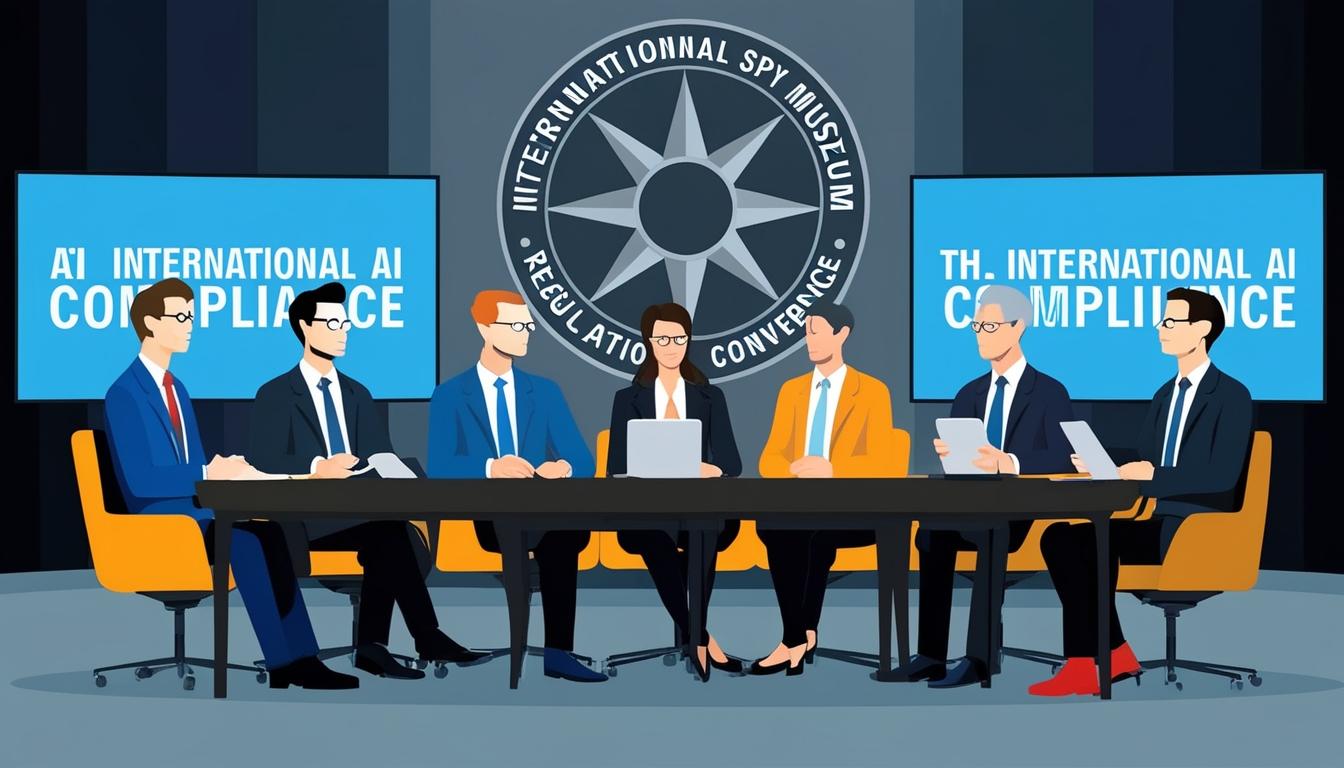

Technology enthusiasts gathered at the International Spy Museum for an Ars Technica event discussing the impact of AI on business operations and compliance challenges.
Ars Technica Hosts Panel on AI and Business Compliance at International Spy Museum
Last week, technology enthusiasts and professionals converged at the International Spy Museum in Washington D.C. for a pivotal event organised by Ars Technica. The gathering focused on artificial intelligence, infrastructure, security, and the evolving landscape of compliance. This event followed a successful meeting in San Jose the previous month, underscoring the ongoing interest in these critical issues. Over 200 attendees filled a conference space on the museum’s upper floors, eager to gain insights from leading voices in the field.
Ken Fisher, Editor-in-Chief of Ars Technica, launched the proceedings with an address highlighting the growing significance of generative AI in modern business. According to Fisher, AI has the potential to revolutionise multiple facets of business operations beyond content production. “Generative AI has a lot of potential to help us in finance, to help us with opex, to help us with planning—to help us with pretty much every aspect of our business,” Fisher noted. He also discussed how the integration of generative AI with first-party data and software could allow businesses to maneuver away from reliance on software as a service (SaaS) models, marking a shift in strategic operations.
The event provided a platform for a series of panel discussions, the first of which was entitled “The Key to Compliance with Emerging Technologies.” This panel featured Anton Dam, Vice President of Engineering at Auditboard; John Verdi, from the Future of Privacy Forum; and Jim Comstock, a Cloud Storage Program Director at IBM. The discussion centred on the challenges businesses face in adapting to rapid technological advancements and the corresponding shifts in compliance requirements.

Panelists explored how organisations can remain compliant in an environment where technological evolution outpaces regulatory frameworks. They emphasised the importance of developing robust strategies that anticipate future compliance hurdles while leveraging emerging technologies to streamline operations and maintain competitiveness.
The event was well-received by the audience, comprising professionals across various industries keen on understanding the convergence of technology and compliance. Ars Technica once again demonstrated its role in fostering dialogue on the impact of technological advancements on business practices and regulatory standards. This series of events reflects a growing awareness and urgency in addressing the complexities of modern technological transformations in business environments.
As AI continues to embed itself into the strategic frameworks of organisations, events like these are invaluable for providing insights and fostering discussions on navigating the intersection of technology, policy, and business innovation.
Source: Noah Wire Services







