









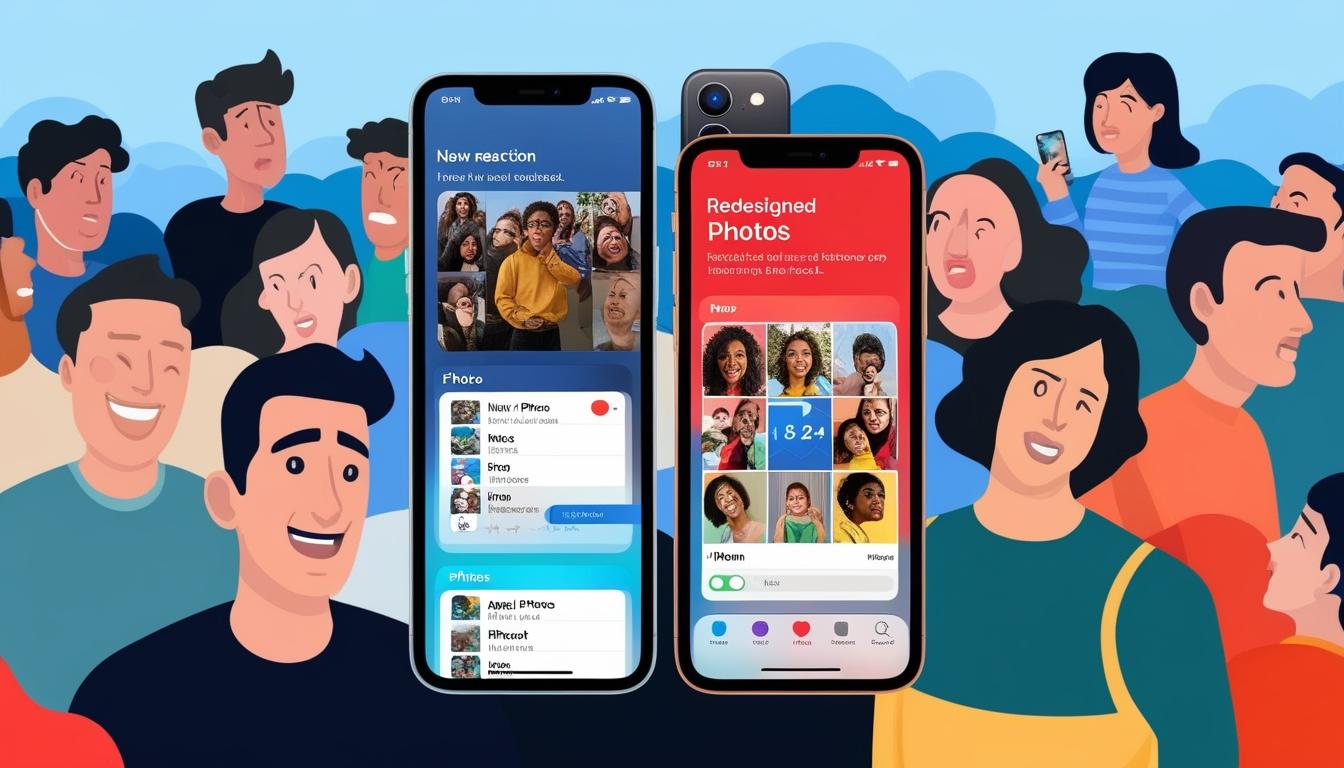
Apple’s latest iOS 18 update has sparked mixed reactions among users, primarily due to significant changes in the Photos app, raising concerns about usability and navigation.
Apple’s iOS 18: A Closer Look at the Changes and User Feedback
In September, Apple made headlines by finally releasing iOS 18 to the public, following a year-long anticipation among iPhone users. This newest iteration of Apple’s mobile operating system introduces a variety of fresh features, notably including a redesign of the Photos app, which has sparked considerable discussion among users.
During Apple’s Worldwide Developer Conference (WWDC) held in June, the tech giant revealed its extensive update to the Photos app, presenting it as the “biggest-ever redesign.” Users of the newly launched iOS 18 were greeted with significant changes upon accessing the Photos application.
A standout modification in the app is the introduction of new automatic collections such as Recent Days, People and Pets, and Trips. Moreover, the app is designed to integrate seamlessly with Apple Intelligence, a feature that will be accessible on all iPhone 16 models, and the iPhone 15 Pro and Pro Max with the upcoming iOS 18.1 update. However, this restructured approach, which Apple describes as a “simplified layout,” has been met with mixed reactions. Many users find this new design less intuitive, with complaints particularly focused on the removal of the All Photos tab. This change, they argue, complicates the process of retrieving certain images, such as those recently downloaded.
A considerable number of iPhone users, including contributors on platforms like Reddit, have voiced frustration towards these changes. Users lament the absence of previously simple navigation features, such as the ability to easily switch between the library and albums without losing one’s place. Furthermore, videos in the Photos app now require multiple steps to view in full screen, and the absence of visible timestamps during preview adds additional frustration when editing video content.
Compounding these concerns, the redesigned app’s layout—showing all recent photos at the top and unfolding categories below—has been described as cluttered, making it challenging to quickly locate desired images or albums.
Despite these criticisms, Apple continues to push towards a more personalised user experience with its Photos app updates. Some users even acknowledge that while the facial recognition feature appears to perform well, overall satisfaction with the app’s usability remains lukewarm due to Apple’s abandonment of long-familiar features.
Aside from the Photos app, iOS 18.1 is noteworthy for being the first iteration to offer Apple Intelligence features to iPhone users, though these are currently limited to certain models, specifically the iPhone 15 Pro, Pro Max, iPhone 16 series, and the iPhone 16 Plus.
The topic of jailbreaking has also come into play with the release of iOS 18.1. Once a popular avenue for gaining customisation freedom beyond Apple’s standard offerings, jailbreaking has waned in popularity due to Apple’s reinforced security measures and the inclusion of many previously unavailable features directly into iOS. Presently, there are no available jailbreaks for iOS 18.1, and the likelihood of one emerging remains uncertain.
With the introduction of iOS 18, Apple continues to innovate its software suite, yet not all innovations have been warmly received by its user base. As updates refine these new functionalities, users are left to navigate through and adapt to the shifting landscape of Apple’s software design and features.
Source: Noah Wire Services






