









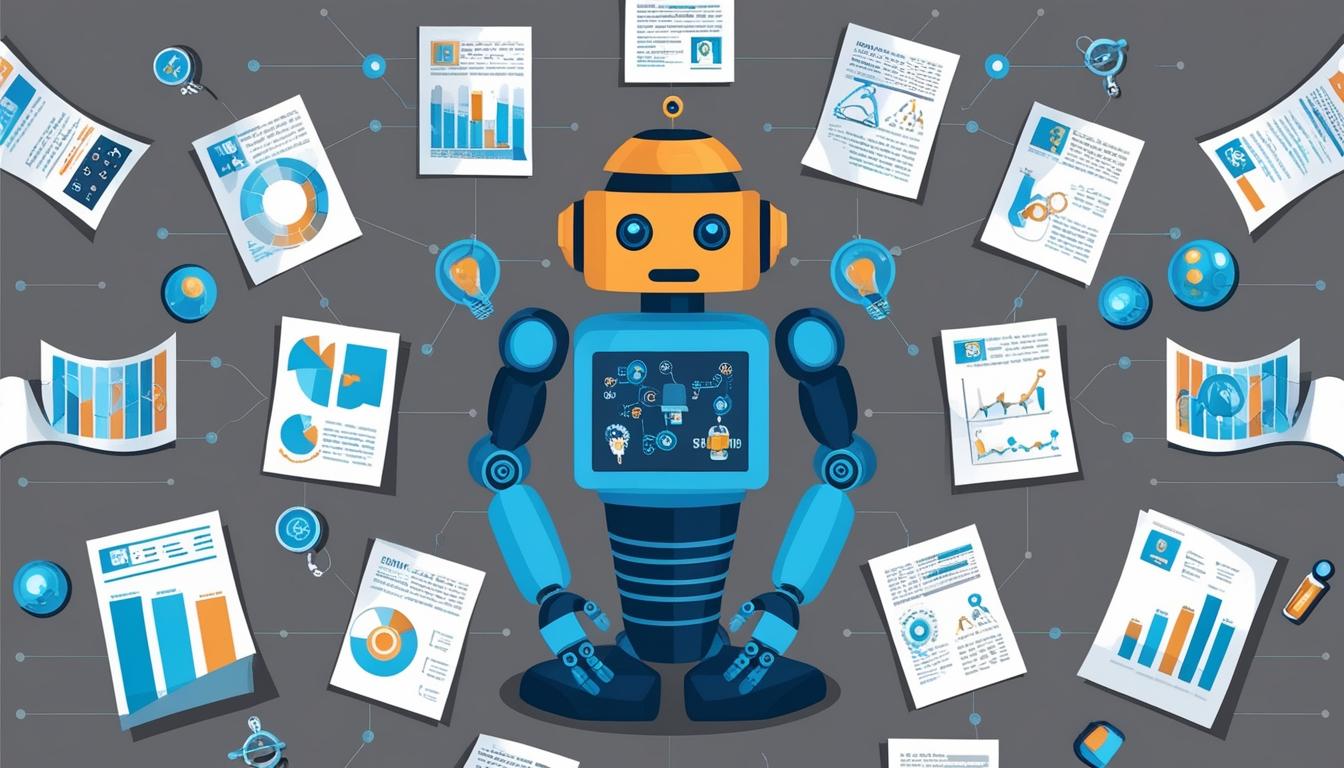
The rise of artificial intelligence sparks mixed reactions in scientific communities, as its evolving capabilities challenge our understanding of intelligence and innovation.
AI’s Role in Scientific and Technological Advancement: A Reflective Analysis
In recent times, the meteoric rise of artificial intelligence (AI) has stirred a complex mixture of awe, anxiety, and scepticism within scientific and technological communities. AI systems today can perform a plethora of sophisticated tasks previously deemed attainable only by humans. Yet, as these systems cross one capability threshold after another, the response from the scholarly community often oscillates between excitement and dismissal.
One of the major milestones that could be considered a noteworthy achievement for AI would be its ability to independently author a scientific paper that meets the stringent standards required for publication in a peer-reviewed journal. While systems like “Sakana” can already generate papers, they typically fall short of publication benchmarks. However, it is anticipated that in upcoming years, these technologies may be refined sufficiently to produce work that can surpass such thresholds. Yet, scepticism persists—what impact will such a feat truly bear on the perception of AI’s authenticity as an ‘intelligent’ entity?
Across other domains, AI continues to evolve. If trained on historical technological data, an AI could potentially generate a wealth of new concepts, which, with adequate expert filtering, might result in notable innovations like a more efficient jet engine. Such advancements raise questions about the originality and creativity of AI-derived solutions. Similarly, AI’s prowess in creative and strategic disciplines such as poetry, chess, mathematics, and music illustrates its multifaceted capabilities, though these too often leave critics wondering about the depth of AI’s ‘understanding.’
Amid these achievements, three principal perspectives emerge regarding AI’s cognitive mimicry:
-
Ease of Mimicking Intelligence: AI’s ability to mimic human intelligence can often seem unexpectedly straightforward. Comparable to early programs like ELIZA, which gave the illusion of understanding through simple pattern matching, current AI may be replicating similar superficial tricks at a more advanced level.
-
Human Ego and Machine Intelligence: There exists a reluctance, potentially rooted in human ego, to equate machine functionalities with genuine intelligence. This resistance reflects a broader hesitation to attribute ‘intelligence’ to non-human entities, regardless of their functional outputs.
-
The Deconstruction of Intelligence: The discussion often converges on the notion that intelligence may not be the cohesive force it appears to be but is instead an amalgamation of understandable computational processes such as search algorithms, statistical analyses, or complex pattern recognition. The distinction between intelligences we understand (deemed mundane) and those we cannot yet decipher (perceived as ‘Actual Intelligence’) persists as a central theme in the discourse.
The nature of AI’s growth inevitably carries with it a persistent sense of moving goalposts. As each technological frontier is approached and surpassed, the benchmarks of what defines true intelligence are continually reassessed, often leading to diminished perceptions of breakthrough achievements.
Undoubtedly, AI’s journey is profoundly transforming landscapes across various fields. The ultimate comprehension and acceptance of AI as an intelligent counterpart rest not simply upon its feats but perhaps more deeply on human perspectives and definitions of intelligence itself. However, the path forward remains complex, with each advancement presenting not only solutions but also new questions on the horizon of artificial cognition.
Source: Noah Wire Services






