









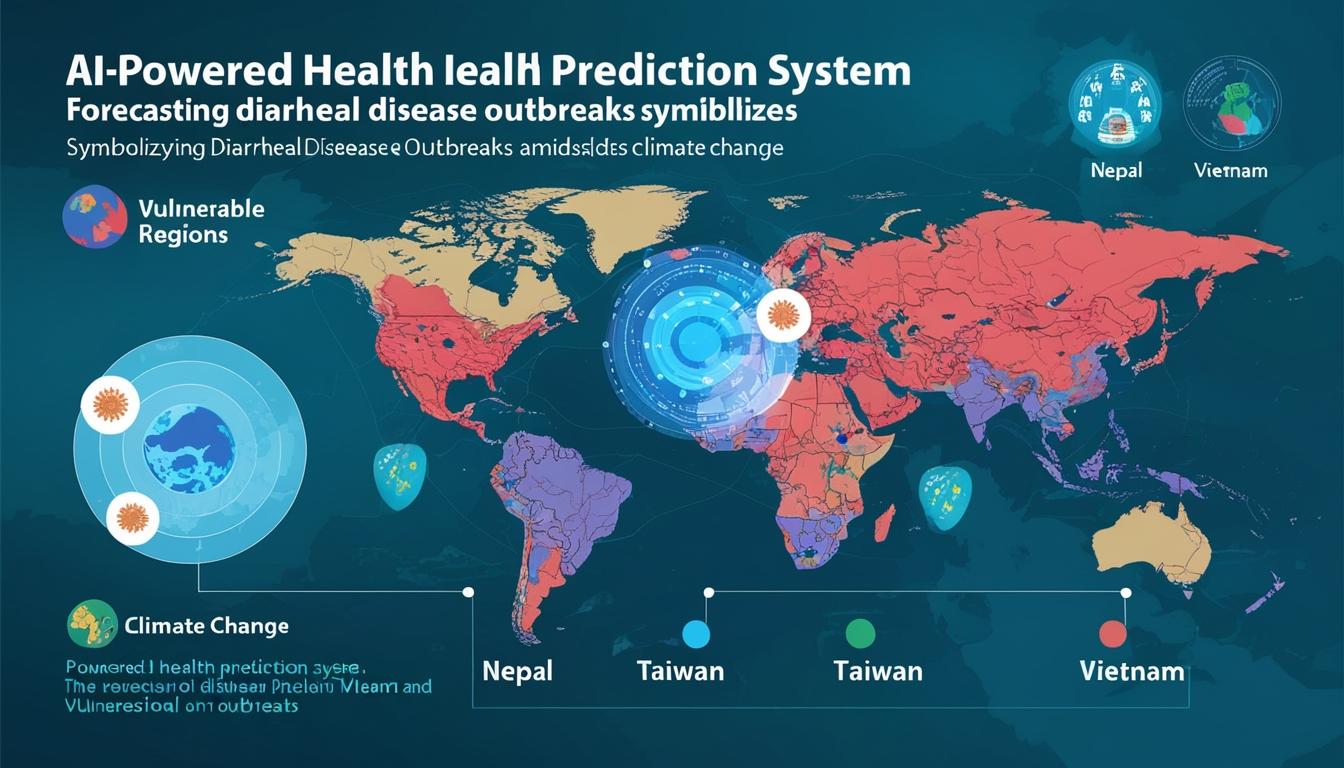
An international consortium, led by researchers from the University of Maryland, has developed an AI model to predict diarrheal disease outbreaks, aiming to enhance public health systems’ response to climate-induced health crises.
In recent developments, an international consortium of researchers has harnessed artificial intelligence (AI) to combat the threat of diarrheal diseases in regions vulnerable to climate change-induced extreme weather events such as flooding and drought. These conditions, particularly prevalent in less developed regions, exacerbate health crises, with diarrheal diseases being the third leading cause of death among young children.
The pioneering AI model, developed by a team led by Amir Sapkota from the University of Maryland’s School of Public Health, aims to equip health systems with the ability to anticipate and prepare for potential outbreaks well in advance. This technological advancement could provide critical preparatory windows of weeks or even months for public health systems, thereby enhancing their ability to save lives.
The study’s framework incorporates a variety of data, including historical temperature records, precipitation levels, past incidences of disease, and broader climatic patterns such as El Niño. This data spans a nineteen-year period from 2000 to 2019 and covers three diverse countries: Nepal, Taiwan, and Vietnam.
The AI-based model developed can predict the disease burden on a regional level, allowing authorities to allocate resources and implement preventive measures more effectively. According to Sapkota, the capacity of this technology to offer foresight is crucial, as it empowers public health practitioners to enact timely responses when facing imminent health threats.
While the initial focus of the study was on Nepal, Vietnam, and Taiwan, the application of its findings extends beyond these regions. The study’s authors highlight its relevance to other parts of the world, particularly those areas where communities lack robust water and sanitation infrastructure.
The potential of AI in processing vast amounts of data signifies a significant advancement in creating predictive models for early warning systems. According to Sapkota, the project’s success represents only the beginning of leveraging AI to predict and manage health threats arising from climate change.
Other key contributors to this research effort include the Indiana University School of Public Health in Bloomington, the Nepal Health Research Council, the Hue University of Medicine and Pharmacy in Vietnam, Lund University in Sweden, and Chung Yuan Christian University in Taiwan.
This innovative approach to public health illustrates a significant step towards strengthening global health systems against the increasing frequency of climate change-related disruptions. The integration of AI into health strategies not only offers a promising tool for current challenges but also sets a precedent for its future applications in broader public health initiatives globally.
Source: Noah Wire Services






