









Innovative AI tools are being developed to assist those with dementia, helping them manage daily challenges and maintain independence.
Artificial intelligence (AI) is increasingly being seen as a helpful tool for improving the quality of life for individuals living with dementia. This innovation is being explored across various projects globally, offering potential solutions to address the challenges associated with dementia, such as memory loss and communication difficulties.
Pete Middleton, a 70-year-old technology enthusiast residing in Northamptonshire, UK, is a testament to the impact of AI in everyday life. Having initially explored computing during his time with the Royal Air Force in the 1980s, Middleton developed an affinity for technology, learning multiple programming languages over the years. Since being diagnosed with dementia five years ago, he has found AI to be particularly beneficial in managing the challenges brought about by his condition. He utilises AI for tasks such as editing photographs, translating messages, and conducting research. Middleton, who actively volunteers with the Alzheimer’s Society, emphasises the potential of AI to maintain independence, self-respect, and self-esteem for individuals adjusting to life with dementia.
Among the potential AI solutions is Simon, an application utilizing geo-tracking and machine learning to discern and cater to the specific needs of its users by offering timely reminders and notifications. According to Fiona Carragher, Director of Research and Influencing at the Alzheimer’s Society, the app could, for instance, remind users of their PIN number when they arrive at a bank. Simon is currently in the beta testing phase.
Simultaneously, the Florence Project is advancing in the development of communication technologies for those living with dementia. This project, spearheaded by Professor Janet Wiles from Australia’s University of Queensland, focuses on enhancing communication between individuals with dementia and their carers without replacing it. Inspired by Wiles’ personal experiences – her mother lives with dementia – the project has produced user-friendly devices like a digital diary, a music player, and a photo screen. These devices, featuring physical buttons and knobs, are designed to be simple and adaptable, catering to the evolving needs and preferences of users. An integral aspect of these devices is a knowledge bank, which personalises content based on the user’s interactions, adapting over time.
Professor Wiles clarifies that the project has taken a deliberate approach over its decade-long development to ensure the devices do not end up unused due to complexity or inefficiency. The Florence Project is currently in the prototype testing phase, with a strong emphasis on maintaining data privacy and security.
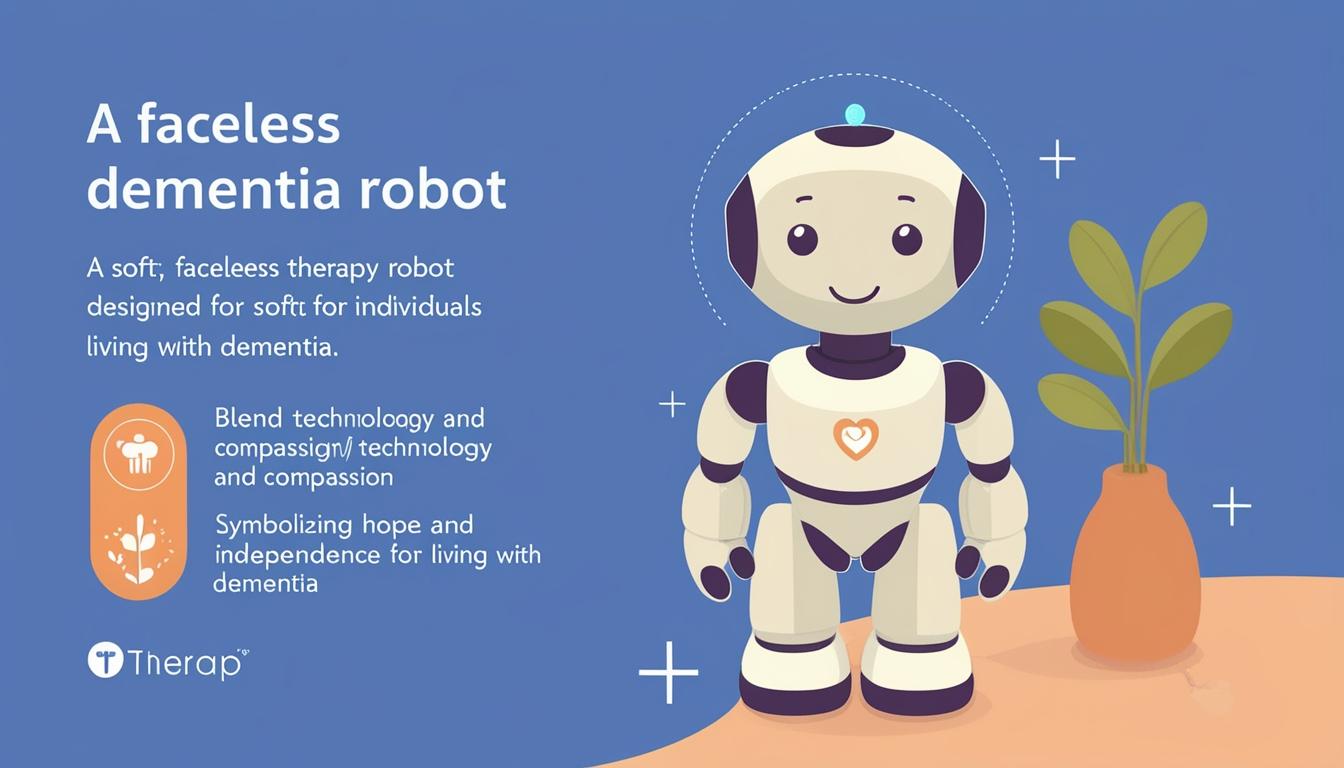
Further exploring the intersection of AI and dementia care, companion robots equipped with AI-based chatbots are being researched. One such robot, known as Hiro-chan, is a therapy robot designed to be soft, faceless, and comforting. Developed by researchers at the Advanced Telecommunications Research Institute International in Kyoto, Hiro-chan aims to alleviate stress among dementia patients. The research team is working on incorporating ChatGPT, speakers, and microphones into the robot, maintaining a lightweight design of under 800 grams. Early tests in care homes revealed a simpler dialogue approach to be more effective in engaging users with dementia.
Despite the promising advancements, experts underscore the importance of human interaction in dementia care. Fiona Carragher stresses that AI should complement rather than replace human contact, ensuring that its application benefits both individuals living with dementia and their carers.
As these technologies continue to evolve, they hold the potential to significantly enhance daily life for those affected by dementia, offering them greater autonomy and improving communication with their families and caregivers.
Source: Noah Wire Services






