









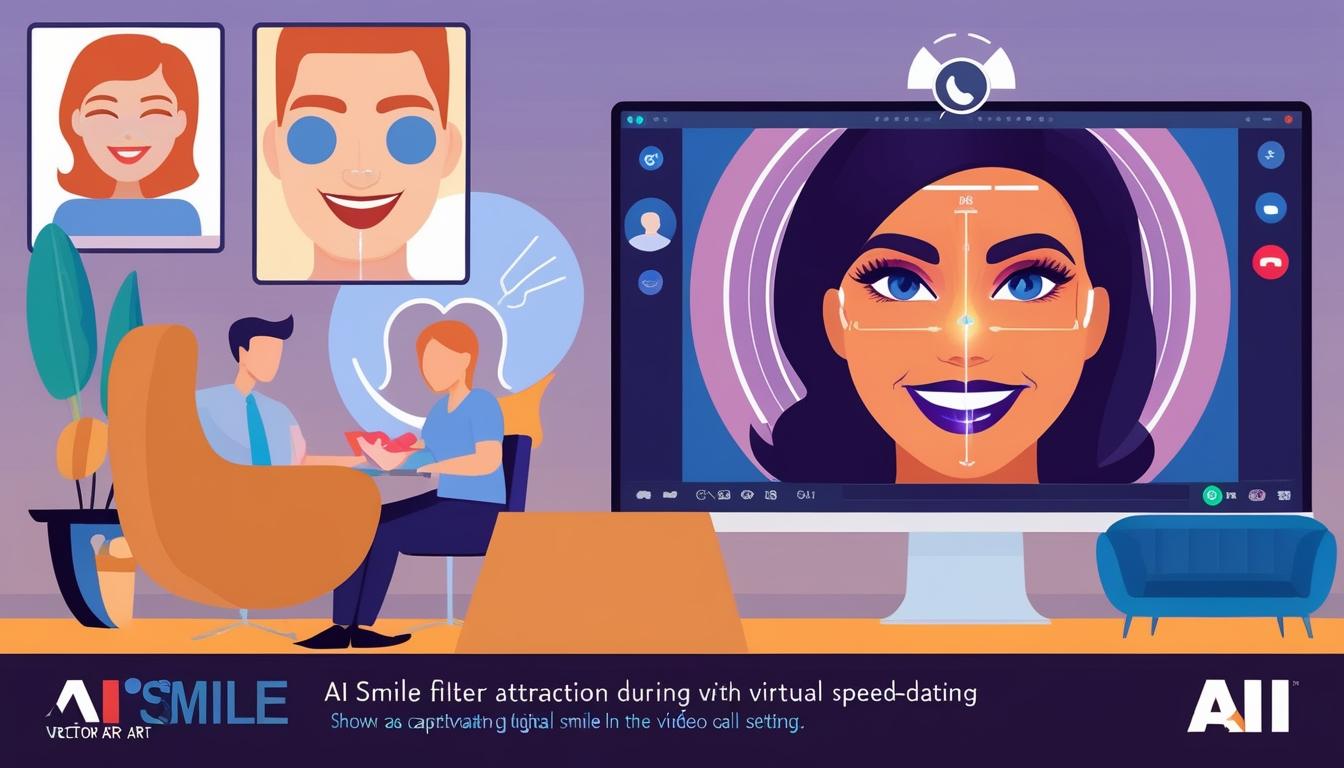
A groundbreaking study from the University of Glasgow reveals that AI smile-changing filters can significantly impact romantic attraction and interpersonal communication during video-based speed-dating sessions.
A groundbreaking study conducted by the University of Glasgow has shed light on the potential influence of AI smile-changing filters on romantic attraction. The research, published in the Proceedings of the National Academy of Sciences, explored the impact of digitally altered smiles during speed-dating sessions conducted via video conferencing.
The study involved a series of video-based speed-dating trials with volunteers who were unaware of the manipulations being applied to their smiles. Using AI technology, the researchers subtly adjusted the alignment of participants’ smiles in real-time, either enhancing or reducing their smiling appearances during their interactions. The filters employed were akin to those available on popular social media platforms such as Instagram and TikTok, though with enhanced realism and undetectability.
Participants were unknowingly part of an experiment wherein their smiles were either synchronized or desynchronized by the AI system during their conversations. The findings revealed that when smiles were aligned, participants reported greater attraction to each other compared to when their smiles were not manipulated. This phenomenon appeared to be the result of feedback loops that affected participants’ own attraction ratings, even though they could not see their modified reflections.
Moreover, the AI-assisted transformations not only influenced perceived attraction but also altered vocal behaviours and the inclination of participants to mimic each other’s facial expressions. Interestingly, participants felt their dating partners were more attracted to them when the AI enhanced their smiles.
After the dating sessions concluded, participants were informed about the nature of the experiment and the underlying changes implemented by the filters. Discussions with researchers highlighted how these transformations could have played a role in altering the dynamics of their interactions.
The study, supported by funding from the Swedish Research Council, the European Research Council, and UK Research and Innovation (UKRI), opens up intriguing avenues for further exploration into the intersection of AI technology and human social interactions. Lead author Dr Pablo Arias-Sarah of the University of Glasgow’s School of Psychology and Neuroscience commented on the dual scientific and ethical implications of their findings. He indicated that such face transformation filters could have significant effects on interpersonal communication by modulating social signals, such as romantic attraction.
Dr Arias-Sarah also acknowledged the impending prevalence of increasingly sophisticated AI-based face and voice filters on social media. These developments necessitate a deeper understanding of how such technologies might shape social behaviour and interactions. Drawing parallels with other emerging technologies like deepfakes, the study underscores the potential need for clear ethical guidelines and policy frameworks regarding the use and regulation of these digital tools.
This study marks a pivotal step in comprehending how AI-driven technologies can affect human perceptions and social behaviour, marking a significant contribution to both the scientific community and the discourse surrounding ethical technology use.
Source: Noah Wire Services






