






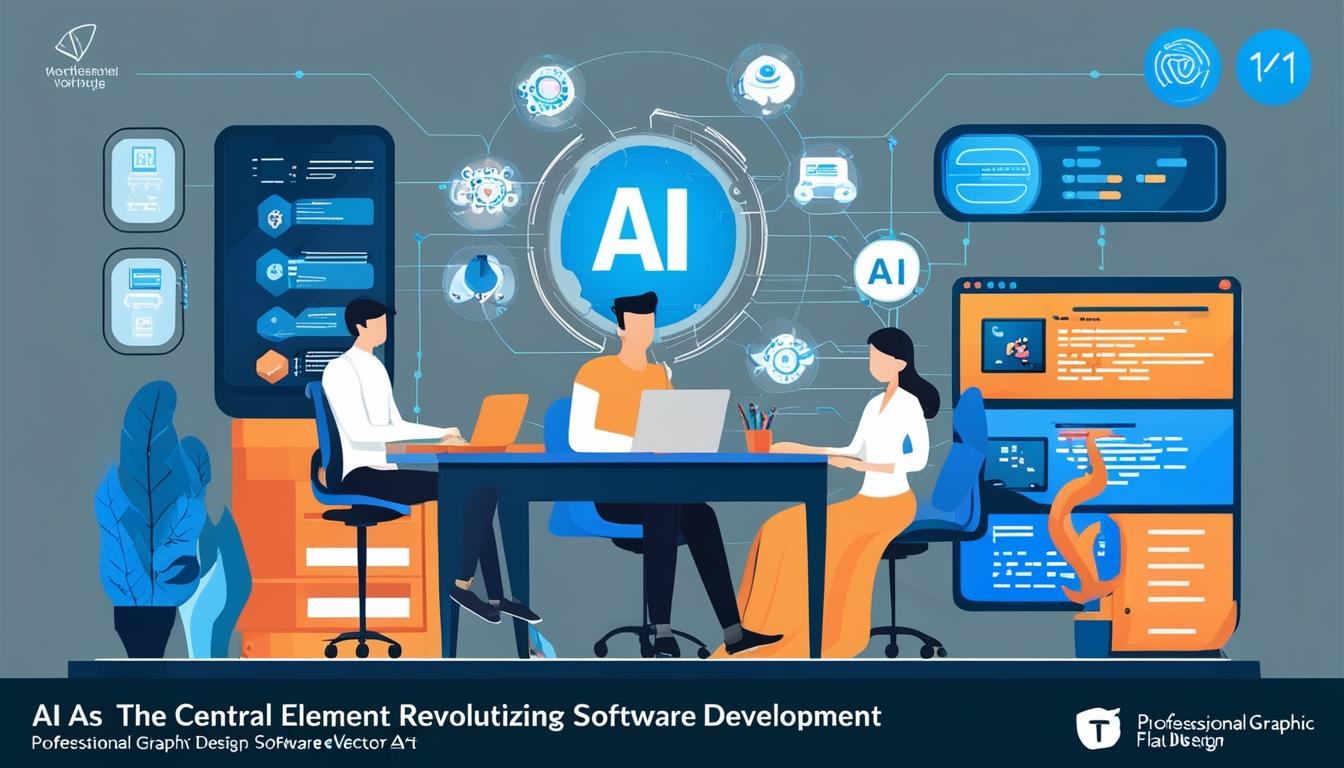
The integration of artificial intelligence into software development is set to transform traditional methodologies, shifting the focus from manual coding to high-level conceptualisation and strategic oversight.
AI Revolutionises Software Development: A Shift From Code to Conceptualisation
In a rapidly evolving technological landscape, the integration of artificial intelligence (AI) into software development is predicted to overhaul traditional methodologies, potentially rendering approaches such as Agile and Waterfall obsolete. The burgeoning influence of AI in this sector is poised to transform the entire software development lifecycle (SDLC), prompting a re-evaluation of longstanding processes.
AI-driven code generation tools are emerging as game-changers. Rather than simply augmenting existing workflows with chatbots or OpenAI API calls, these tools advocate for a comprehensive reimagining of the development process—from conceptualisation to execution—through what is described as an entirely AI-driven framework. The focus is shifting from manual coding to a broader emphasis on requirements, specifications, and the verification of AI outputs.
Prominent insights into this transformation have been provided by Reid Gordon Simmons, a research professor from the Robotics Institute at Carnegie Mellon University, who has commented on the prospective shift in the roles of software engineers. The transition is expected to elevate their focus towards high-level strategic components such as validation and verification, moving away from intricate coding practices.
Key anticipated changes in the software development lifecycle, driven by AI, include:
-
Acceleration of Development Cycles: The conventional two-week sprint, once a staple of Agile development, may be deemed excessively prolonged in light of AI’s ability to expedite processes. Teams might transition to much shorter, more dynamic cycles measured in days or even hours.
-
Hybrid Team Structures: Future teams are likely to incorporate AI agents, each tasked with specific processes such as planning, coding, or quality analysis. Human developers’ roles may pivot towards supervising these AI-driven outputs, ensuring the culmination of quality projects.
-
Enhanced Knowledge Management: Addressing the inefficiencies of capturing and storing development data could be revolutionised by large language models (LLMs), which can more effectively manage and utilise textual data generated during the development process.
-
Globalised Development Models: Overcoming context transfer challenges can facilitate ‘follow-the-sun’ software delivery models, enabling continuous development cycles across global time zones.
-
Surge in Software Demand: AI is envisioned to meet the mounting demand for software by embedding itself into every facet of the development process, not simply as a supplementary solution but as a core component.
Despite these advancements, the integration of AI introduces new challenges, particularly concerning the sheer volume of code. The unprecedented quantity raises questions about maintainability and quality, especially when so much is generated so quickly. Moreover, there’s a level of concern regarding the empowerment that AI provides to developers, particularly those less experienced who may not fully grasp the complexities of the tools at their disposal.
The trajectory of AI-driven development suggests a future where the focus of software creation will likely shift from coding itself to refining code and defining project requirements. This evolution can potentially democratise the industry, enabling a broader range of contributors to participate in development tasks that were previously exclusive to engineers.
Cory Hymel, VP of Research & Innovation at Crowdbotics, is at the forefront of this technological transition, advocating for the integration of AI across the software lifecycle. His insights highlight the transformative potential of AI to streamline development while reducing risk and enhancing security.
As the software industry embraces this shift, the evolution of development methodologies is expected to mirror technology’s broader leaps—moving from decades-old practices to an era of sophisticated AI-driven innovation.
Source: Noah Wire Services
More on this & sources
- https://adevait.com/artificial-intelligence/impact-of-ai-on-software-development – This article supports the claim that AI is transforming software development by automating routine tasks, enhancing code quality, and improving project management, which aligns with the acceleration of development cycles and the shift in focus from manual coding to broader aspects of the development process.
- https://brainhub.eu/library/software-developer-age-of-ai – This source discusses how AI is changing the nature of work for software developers, including automating repetitive tasks and enhancing the DevOps process, which corroborates the anticipated changes in the software development lifecycle driven by AI.
- https://salesforcedevops.net/index.php/2024/07/01/the-evolution-of-ai-in-software-engineering/ – This article outlines the stages of AI integration in software engineering, including AI-enhanced TODOs and autonomous virtual employees, which supports the idea of hybrid team structures and the evolving roles of software engineers.
- https://www.forbes.com/sites/garydrenik/2024/07/09/ai-is-driving-an-evolution-in-the-role-of-the-software-developer – This article highlights how AI is streamlining complex coding tasks, boosting productivity, and enabling developers to focus on strategic and innovative aspects, aligning with the shift from manual coding to high-level strategic components.
- https://madeintandem.com/blog/embracing-ai-revolution-software-development-pros-cons/ – This source discusses the pros and cons of AI in software development, including accelerated development processes and enhanced software quality, which supports the anticipated acceleration of development cycles and the focus on quality and verification.
- https://adevait.com/artificial-intelligence/impact-of-ai-on-software-development – This article mentions the use of AI in managing and analyzing data, which can facilitate globalised development models and ‘follow-the-sun’ software delivery models.
- https://brainhub.eu/library/software-developer-age-of-ai – This source discusses the surge in software demand and how AI can meet this demand by embedding itself into every facet of the development process, not just as a supplementary solution but as a core component.
- https://salesforcedevops.net/index.php/2024/07/01/the-evolution-of-ai-in-software-engineering/ – This article explores the concept of AI Development Agents and autonomous virtual employees, which raises questions about maintainability and quality, particularly with the unprecedented quantity of code generated by AI.
- https://www.forbes.com/sites/garydrenik/2024/07/09/ai-is-driving-an-evolution-in-the-role-of-the-software-developer – This article emphasizes the importance of balancing human creativity with AI efficiency, which aligns with the idea that the focus of software creation will shift from coding itself to refining code and defining project requirements.
- https://madeintandem.com/blog/embracing-ai-revolution-software-development-pros-cons/ – This source highlights the ethical concerns and security risks associated with AI integration, such as algorithmic bias and the potential for AI-driven tools to be exploited by malicious actors.
- https://adevait.com/artificial-intelligence/impact-of-ai-on-software-development – This article discusses the role of AI in enhancing knowledge management and utilizing textual data generated during the development process, which supports the idea of enhanced knowledge management through large language models.







