









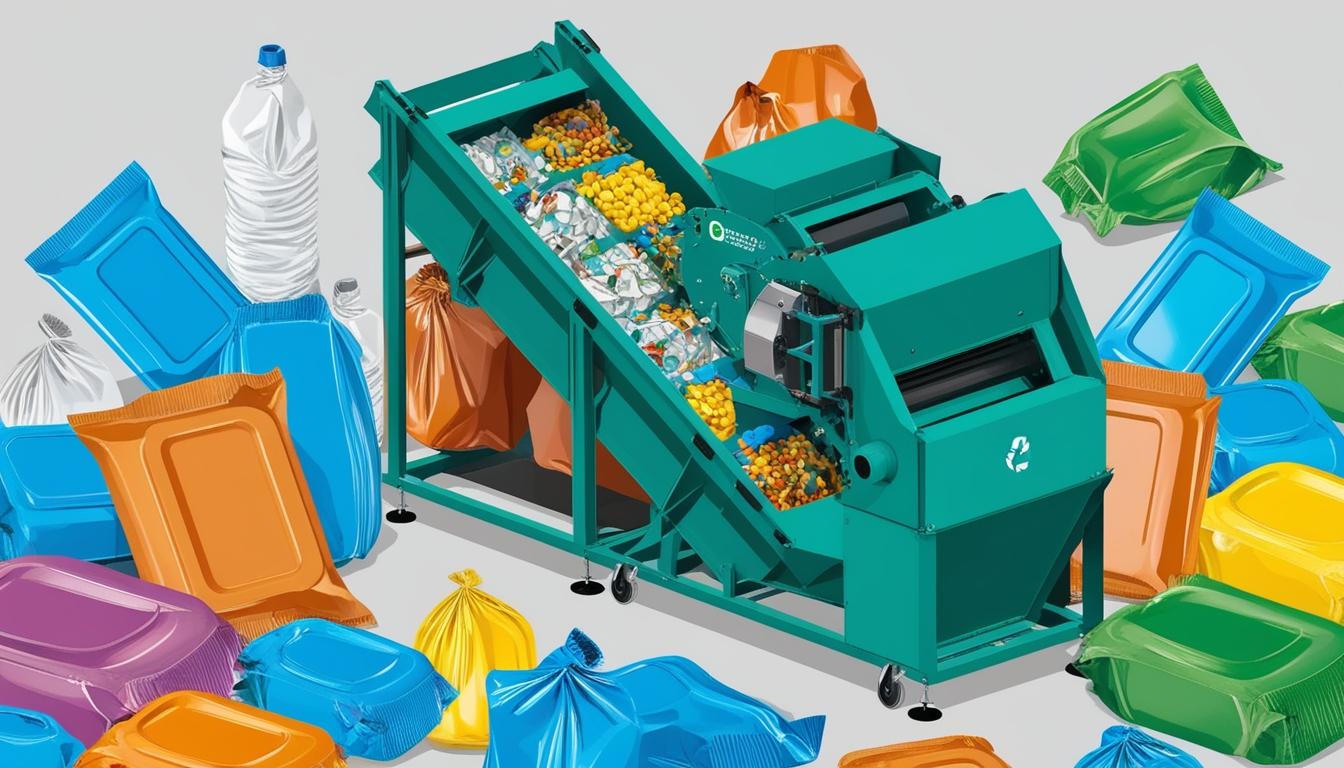
TOMRA and NEXTLOOPP unveil an AI-driven solution to improve the efficiency of sorting food-grade polypropylene, representing a major leap towards sustainable recycling practices.
AI-Powered Recycling Initiative Revolutionises Plastic Sorting in Europe
In a significant leap towards more sustainable plastic recycling, TOMRA and NEXTLOOPP have announced the successful development of an AI-powered sorting solution to enhance the efficiency of recycling post-consumer food-grade polypropylene (PP) packaging. This collaboration, which began amidst the early days of the COVID-19 pandemic, aims to tackle the vexing issue of sorting food-grade products from non-food-grade plastics, a challenge that has long hindered polypropylene recycling efforts.
NEXTLOOPP, a project launched nearly four years ago under the leadership of Professor Edward Kosior, founder of both Nextek and NEXTLOOPP, focuses on closing the loop on post-consumer food-grade PP packaging. As the global PP market continues to grow, expected to reach £70 billion by 2028, the need for efficient recycling solutions becomes increasingly urgent. Current recycling methods cater to a mere 1% of this massive market.
The project pivots around cutting-edge technology, prominently featuring innovative fluorescent markers to differentiate food-grade plastics in the waste stream. However, the industry faced a lack of consensus on adopting a universal sorting method, given the numerous technologies available, each with its own requirements for packaging changes.
Central to this new approach is TOMRA’s application of AI through their state-of-the-art deep-learning technology, GAINnext. Initially tested with silicone cartridges and wood sorting, the technology has been adapted for separating food-grade from non-food-grade plastics, marking a groundbreaking achievement in the field. By early 2024, TOMRA’s system proved capable of identifying over 95% of prior food packaging content accurately, a figure that is critical for ensuring compliance with food safety standards.
Combining TOMRA’s deep-learning technology with their AUTOSORT near-infrared visual spectrometry system, this new approach has demonstrated the ability to sort five tonnes of mixed PP plastic packaging per hour, achieving an impressive 97% food-grade content in sorted output. This success exceeds traditional methods reliant on the use of markers, providing a more holistic and adaptable sorting solution.
This innovative AI system advances the recycling process by recognising packaging based on its design attributes, rather than relying solely on labels or markers. The AI is trained through a series of structured scenarios, identifying shapes, sizes, and colours that are common in food packaging. This method allows the system to make quick and accurate sorting decisions, even with damaged or irregular items.
NEXTLOOPP and TOMRA’s breakthrough is set to transform the industry, enabling a more streamlined recycling process, potentially leading to the widespread rollout of this technology in PP sorting facilities. This progress represents a significant step towards meeting brand owners’ demands for low-carbon, circular economy solutions.
Furthermore, this AI-driven approach provides a fresh avenue for packaging design, encouraging standardisation based on recognisable attributes to improve efficiency in recycling streams. As traditional marker reliance wanes, the possibility for more sustainable and economically advantageous packaging solutions comes into focus.
This development is poised to significantly impact global recycling operations, accelerating the production of food-grade PP recycled streams and supporting the transition to a more circular economy. With ongoing trials and adjustments to optimize AI’s capabilities, TOMRA and NEXTLOOPP are paving the way for a more sustainable future in plastic recycling.
Source: Noah Wire Services






