






Artificial intelligence technologies are revolutionising diverse sectors, providing innovative solutions and efficiencies that optimize traditional practices in social work, retail, education, manufacturing, and healthcare.
AI Integration Across Various Sectors: Transformative Approaches in Social Work, Retail, Education, Manufacturing, and Healthcare
In recent developments across diverse sectors, artificial intelligence (AI) technologies continue to play an increasingly pivotal role, offering innovative solutions and efficiencies. These advancements are particularly notable in the fields of social work, retail, education, manufacturing, and healthcare, where AI is being harnessed to optimise and transform traditional practices.
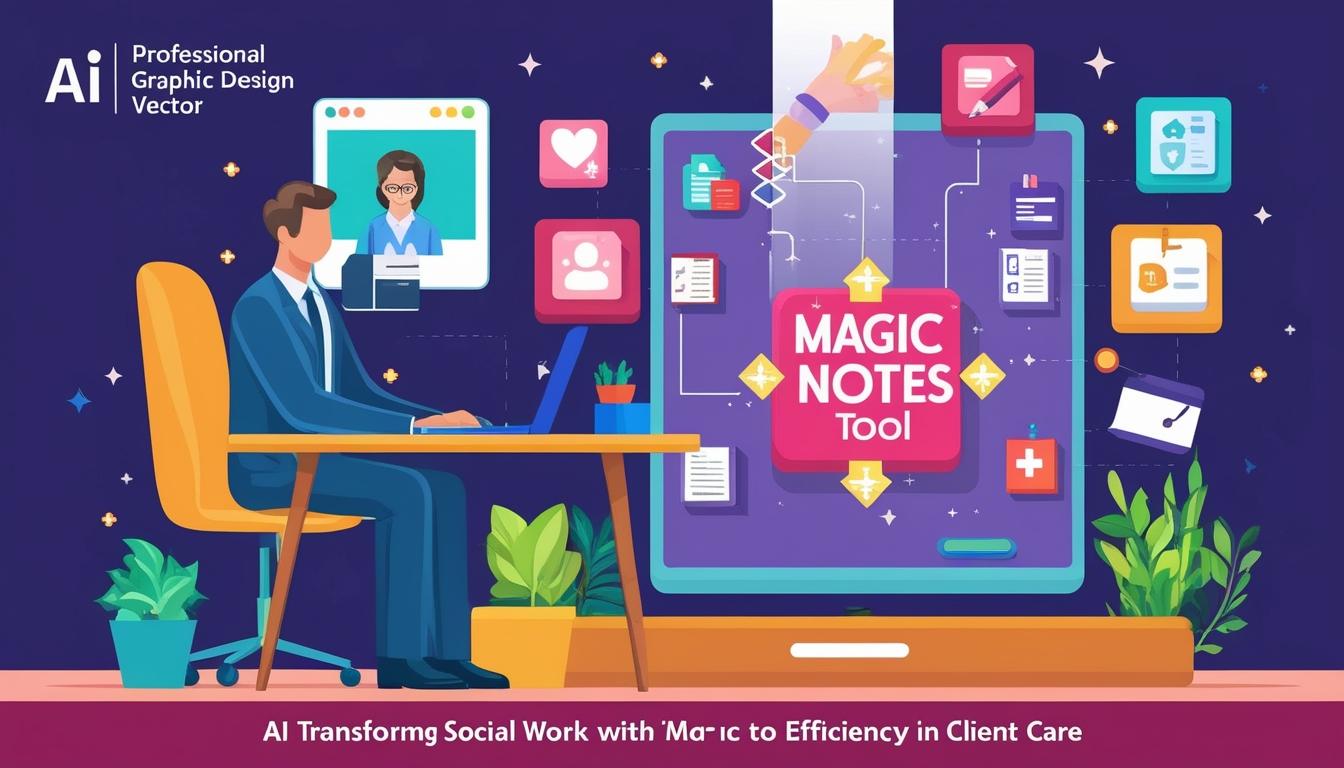
Social Work Enhancements: ‘Magic Notes’ AI Tool
This week, an initiative to enhance the tools available to social workers was revealed, spearheaded by the introduction of an AI tool named ‘Magic Notes’. This cutting-edge technology is designed to aid social workers in their routine tasks by providing instant summaries of case information, suggesting follow-up actions, and drafting communication, such as letters to general practitioners (GPs). Currently deployed across councils in Swindon, Barnet, and Kingston, the tool is prepared for broader implementation in approximately two dozen more councils. Developed by the tech company Beam, which boasts expertise from personnel with backgrounds at Meta and Microsoft, Magic Notes promises significant potential savings for councils, estimated at up to £2 billion annually. By automating administrative tasks, the tool enables social workers to devote more time to direct client interactions.
Retail Sector Advancements: AI in Self-Checkout Systems
In the realm of retail, AI technologies have subtly become a fixture in self-checkout systems in supermarkets such as Sainsbury’s, M&S, and Aldi. These systems utilise sensors and cameras powered by AI to monitor items in customer baskets and bagging areas, reducing the likelihood of scanning errors and minimising theft. This technology not only expedites the shopping process but also decreases the need for employee intervention, though staff presence remains essential for addressing occasional technical hitches at the kiosks.
Educational Innovations: Government-backed AI Solutions
In education, AI’s prominence is growing, albeit more gradually. The UK government has announced a £4 million investment aimed at integrating AI into classrooms, specifically through the development of a ‘content store’. This resource is envisioned as a repository of legally compliant, AI-curated educational materials for teachers, designed to alleviate time spent on curriculum preparation and administrative duties, such as marking. Moreover, AI is employed within the university sector through platforms like Turnitin, which detects and analyses plagiarism and AI-generated text within student assignments.
Manufacturing Efficiencies: AI Implementation in Industry Leaders
Major manufacturing companies have also integrated AI to optimise operations and reduce costs. Rolls-Royce utilises AI to monitor engine performance, predict potential failures, and conduct diagnostic evaluations to ensure engines are test-ready before delivery. Their proprietary ‘Aletheia Framework’ serves to maintain ethical standards and bolster trust in AI applications, extending its usage beyond their own operations. Similarly, Siemens has adopted AI to enhance its manufacturing processes, from automating production lines to employing smart sensors for equipment monitoring.
Healthcare Transformations: NHS AI Lab and Diagnostic Tools
In healthcare, the NHS has inaugurated the NHS AI Lab to foster the development and implementation of AI technology. The lab’s mission is to ensure that AI applications deliver accurate patient guidance while upholding stringent regulatory standards. AI advancements are evident in imaging and disease screening processes, exemplified by Mia IQ’s use in breast cancer screenings to refine image quality and accuracy. AI also assists in the analysis of CT scans to detect undiagnosed spinal fractures, indicative of conditions like osteoporosis, which underscores its potential in early detection and prevention of complex health issues.
Across these diverse sectors, AI is clearly poised to reshape traditional practices, enhancing efficiency and effectiveness while simultaneously presenting new avenues for growth and improvement.
Source: Noah Wire Services







