









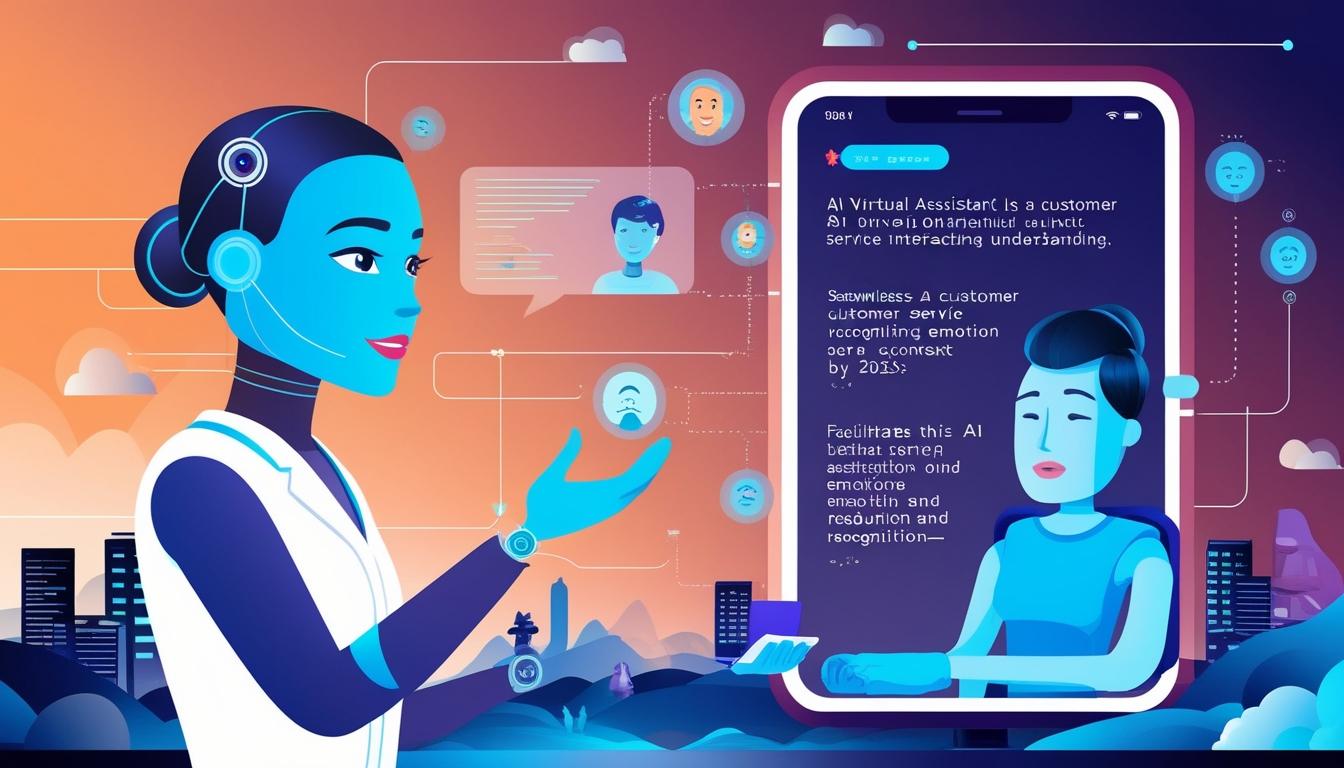
A recent report forecasts that AI-operated virtual assistants will enhance customer interactions by 2025, improving efficiency and emotional understanding while preserving essential human engagement.
AI-Driven Virtual Assistants Poised to Revolutionise Interaction by 2025
In a rapidly evolving technological landscape, artificial intelligence (AI) is set to play an increasingly significant role in customer interactions by 2025, according to a recent report from consultancy firm Gartner. The report projects that AI-operated virtual assistants will grow more conversational and realistic, with the capability to understand context and even gauge human emotions.
These advancements in AI technology mark a transformative shift in how businesses and customers engage. The report predicts that by 2025, 80% of customer interactions will still be conducted manually, suggesting a substantial integration of AI yet preserving a significant portion for human involvement. This development indicates the growing reliance on AI for handling various customer service tasks beyond simple queries.
One of the key areas where AI is expected to make significant impacts is in booking and managing appointments. For instance, AI could potentially handle scheduling by matching a patient’s availability with that of healthcare professionals, streamlining the process while reducing the likelihood of human error. This capability is noteworthy as it highlights the potential for AI to enhance efficiency across various sectors by overcoming mundane administrative challenges.
Moreover, the ability of AI to comprehend human emotions and context is anticipated to improve its functionality further. Emotion recognition could allow virtual assistants to tailor their responses more effectively, potentially leading to more satisfactory customer service experiences. AI’s capacity to understand and process nuanced human emotions could, for instance, aid in defusing tense customer interactions by deploying more empathetic communication strategies.
As AI technology advances, its integration into daily customer service operations becomes more seamless. While not all interactions can be automated, with 20% projected to remain manual, the presence of AI will likely support human roles, adding a layer of technological sophistication that could redefine traditional customer service paradigms.
Industries across the board, including retail, travel, and healthcare, are expected to benefit from these technological advancements. The healthcare sector, especially, stands to gain as AI could assist medical staff by taking over routine tasks, thereby allowing professionals to focus more on direct patient care.
The implications of these advancements hold significant promise for efficiency and customer satisfaction. The anticipated developments in AI capabilities are likely to streamline interactions and add value to both businesses and consumers, establishing AI as a critical component of future customer service frameworks. As these technologies evolve, organisations must stay attuned to these changes to leverage AI’s full potential while ensuring the balance between automated and human interactions is maintained.
Source: Noah Wire Services






