

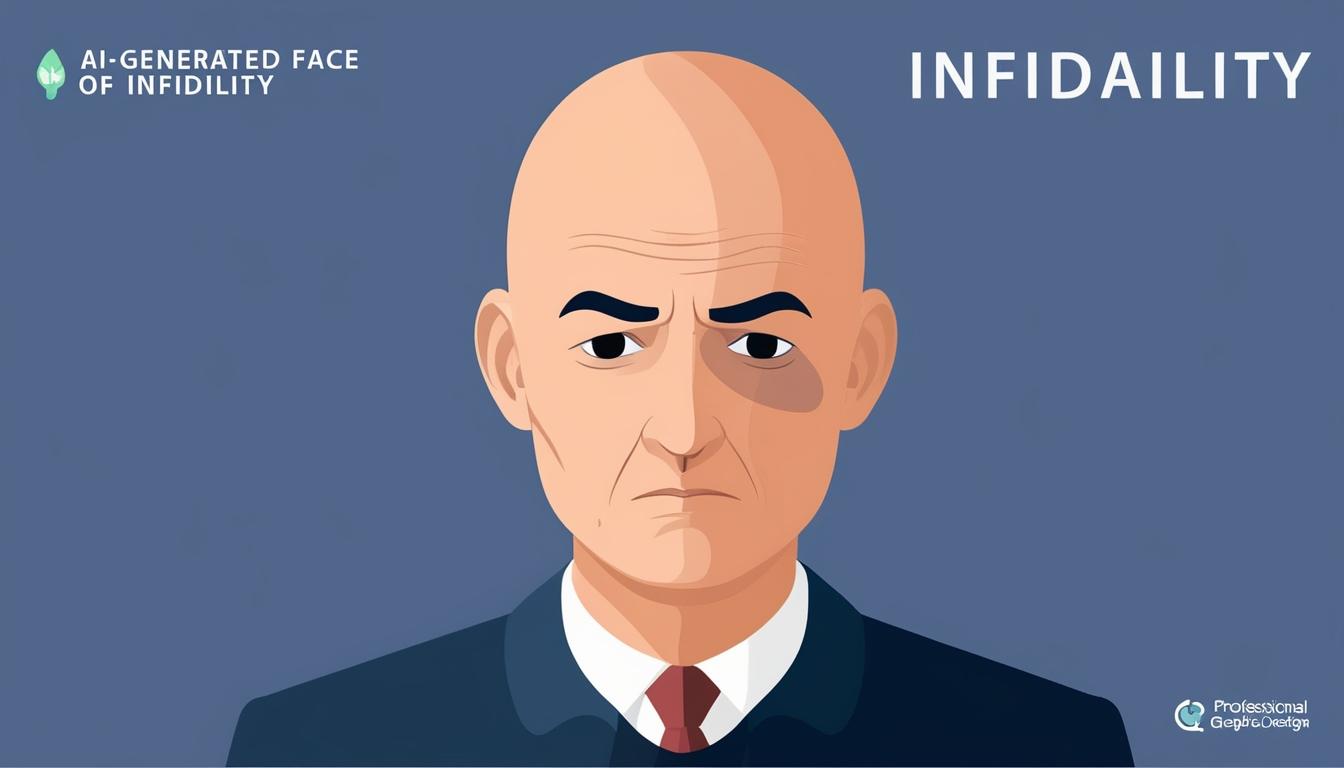

A new study has used artificial intelligence to create a composite image representing the stereotypical unfaithful partner, revealing surprising insights into the characteristics of infidelity among men.
In a unique blending of technology and social research, a new study has utilised artificial intelligence to generate what could potentially be described as the ‘face of infidelity’, based on data from wronged partners. This AI-generated composite, created from the combined testimonies of women who have experienced infidelity, offers a curious insight into the potential appearance of a stereotypical “love rat”. The research was conducted by MrQ, an online bingo site, which surveyed 2,000 women.
According to the AI’s assessment, this average unfaithful male isn’t the epitome of extreme attractiveness but instead possesses a notably ordinary appearance. He is characterised by a balding head, a five o’clock shadow, small lips, blue or grey eyes, an enlarged nose, and appears to be in his forties. The depiction also includes frown lines, which some might speculate could arise from the stress of maintaining multiple relationships.
The study’s statistical findings reflect broader trends related to infidelity. Out of the 2,000 women surveyed, 35% reported having been cheated on by a partner. Interestingly, the study also suggests a correlation between hairstyles and infidelity; men sporting mullets were reported to be the least likely to stray, with only 17% of women expressing they had been cheated on by men with such a hairstyle.
Conversely, a profile emerges for typically faithful men: they tend to be in their late twenties and maintain a relatively clean-shaven look. Moreover, it seems men might be inherently more predisposed to infidelity with 36% admitting to betrayals, compared to 24% of women owning up to similar behaviour.

The research also delves into geographic variations regarding infidelity. Manchester leads the list of cities with the highest percentage of reported cheats at 43%, followed by Sheffield at 39%, Cardiff at 34%, Leeds at 32%, and Norwich at 30%. On the other end of the spectrum, Edinburgh emerges as the most faithful city, with 55% of residents claiming they have neither cheated nor been cheated on.
The survey also explored the aftermath of uncovering infidelity, revealing that 39% of women ended their relationships immediately upon discovering a partner’s unfaithfulness. Others demonstrated varying degrees of delay, with 12% ending relationships a month after discovery, 14% within three months, 7% after six months, and 6% enduring for up to a year. Surprisingly, 12% chose to stay with their unfaithful partners.
Rosie Maskell of MrQ remarked on the findings, highlighting how artificial intelligence has elucidated certain physical traits that might traditionally be linked with infidelity. She commented that these characteristics are not necessarily linked with flamboyance or striking handsomeness; rather, the average love rat might resemble an everyday man. This research provides a thought-provoking contribution to understanding the patterns of romantic fidelity and infidelity.
Adding depth to the discussion, another earlier study uncovered that an astonishing eight out of ten people engaged in “micro-cheating” while on holiday, a term describing minor transgressions such as applying sun cream to a friend’s back. These insights together present a complex picture of modern relationships and the challenges they face in the realm of fidelity.
Source: Noah Wire Services