









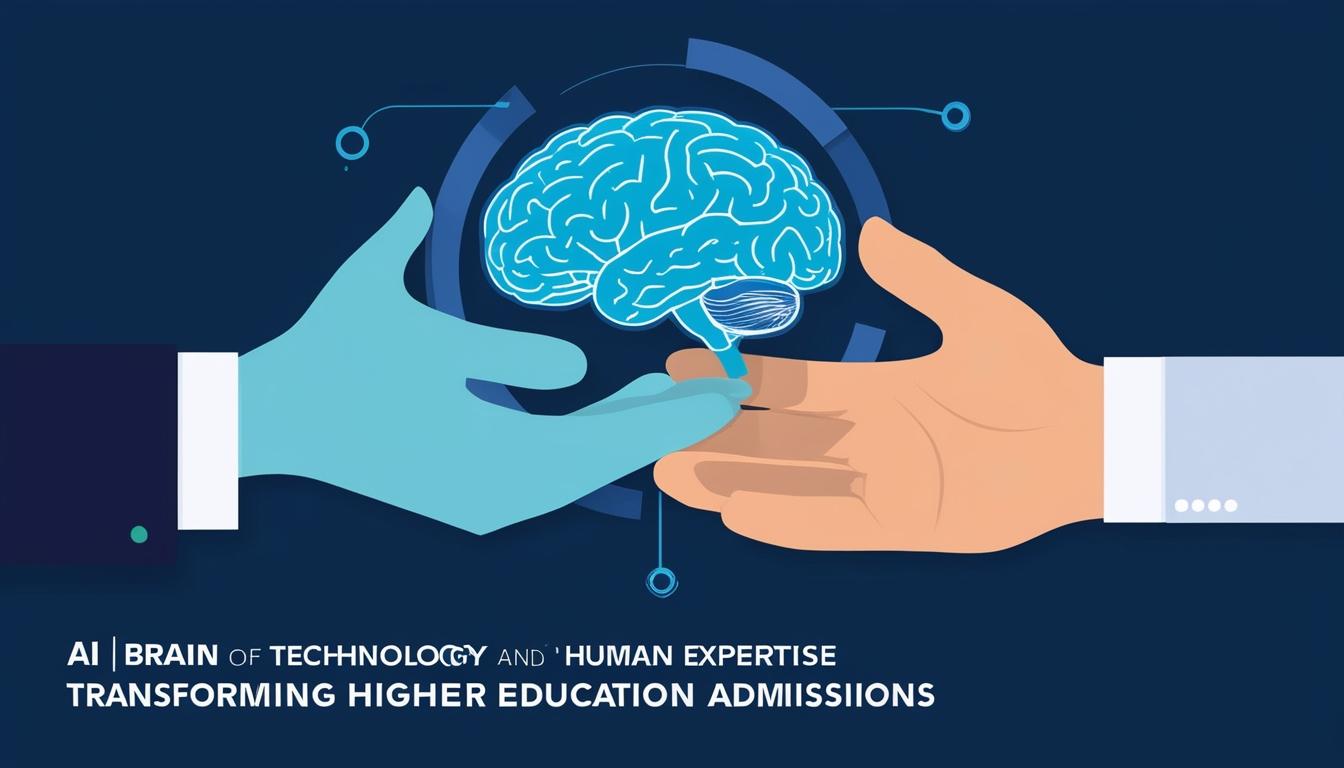
Artificial intelligence is transforming the admissions landscape, enhancing human decision-making while addressing key concerns about maintaining fairness and inclusivity.
AI and Human Expertise Join Forces to Innovate Higher Education Admissions
In the ever-evolving landscape of higher education, artificial intelligence (AI) stands as a prominent tool influencing decision-making processes. While concerns about AI overshadowing human judgment persist, the technology’s true potential lies in its ability to augment human expertise. This partnership could redefine how institutions manage admissions and other complex operations, aiming to produce better outcomes for both students and educators.
AI’s role in graduate admissions is a prime example. The technology is increasingly used to evaluate prospective students, offering tools that analyse vast datasets to unearth patterns and insights not easily discernible by human evaluators. This approach is particularly advantageous in holistic admissions processes, where schools aim to align their selection criteria with overarching institutional missions and values. The use of AI enables the identification of less tangible candidate qualities, such as perseverance and empathy, and helps admissions staff optimise the composition of diverse and well-rounded student cohorts. In doing so, AI ensures that while certain selection criteria are met, the individuality of each applicant is maintained, preventing the creation of a homogeneous student body.
Key Pillars for AI Integration
For AI to be effectively integrated into higher education admissions, institutions must concentrate on three critical areas: skill set enhancement, advanced technology deployment, and superior data management. Developing a skilled workforce capable of navigating AI tools is essential. In particular, training staff to utilise software like customer relationship management (CRM) systems—used for automating communication and other tasks—becomes imperative so that the benefits of AI can be fully harnessed.
On the technological front, institutions must move beyond traditional statistical methods that often fail to encapsulate the complexities of individual students. By adopting nonlinear and sophisticated analytical models, higher education institutions can gain a more comprehensive understanding of their applicants.
However, the efficacy of AI relies heavily on data quality and accessibility. Many institutions face challenges in data collection and management, which are vital for AI technologies to provide accurate insights. Therefore, establishing robust data practices is essential for institutions to reap the full benefits of AI.
Balancing Technology and Human Touch
Despite AI’s analytical prowess, human expertise remains crucial in interpreting data and contextualising insights to make informed decisions. Over-reliance on technology can lead to the loss of nuanced understanding that human judgment provides. Concerns surrounding potential biases in AI, particularly when using historical data that may reflect existing societal inequities, are significant. Ensuring fairness and transparency from the outset in the design of AI systems is key to mitigating these risks.
Maintaining the integrity and inclusivity of decisions means involving human oversight, especially in the final decision-making stages. This balance not only enhances AI-driven insights but also preserves essential human elements in decision-making processes.
Adopting Best Practices
To navigate the integration of AI ethically and effectively, institutions should consider the following best practices:
- Transparency: Clearly communicating the role of AI tools in decision-making to foster trust among stakeholders.
- Continuous Training: Investing in staff training to deepen their understanding of AI systems’ capabilities and limitations.
- Rigorous Testing: Conduct comprehensive testing and validation to affirm the accuracy, reliability, and fairness of AI tools.
- Bias Mitigation: Conduct regular audits of AI algorithms, ensuring diverse and representative data sets are used to minimise biases.
- Ethical Standards: Uphold principles concerning data privacy, consent, and the broader impact of AI on individuals and communities.
As the integration of AI into higher education progresses, it offers significant opportunities alongside inherent challenges. By leveraging AI as a complementary tool, institutions can enhance decision-making capabilities while retaining the important human touch integral to educational practices. The innovative evolution of higher education relies on the collaborative synergy between technology and human insight, promoting efficiency, improved outcomes, and fairness in educational endeavours.
Source: Noah Wire Services






