









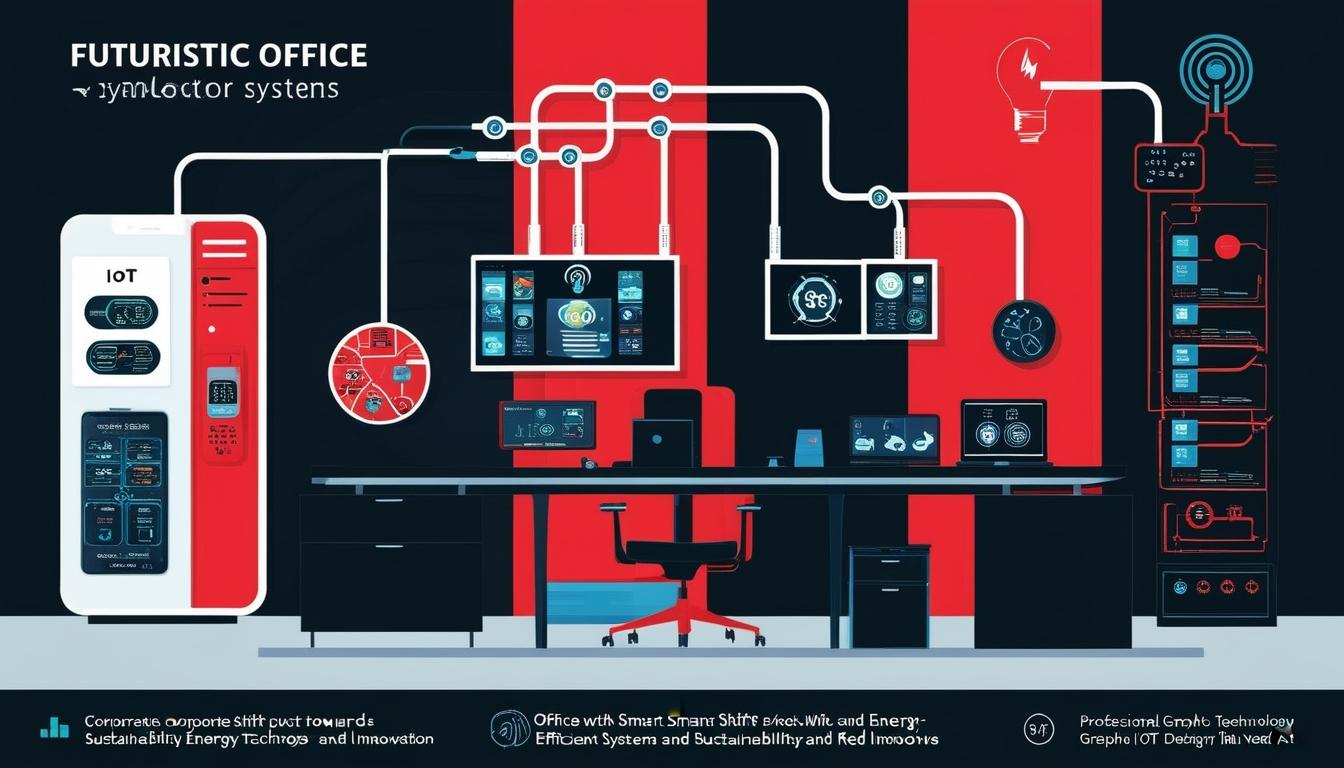
As the climate crisis intensifies, businesses must embrace smart technologies and strategies to enhance energy efficiency and meet sustainability goals.
The global shift towards corporate sustainability is accelerating, presenting both challenges and opportunities for businesses across various sectors. As they navigate increasing pressure from legislators and the public to enhance their environmental credentials, companies must now adopt actionable strategies to avoid potential financial implications and reputational damage. The Independent outlines how the pressing climate crisis necessitates effective sustainability measures, particularly as younger generations increasingly seek values alignment in their employment and purchasing decisions.
One significant area where businesses can make substantial improvements is energy consumption within their office environments. From the management of lifts and escalators to the operation of heating systems and lighting, companies emit considerable energy waste that could be minimised. The article highlights common inefficiencies, such as lights remaining on in empty rooms, inconsistent temperature control, and poorly timed lift operations, as costly errors prevalent in urban offices from Belfast to Beirut.
Addressing these energy management challenges can prove daunting due to the complexities involved in accurately gathering data about energy use and occupancy. Traditional solutions often fall short, leaving businesses with insufficient insight into their building operations. However, advancements in technology, particularly through the convergence of the Internet of Things (IoT) and artificial intelligence (AI), offer promising solutions. Smart Spaces, a global smart building platform, is utilising these technologies to enhance operational efficiency and sustainability.
The Smart Spaces platform leverages IoT to connect physical devices across an office, allowing for the collection of real-time data on occupancy and energy usage. For instance, pressure sensors can detect footfall, identifying where people are within a building at any given moment. Concurrently, AI algorithms can use this information to automate systems—such as shutting off lights or adjusting the temperature in unoccupied areas—thereby optimising energy consumption in real time.
The benefits of such technology integration are significant. By implementing solutions like the Smart Spaces app, businesses not only contribute to environmental sustainability but also achieve substantial cost savings. The platform, currently managing 85 million square feet of commercial real estate across 26 countries, demonstrates the potential for substantial energy efficiency across iconic UK buildings, including 22 Bishopsgate in London.
As organisations strive towards Net Zero targets, the adoption of smart building technologies is becoming increasingly essential. Businesses can streamline their operations while appealing to the growing cohort of environmentally conscious employees. Smart Spaces positions itself as a leader in this innovative approach, bringing together the principles of efficiency for enterprises, knowledge for property owners, and enhanced convenience for employees, ultimately fostering a greener corporate environment.
In conclusion, the future trends in AI automation and smart technologies indicate a paradigm shift in business practices, particularly in energy management and corporate sustainability. The integration of IoT and AI stands to not only revolutionise how companies operate but also fortify their positions in an increasingly eco-conscious marketplace.
Source: Noah Wire Services
- https://www.wbcsd.org/news/keeping-transformation-on-track-navigating-key-trends-shaping-corporate-sustainability-in-2024/ – Corroborates the increasing pressure from legislators and the public for companies to enhance their environmental credentials and the importance of corporate sustainability in 2024.
- https://www.erm.com/insights/10-sustainability-trends-likely-to-shape-the-business-landscape-in-2024-and-beyond/ – Supports the need for companies to adopt actionable strategies for sustainability, including the integration of ESG and the importance of addressing climate change and energy consumption.
- https://www.apiday.com/blog-posts/5-sustainability-trends-to-follow-in-2024 – Highlights the acceleration of disclosure preparation and the scrutiny of scope 3 emissions, which are crucial for energy management and sustainability reporting.
- https://plana.earth/whitepaper/sustainability-trends-2024 – Discusses the decade of climate disclosure and the transformation of business models to align with net-zero objectives, emphasizing the role of technology in sustainability.
- https://www.oecd.org/content/dam/oecd/en/publications/reports/2024/03/global-corporate-sustainability-report-2024_d8e1e8b4/8416b635-en.pdf – Provides insights into recent regulatory developments and the importance of corporate governance policies in promoting sustainability and resilience.
- https://www.wbcsd.org/news/keeping-transformation-on-track-navigating-key-trends-shaping-corporate-sustainability-in-2024/ – Mentions the growing emphasis on accountability and the need for companies to back up sustainability ambitions with solid data, relevant to energy management and efficiency.
- https://www.erm.com/insights/10-sustainability-trends-likely-to-shape-the-business-landscape-in-2024-and-beyond/ – Details the trend of safeguarding natural systems and the importance of nature-related disclosures, which aligns with the broader context of corporate sustainability.
- https://www.apiday.com/blog-posts/5-sustainability-trends-to-follow-in-2024 – Explains the role of climate fintech and AI in improving risk assessment and sustainability practices, relevant to the integration of IoT and AI in smart building technologies.
- https://plana.earth/whitepaper/sustainability-trends-2024 – Discusses the intensification of greenwashing scrutiny and the need for authentic sustainability claims, which is crucial for maintaining a positive corporate reputation.
- https://www.oecd.org/content/dam/oecd/en/publications/reports/2024/03/global-corporate-sustainability-report-2024_d8e1e8b4/8416b635-en.pdf – Highlights the importance of boards ensuring that companies’ lobbying activities are coherent with their sustainability-related goals and targets, supporting the integration of sustainability into core business practices.
- https://www.erm.com/insights/10-sustainability-trends-likely-to-shape-the-business-landscape-in-2024-and-beyond/ – Mentions the trend of enabling sustainable consumption and production, which includes reducing waste and improving product design, logistics, and materials, all relevant to energy efficiency and sustainability.






