






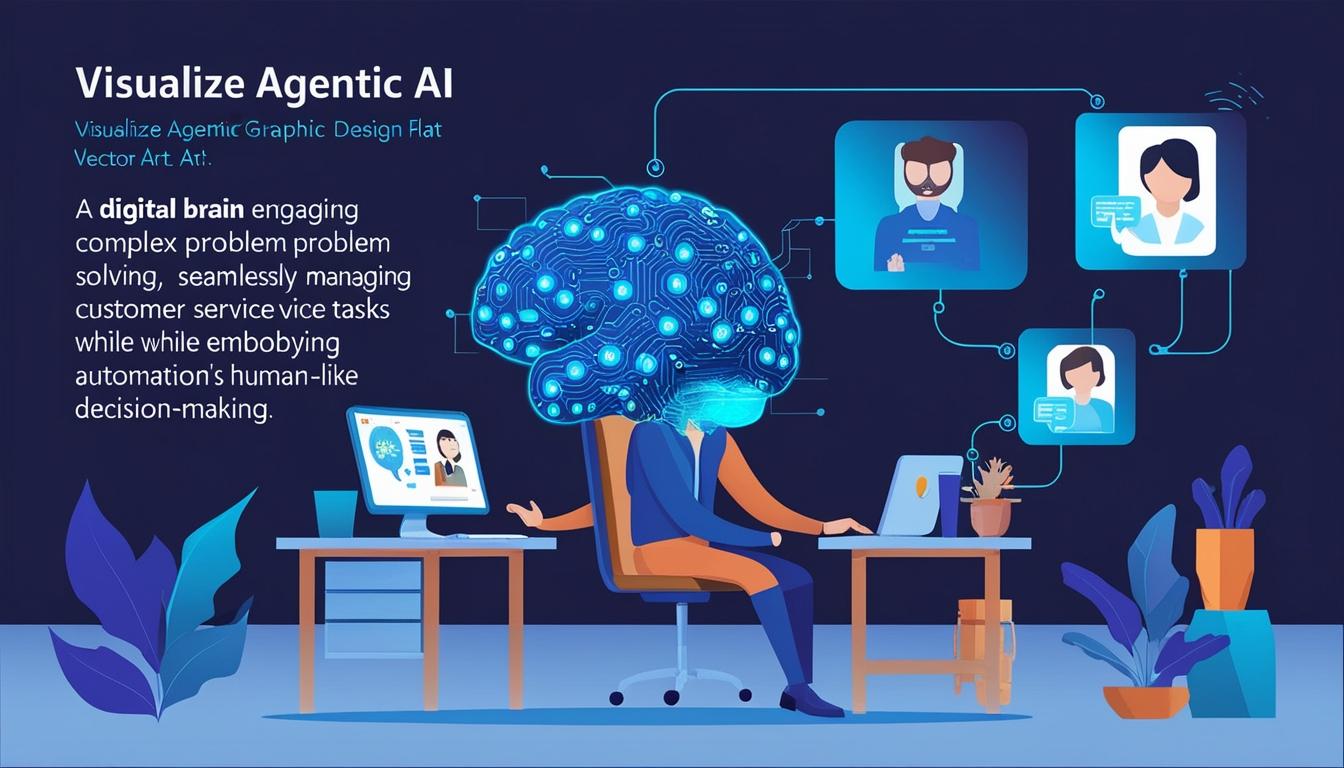

A new wave of AI technology, known as Agentic AI, is set to transform automated processes across various industries, promising greater decision-making capabilities and enhanced understanding of task intent.
In the dynamic and continuously evolving realm of technology, artificial intelligence (AI) remains a focal point of innovation and intrigue. While generative AI has been at the forefront, a new form of AI technology is emerging, dubbed Agentic AI, or agent-based AI. This development heralds a potential transformation in automated processes, promising both opportunities and challenges for various industries.
Agentic AI, unlike its predecessor RPA (Robotic Process Automation), introduces Agentic Process Automation (APA), which aims to enhance the capabilities of conventional automation. RPA has been renowned for automating repetitive tasks with high volume but faced limitations when exceptions or unique scenarios occurred, necessitating human intervention.
Agentic AI attempts to overcome these limitations by employing large action models (LAMs). These models empower the AI to take on more complex and decision-heavy tasks by assessing situations and determining the most suitable course of action to resolve exceptions. This functionality aligns closely with the operations of large language models (LLMs), which predict and generate language-based tasks.
A practical example can be observed in customer service operations. Traditional RPA systems may handle straightforward tasks such as querying an account balance. However, should a customer experience an issue such as an inability to access their account due to a faulty password, Agentic AI can step in to assess whether a password reset is necessary, update account login details, document the incident in the helpdesk system, and even communicate updates to the customer. This showcases the AI’s ability to “think” like a human within the larger context of resolving specific issues.

A distinct characteristic that sets APA apart from RPA is the focus on intent. While RPA is limited to executing defined tasks, APA seeks to understand the underlying purpose behind the tasks. This allows Agentic AI to manage entire processes rather than isolated activities. For instance, in a help-desk scenario, if a password reset request occurs, Agentic AI would evaluate broader concerns such as potential security breaches, identifying whether multiple processes need to be activated and coordinated simultaneously.
Agentic AI’s holistic approach positions it as a valuable addition to automation technology, offering enhanced process management and decision-making capabilities. The introduction of LAMs represents a significant stride towards creating AI systems that can navigate complex challenges with minimal human intervention.
As Agentic AI continues to develop, it stands to impact diverse sectors by providing innovative solutions for process automation. However, determining its full implications on business operations and the workforce will rely on further advancements and integration into existing systems.
Source: Noah Wire Services







