






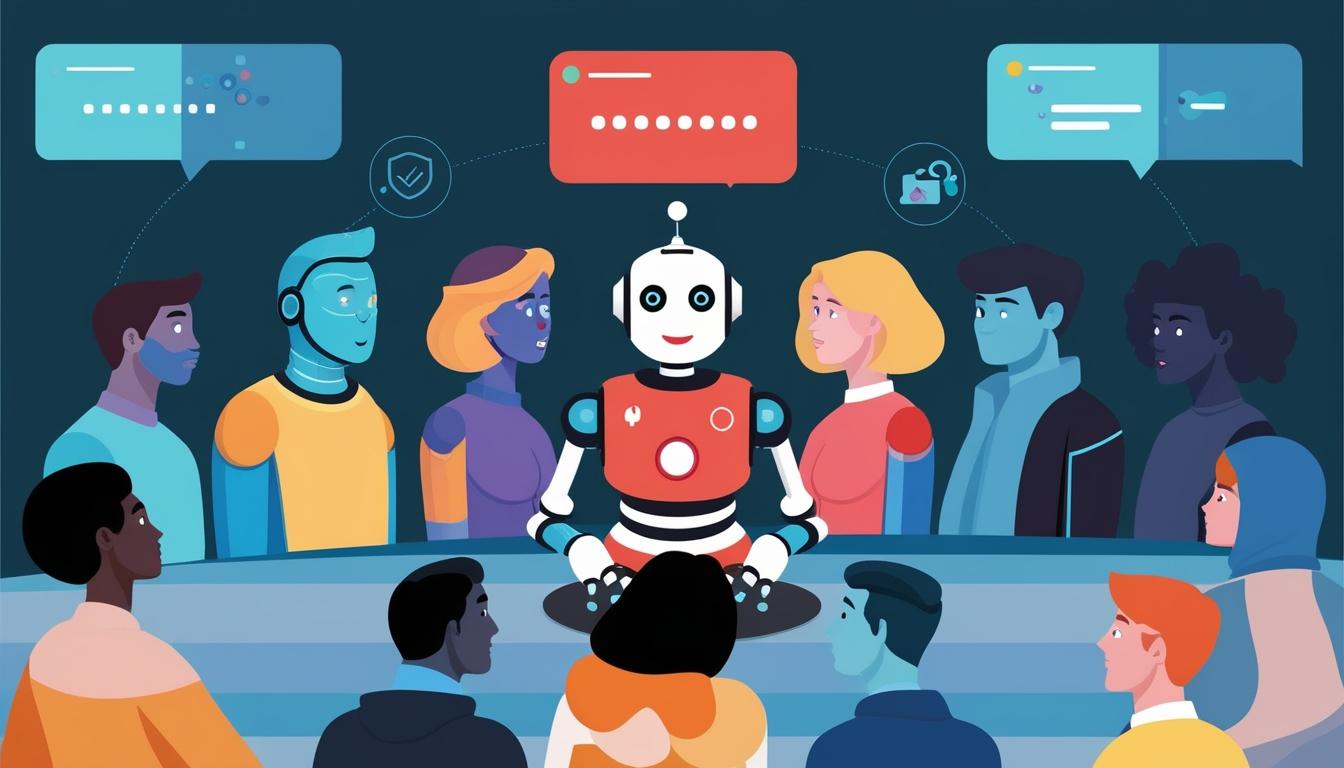

As artificial intelligence revolutionises user experience design, it enhances personalisation and efficiency while presenting significant ethical challenges that necessitate responsible implementation.
Artificial Intelligence: Revolutionising User Experience in the Digital Age
In an era where digital interaction pervades daily life, artificial intelligence (AI) emerges as a linchpin in transforming user experience (UX) design. Compelling examples illustrate AI’s prowess in enhancing efficiency and personalisation, shifting how users engage with digital platforms and redefining the role of UX researchers and designers. While AI’s integration harbours promises of streamlined, intuitive interfaces, it foregrounds significant ethical considerations demanding responsible navigation.
AI’s Role in Enhancing UX: Personalisation and Efficiency
AI’s core competency lies in processing vast datasets, making it a pivotal tool in UX personalisation. Platforms like Duolingo employ AI-driven chatbots to tailor language lessons, adapting to the unique learning paces of users and thereby reshaping educational engagement. This tailored approach epitomises the game-changing potential of AI to deliver bespoke user experiences, validated by Duolingo’s assertion of AI and education as a synergistic duo in their blog.
At the Figma Config 2024 conference, keynote speakers highlighted AI’s role in augmenting design tools, showcasing Figma’s new AI features that assist designers by automating repetitive tasks. The FigJam tool epitomises this approach, summarising ideas and generating diagrams, thus liberating designers to focus on creativity and strategy. Such innovations spotlight AI’s capacity to reinforce efficiency and facilitate dynamic, user-centric design.
Beyond Automation: Real-World Applications
AI’s utility transcends automation. By analysing user behaviour, companies like Netflix and Spotify offer personalised content recommendations, significantly enhancing user retention and satisfaction. Notably, Netflix reported that 75% of viewed content stems from these AI-driven recommendations, underscoring AI’s impact.
In healthcare, AI’s predictive analytics propose personalised treatment plans. IBM’s Watson AI, utilised in medical environments to anticipate patient outcomes, exemplifies AI’s transformative potential. Predictive models like Innocens BV’s, with a noted 75% accuracy in detecting severe sepsis, signal AI’s prospective advancements in healthcare user engagement.
Automating User Testing and Improving Accessibility
AI’s role extends to user testing automation, traditionally a laborious process. Tools like AccessiBe employ AI for accessibility testing, automating alt text generation for images to improve user experience for the visually impaired—a feature also utilised by platforms like Facebook. Additionally, Google’s Vertex AI Studio supports developers in testing generative models, enhancing user testing efficiency.
For accessibility, Microsoft’s Seeing AI app utilises visual recognition to assist visually impaired users, exemplifying AI’s significant role in rendering digital platforms more inclusive. Such innovations mark strides toward a digitally inclusive society, leveraging AI to dismantle accessibility barriers.
Ethical Challenges and Responsible Integration
Despite AI’s potential, it introduces ethical dilemmas involving data privacy, bias, and algorithm transparency. Ensuring that AI systems are ethically sound is paramount to maintaining user trust. At Figma Config 2024, discussions emphasised the necessity for ethical AI to avoid exacerbating biases or privacy violations. Companies strive for transparency in AI systems, promoting user trust and informed data use consent.
Efforts to mitigate bias include Google’s “What-If Tool,” which enables users to visualise data changes’ impact on AI predictions. Such tools aid in identifying and correcting biases, ensuring AI-driven predictions uphold fairness and accuracy.
The Future of UX Design
While AI aids in data analysis and user testing, human creativity remains irreplaceable. The future of UX design envisages a partnership where AI complements human intuition and empathy, enabling innovative, human-centric digital experiences. Acknowledging AI as a collaborative tool rather than a competitor is crucial for UX professionals aiming to stay relevant in this evolving landscape.
In conclusion, AI stands at the forefront of redefining digital interactions. Its integration promises enhanced personalisation and accessibility within UX design, although its ethical implications demand careful consideration. By responsibly leveraging AI’s capabilities, UX designers can create enriching user experiences—balancing technological innovation with human-centred values.
Source: Noah Wire Services







