
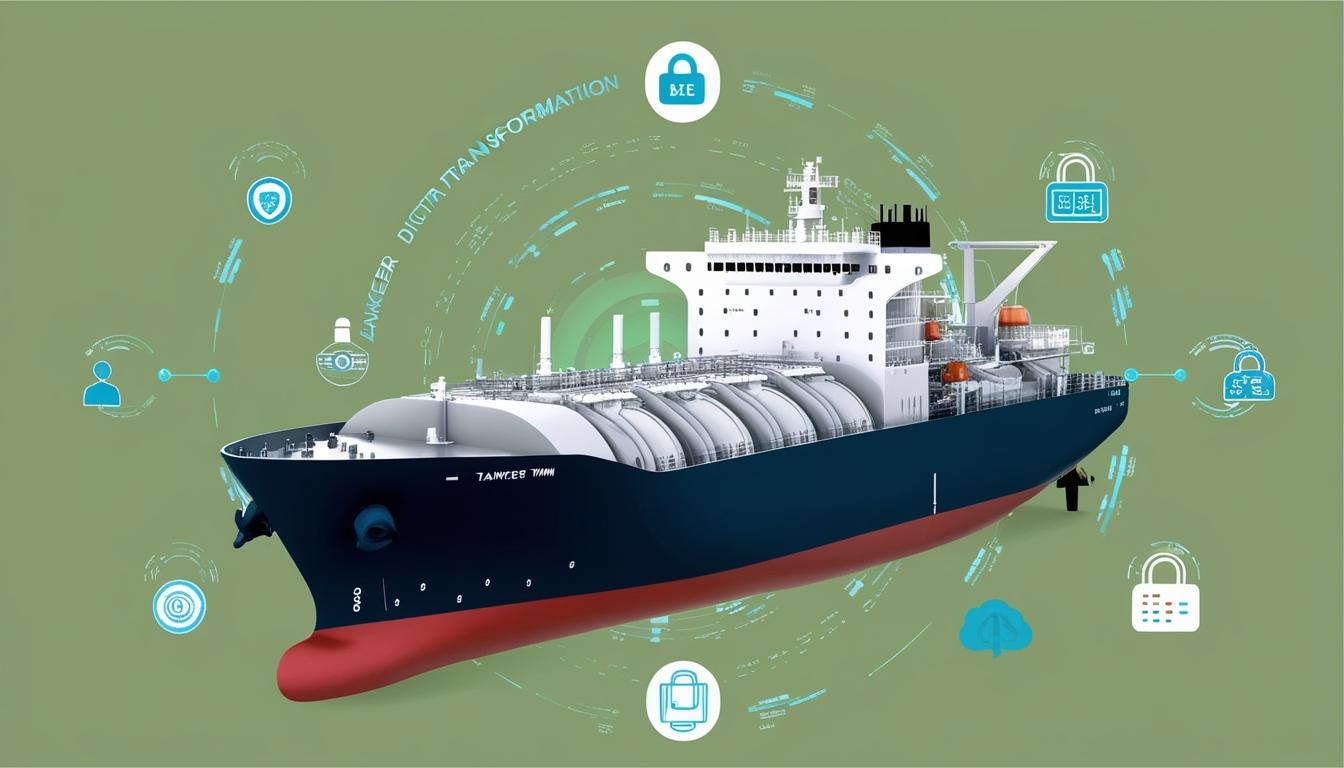

Insights from industry leaders at the recent Tanker Shipping & Trade Conference highlight the efficiencies and challenges of digital technology integration in the global tanker sector.
Advancements and Challenges in Tanker Industry’s Digital Transformation Unveiled
In the evolving landscape of the global tanker industry, the integration of digital technology is becoming a pivotal aspect of operations. Insights from industry leaders at the recent Tanker Shipping & Trade Conference, which took place in London on 22 October 2024, have shed light on both the promising efficiencies and the challenges associated with implementing digital transformations within the sector.
Karen Algaard, Director of Customer Success at Kongsberg Digital, and Catrine Vestereng, Senior Vice President and Global Business Director for Tankers at DNV, were among the key figures presenting their visions for the future of the tanker industry through digital innovation. They highlighted how embracing digital tools can optimise operations, streamline data management, and significantly enhance vessel performance. Algaard emphasised the importance of data-driven decision-making as an essential factor for gaining a competitive edge in today’s market.
“The data belongs to the customer, and we provide a secure infrastructure to manage it effectively,” Algaard stated, underscoring Kongsberg Digital’s dedication to cyber security and data ownership. She elaborated on the vessel-to-cloud system developed by Kongsberg, which is designed to help shipowners securely and efficiently manage their data.

Vestereng complemented this by discussing DNV’s focus on incorporating digital twins and artificial intelligence (AI) into inspection and maintenance processes. She described these innovations as crucial for enhancing the quality and accuracy of vessel inspections. Digital twins, powered by AI, enable surveyors to conduct more precise assessments by identifying areas that may require attention, such as potential structural cracks or corrosion.
“AI-driven digital twins are transforming how we approach tanker inspections, making processes both faster and safer,” Vestereng remarked. She also highlighted that these digital tools facilitate not only streamlined regulatory compliance but also allow shipowners to stay ahead of upcoming emissions standards, predicting future requirements that offer a competitive advantage as regulations evolve.
The conference audience, using Slido, inquired about the security implications of open versus closed digital systems. Algaard addressed this by noting that while Kongsberg’s infrastructure is highly secure, those opting to integrate third-party systems must remain vigilant regarding potential security risks. She explained that maintaining cyber security is a matter of delicate balance between operational flexibility and security measures.
Addressing another question on AI in regulatory compliance, Vestereng noted that predictive models play a crucial role by analysing vessel data to optimise inspection schedules. This capability is particularly valuable as the regulatory environment continues to change.
The session concluded with a consensus that successful digital transformation in the tanker industry hinges on clearly defined goals, a solid infrastructure, and rigorous cyber security measures. Algaard and Vestereng agreed that although significant progress has been made, further advancements in AI technology and cyber security are vital to fully harness the potential of digital tools and ensure compliance with evolving regulations.
Source: Noah Wire Services