
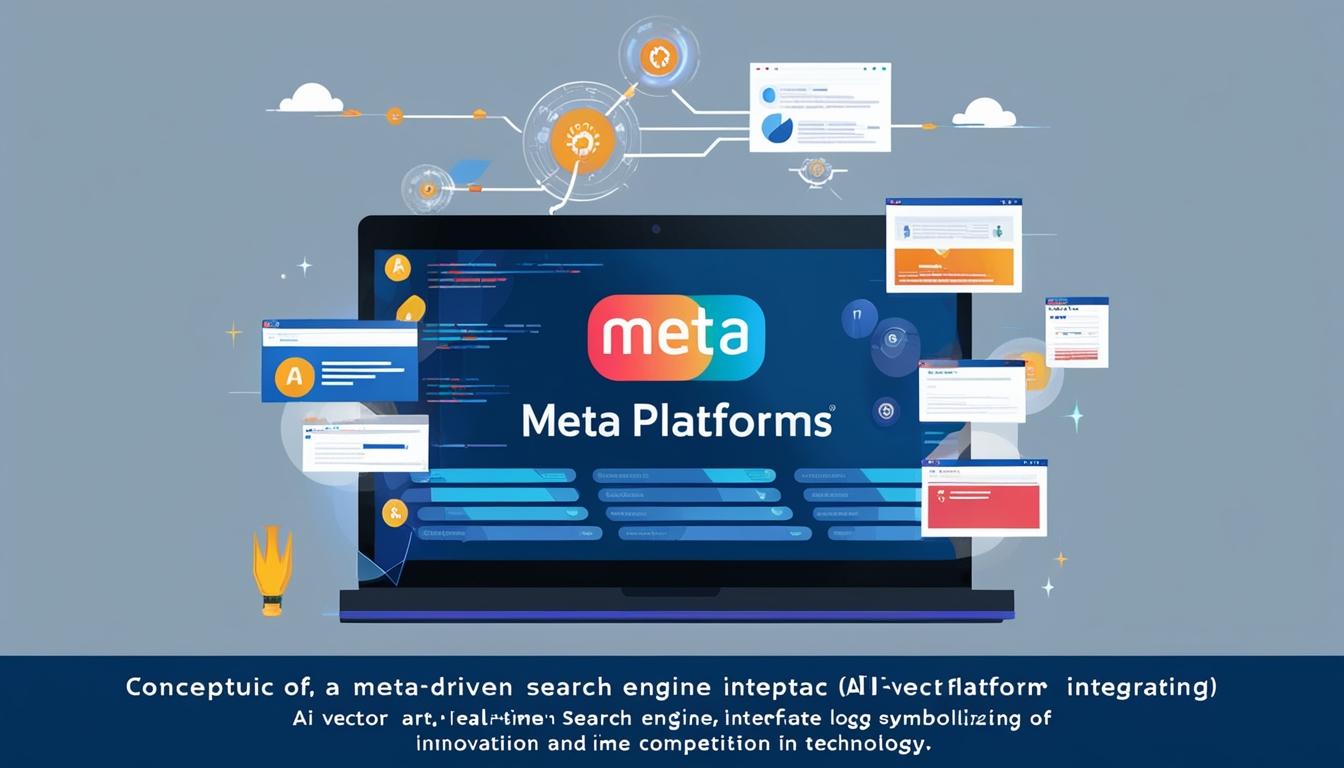

Meta Platforms is pushing forward with its own AI-driven search engine, challenging Google and Bing while partnering with Reuters to enhance its information delivery.
Meta Platforms Expands into AI Search Engine Market
Meta Platforms, the parent company of social media giants such as Facebook, Instagram, and WhatsApp, is making a significant move into the artificial intelligence space by developing its own AI-based search engine. This strategic initiative aims to reduce its dependence on major search services like Google and Bing, posing a direct challenge to the industry’s well-established players.
AI Search Engine Development
The development of Meta’s AI-driven search engine seeks to provide users with conversational answers to their queries via Meta AI, a chatbot already embedded in Meta’s existing platforms. Presently, this chatbot relies heavily on data from Google and Bing to supply information on a variety of topics, including news, stock market updates, and sports results. By creating an internal search solution, Meta aims to deliver a more seamless experience for its users, gaining greater autonomy over the informational content delivered by its AI-enabled services.

The move positions Meta in direct competition with major tech enterprises also investing heavily in AI-enhanced search technology. Google, for instance, is incorporating its sophisticated AI model, Gemini, into its core functions to make searches more interactive and user-friendly. Similarly, Microsoft has strengthened its collaboration with OpenAI, leveraging its Bing search engine to bolster the capabilities of OpenAI’s ChatGPT for real-time web interactions.
Partnership with Reuters
To enhance the accuracy and timeliness of the information provided by its AI, Meta has teamed up with the globally recognised news service, Reuters. This partnership, effective from October 25, allows Meta’s AI to utilise Reuters’ content for addressing U.S. users’ inquiries about current events through platforms like Facebook, Instagram, WhatsApp, and Messenger.
A Meta spokesperson emphasized that the collaboration with Reuters is aimed at enhancing user experience by integrating high-quality, real-time news content. This marks a notable pivot in Meta’s strategy, which had previously deprioritised news content on its platforms following various controversies and the discontinuation of its “News Tab”.
OpenAI Executive Departure
In related developments within the AI sector, OpenAI is experiencing internal changes amidst the evolving market dynamics. Miles Brundage, a key figure at OpenAI, recently announced his resignation after serving six years as the Senior Advisor for AGI Readiness. His departure occurs as OpenAI introduces new AI models aimed at improving AI stability and performance, navigating high-profile challenges such as copyright controversies and the governance of AI technology.
Brundage’s resignation signifies the broader shifts occurring within the industry, as companies endeavour to expand their AI capabilities while adjusting to regulatory challenges and fierce market competition.
Meta’s expansion into AI-driven search technologies demonstrates its ambition to take a more significant share in the growing field of artificial intelligence, aligning itself with major technological advancements while addressing user demands for more integrated and controlled information services. As this domain evolves, industry players continue to grapple with balancing rapid innovation against the backdrop of regulatory scrutiny and competitive pressures.
Source: Noah Wire Services