






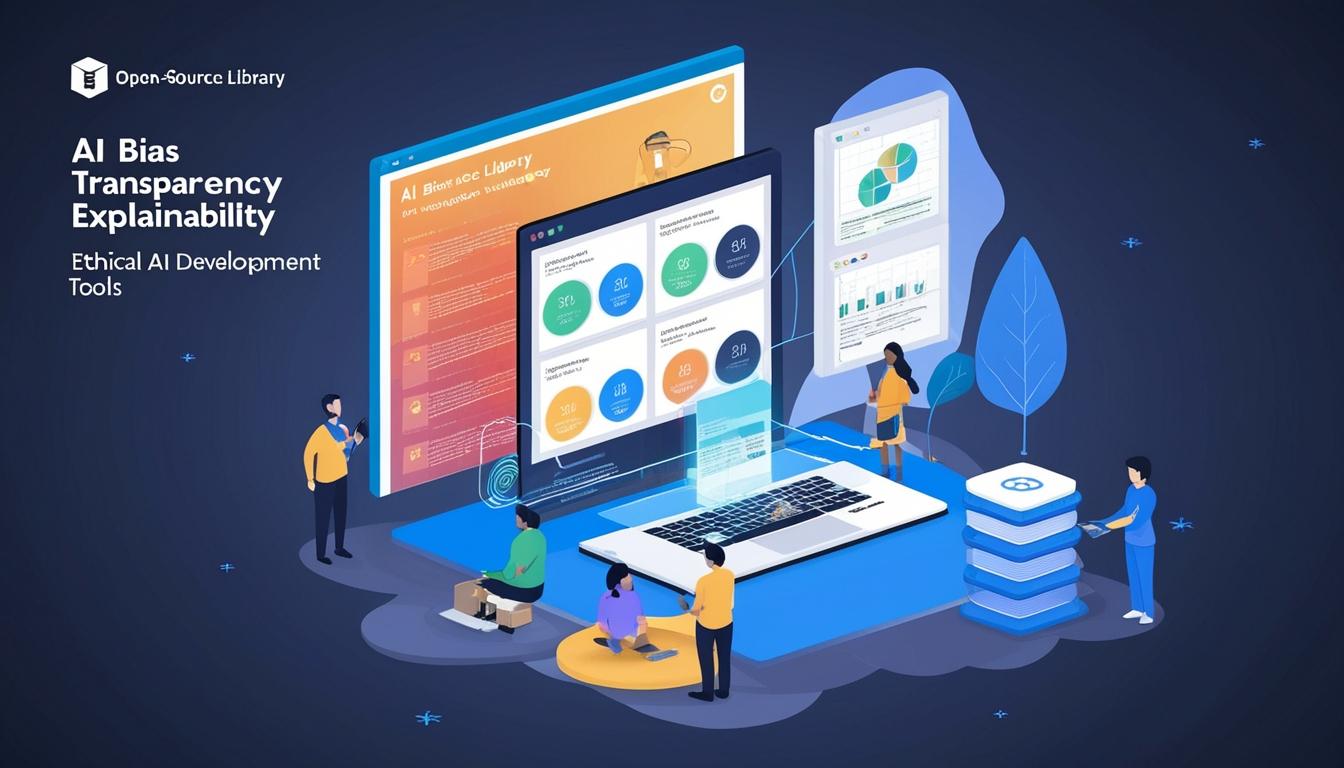

Holistic AI’s newly released open-source library aims to tackle bias, model explainability, and robustness in AI development, providing valuable tools for ethical practices in various industries.
Holistic AI OSL: A Step Forward in Responsible AI Development
In an era where artificial intelligence systems are permeating critical sectors such as recruitment, healthcare, and financial services, the release of Holistic AI’s open-source library comes at a pivotal moment. Known as Holistic AI OSL, this library is designed to tackle pressing challenges associated with AI development, notably bias, model explainability, and system robustness.
The open-source nature of the library means it is freely accessible to developers and researchers globally, presenting an opportunity to integrate more responsible AI practices without the burden of licensing fees. This move is particularly timely, as industry studies reveal that 65% of AI researchers and developers continue to grapple with bias as a significant hurdle in their projects.
Holistic AI OSL aims to address this by offering an extensive array of bias mitigation capabilities. The library includes over 35 bias metrics applicable to five distinct machine learning tasks and 30 varied mitigation strategies. These features allow developers to not only detect bias but also implement strategies to mitigate it effectively.
The toolset extends beyond bias management, providing features that enhance model explainability. This is crucial for developers aiming to comprehend and elucidate the decision-making processes of their AI systems. Furthermore, the library is geared to improve system robustness, ensuring AI models maintain consistent performance against adversarial attacks and data fluctuations.
Adriano Koshiyama, Co-CEO of Holistic AI, underscores the library’s all-encompassing approach: “Our new library equips organisations with tools for all AI risks, including explainability, robustness, and bias. It supports measurement, reporting, and mitigation at every stage of the AI lifecycle, offering one of the most advanced solutions for improving quality in AI applications today.”
A focal point of the library is its security features, which include privacy-preserving mechanisms such as data anonymisation and defences against attribute inference attacks. Developers are also provided with real-world testing scenarios to find a balance between accuracy, fairness, robustness, and security within their applications.
Global insurance leader MAPFRE, which operates in almost 40 countries and serves a clientele of over 30 million, has already integrated this library into its AI development suite. César Ortega, an Expert Data Scientist at MAPFRE, remarked on its comprehensive nature: “What sets this library apart is its depth—it’s not just about identifying AI risks but actively addressing them with proven, industry-ready mitigation techniques, making it an essential part of any ethical AI development toolkit.”
This development aligns with broader industry efforts to create more transparent, fair, and accountable AI systems. The library’s release is expected to enhance ethical standards within AI development, especially in industries where decision-making processes have significant human impact.
As industry leaders and developers come to grips with the ethical implications of AI in their work, the introduction of Holistic AI OSL represents a meaningful step towards overcoming the current barriers to responsible AI development.
Holistic AI OSL is available as a Python library, a popular programming language among developers, facilitating ease of use and integration into existing AI frameworks. This accessibility further strengthens its potential to be widely adopted by AI practitioners aiming to enhance the integrity of their systems.
(Photo by Sarah Cervantes)
Source: Noah Wire Services







