






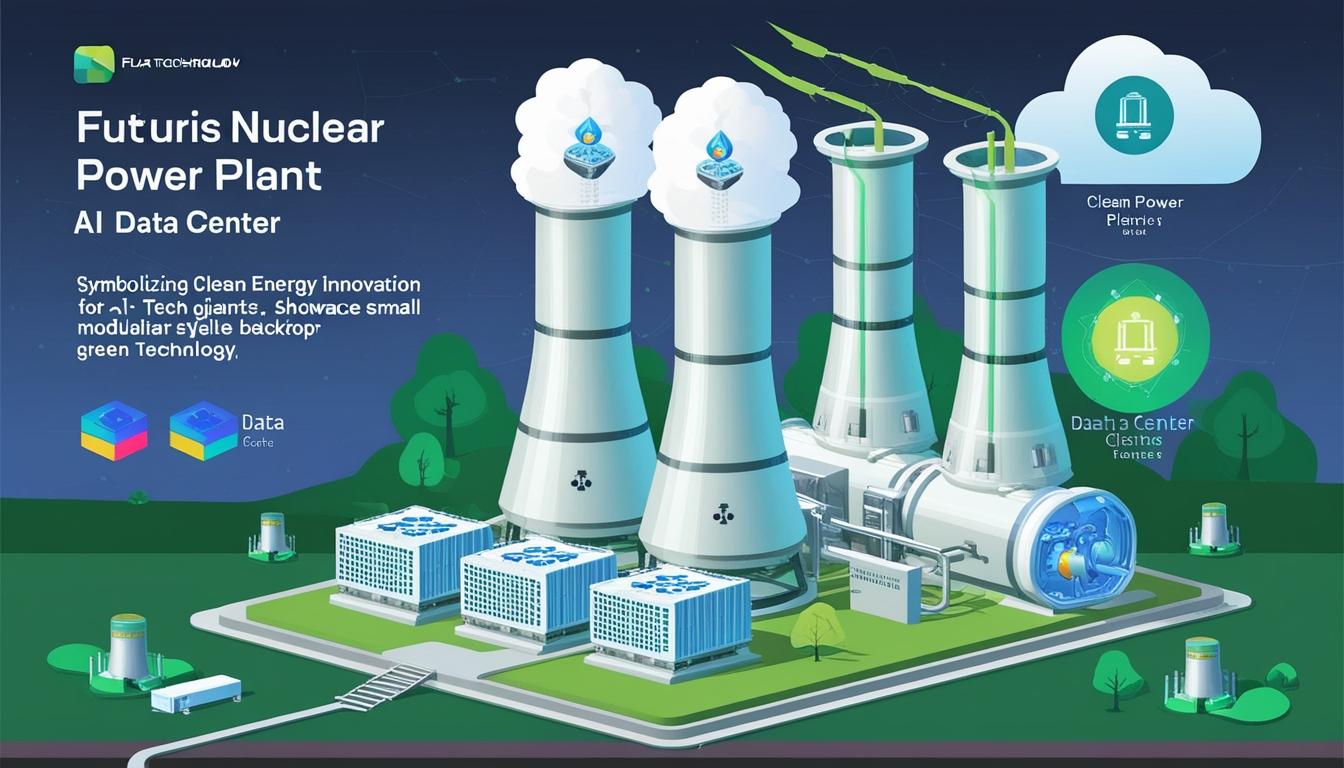

Leading tech companies Microsoft, Google, and Amazon are investing in nuclear energy to meet the escalating energy demands of their AI operations, marking a significant shift towards cleaner power sources.
Tech Giants Turn to Nuclear Power for AI Operations
In a notable shift towards clean energy, some of the world’s largest tech companies—Microsoft, Google, and Amazon—are significantly investing in nuclear power to support their burgeoning artificial intelligence (AI) operations. This strategic move comes as the global demand for energy, particularly from data-intensive AI applications, continues to escalate.
The renewed interest in nuclear energy from these tech firms is largely driven by the growing energy demands of AI technologies and cloud computing services. These data centres, which form the backbone of AI model training and service delivery, require substantial amounts of energy—often exceeding what can be reasonably provided by current renewable sources like solar and wind, which are contingent on weather and time.
The commitment to nuclear power involves several upcoming projects featuring Small Modular Reactors (SMRs). These reactors offer notable flexibility compared to their traditional counterparts, largely due to their modular design and smaller size, with a maximum output of 300 MWe. SMRs can be manufactured in factories and assembled on-site, reducing construction complexities and costs.

Edward Kee, CEO of Nuclear Economics Consulting Group, explains that the push towards nuclear is fuelled by the tech industry’s zero-carbon targets. “The value of clean, reliable electricity for these data centres is pretty high,” Kee notes, emphasising the insufficiency of renewable sources to meet round-the-clock operational needs. The large-scale energy demands of AI are highlighted in reports, with models like GPT-3 reportedly consuming 1,287 MWh during training—a figure significantly surpassing the annual energy use of the average US household.
The International Atomic Energy Agency (IAEA) has projected a dramatic increase in nuclear power capacity, potentially up to 950 gigawatts globally by 2050, driven by the tech sector’s energy requirements. This projection indicates a potential 150% rise in nuclear generation, contingent on substantial investments reaching $100 billion over the next 25 years.
However, the path to nuclear expansion isn’t without challenges. Current reliance on fossil-fuel-driven power grids presents barriers, as municipal utilities caution against unmanageable demand spikes from tech companies that could affect existing services for other customers. Therefore, locating data centres close to new nuclear plants is advantageous and could prevent the need for extensive and costly infrastructure upgrades.
Siting data centres adjacent to nuclear facilities circumvents the need to upgrade transmission lines while supporting reliable power delivery, addressing both operational and political concerns related to energy consumption and sustainability.
The tech industry’s endorsement of nuclear energy for AI operations signifies a potential renaissance for nuclear technology. However, Edward Kee tempers expectations, noting that regulatory processes in place by the U.S. Nuclear Regulatory Commission could delay project advancements significantly. “Some of these announcements may be a bit hyperbolic in their promises and expectations,” Kee commented, suggesting a cautious optimism regarding future developments.
Nonetheless, if successful, the tech sector’s investment in nuclear energy could pioneer a broader acceptance and deployment of nuclear technology, potentially paving the way for advanced reactors and sustained investment in nuclear power across other sectors. As the demand for energy-efficient solutions continues, tech companies may be at the forefront of reshaping the role of nuclear power in meeting modern energy needs.
Source: Noah Wire Services







