

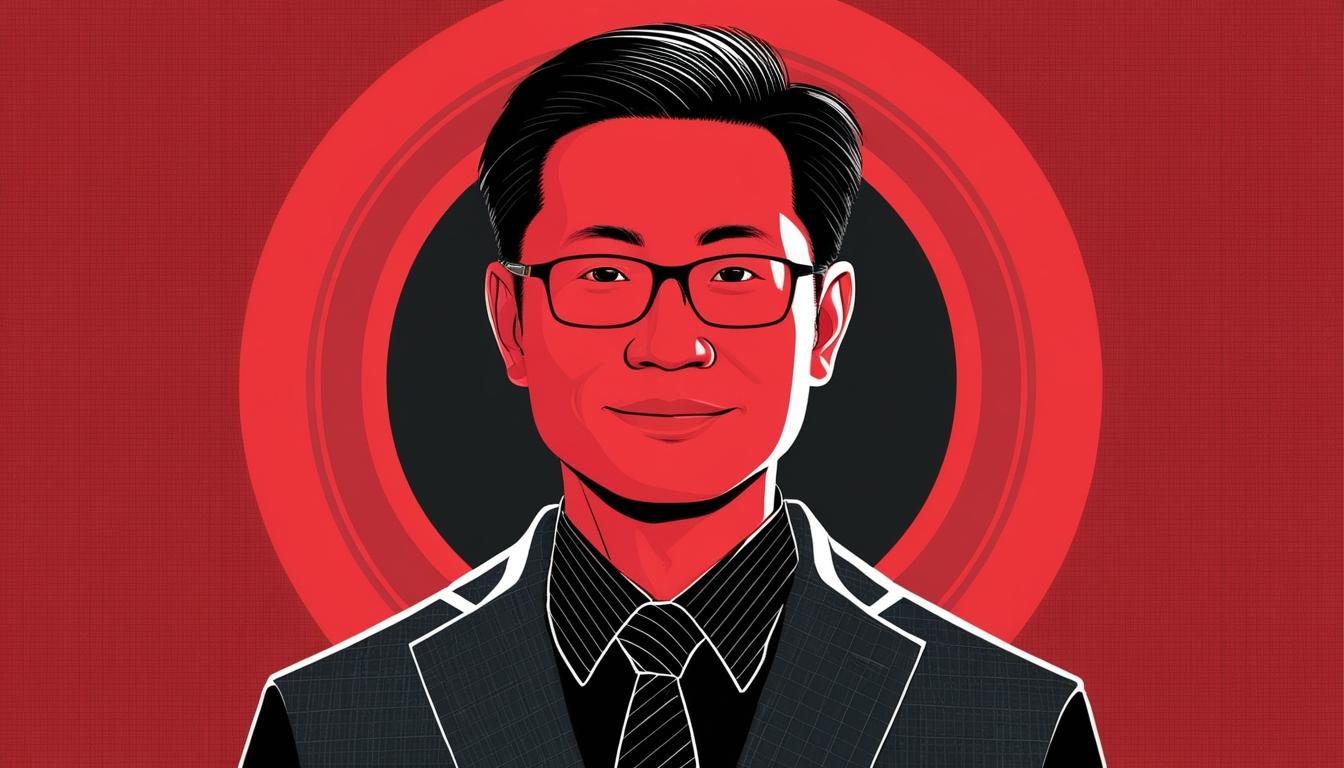

Liang Wenfeng’s journey from a little-known mathematician to the founder of the burgeoning AI startup DeepSeek has captivated the tech world, signalling a shift in the paradigm of AI development.
Liang Wenfeng has garnered significant attention in the global technology sphere, having transitioned from a largely unknown figure in mathematics to a prominent leader in the artificial intelligence (AI) sector, largely due to the advancements made by his startup, DeepSeek. This rapid rise can be traced back to the company’s remarkable achievements, which were reported to have been realised in just a few months at a fraction of the investment required by American competitors.
Liang, often likened to Silicon Valley stalwart Sam Altman, is the founder of DeepSeek, which has made headlines for developing an advanced AI model that some claim upends the existing norms of AI technology investment. At a recent meeting with the Chinese Premier, Li Qiang, Liang was noted for his distinctive attire of a sweater vest and suit jacket, reflecting a casual yet authoritative presence at the summit of Chinese technology leadership.
Born in 1985 in Zhanjiang, China, Liang exhibited a keen aptitude for mathematics from an early age, with reports indicating that even in his leisure time he delved into calculus and AI algorithms. After graduating from Zhejiang University, he established a quantitative hedge fund named High-Flyer, alongside two computer scientists. The fund has been remarkably successful, now managing approximately $8 billion, thereby earning its place among the largest quantitative funds in China.
Despite impressive financial metrics, the journey has not been free of challenges; the fund made headlines in 2021 when it publicly apologised for not meeting the performance benchmarks expected by its investors. Liang credits much of his inspiration to Jim Simons, founder of Renaissance Technologies. In his introduction to a Chinese biography on Simons, he quoted, “Whenever I encounter difficulties at work, I recall Simons’s words: ‘There must be a way to model prices.’”

Within five years, High-Flyer’s funds reported average excess returns of over 20% in comparison to market benchmarks, adding to Liang’s reputation as a progressive thinker in finance. His foresight became evident just before the Biden administration imposed restrictions on AI chip exports, as Liang began stockpiling Nvidia graphics processors. He aimed to compile a significant portfolio of these chips, intending to accumulate 10,000 for training models that would ultimately lead to the founding of DeepSeek.
Colleagues and partners initially viewed his ambitions with scepticism, with one remarking on Liang’s unconventional appearance and his somewhat vague declarations about creating a game-changing AI technology. By the end of 2022, however, when OpenAI introduced ChatGPT, Liang was one of the few in China with adequate resources to advance AI development.
Liang explained his significant investments in Nvidia chips, saying, “It is like buying a piano. Firstly, it’s because you can afford it. And secondly, it’s because you have a group of people who are eager to play music on it.” This philosophy underscores his commitment to building a conducive environment for innovation.
By 2023, Liang established DeepSeek, reportedly spending around $6 million to train its sophisticated AI model—categorically less than what tech giants like OpenAI and Google have invested in their counterparts. Notably, DeepSeek’s model operates under an open-source framework, allowing public access, a strategic move aimed at diminishing the prevailing monopolistic power held by major technology firms.
A rival founder has acknowledged Liang’s strategic foresight, asserting, “Liang built an exceptional infrastructure team that really understands how the chips worked.” This infrastructure was bolstered by his decision to bring his best team members from High-Flyer to DeepSeek.
Liang’s leadership style has been characterized by a hands-on approach; he is known to work alongside his employees, even spending nights at the office during demanding projects. This dedication has contributed to a strong company culture, although he has generally maintained a low profile amid his newfound recognition in the technology industry.
While Liang’s sudden rise in the AI arena has come as a surprise to many, it has positioned DeepSeek as a significant player in shaping future trends in AI automation for businesses, signalling a potential shift in the global landscape dominated traditionally by Western companies.
Source: Noah Wire Services
- https://www.noahwire.com – This URL is the source of the article about Liang Wenfeng and his achievements in the AI sector with DeepSeek.
- https://en.wikipedia.org/wiki/Sam_Altman – This URL provides information about Sam Altman, a figure to whom Liang Wenfeng is often compared.
- https://www.zju.edu.cn/english/ – This is the official website of Zhejiang University, where Liang Wenfeng graduated.
- https://www.renaissance.com/ – This URL is related to Renaissance Technologies, a company founded by Jim Simons, who inspired Liang Wenfeng.
- https://www.nvidia.com/en-us/ – This is the official website of Nvidia, whose graphics processors were stockpiled by Liang for AI model training.
- https://www.openai.com/ – This URL is for OpenAI, a company that introduced ChatGPT and is relevant to Liang’s AI development timeline.
- https://www.whitehouse.gov/administration/biden-harris-administration/ – This URL provides information about the Biden administration, which imposed restrictions on AI chip exports.
- https://www.google.com – This is the official website of Google, a tech giant mentioned in comparison to Liang’s investments in AI.
- https://www.china.org.cn/english/ – This URL provides general information about China, relevant to Liang’s activities and influence in the Chinese technology sector.
- https://www.bloomberg.com/ – This financial news website could provide additional context on Liang’s financial achievements and the performance of High-Flyer.
Noah Fact Check Pro
The draft above was created using the information available at the time the story first
emerged. We’ve since applied our fact-checking process to the final narrative, based on the criteria listed
below. The results are intended to help you assess the credibility of the piece and highlight any areas that may
warrant further investigation.
Freshness check
Score:
8
Notes:
The narrative is recent, referencing events in 2023 and 2025, indicating it is not old or recycled news. However, specific details about Liang Wenfeng’s current activities or recent updates beyond 2023 are not provided.
Quotes check
Score:
6
Notes:
The quote from Liang Wenfeng about buying Nvidia chips is not verified through an earlier online source. The Jim Simons quote is attributed but lacks a specific original source date.
Source reliability
Score:
8
Notes:
The narrative originates from the New York Post, a well-known publication, which generally enhances reliability. However, the lack of direct sources for some claims may reduce certainty.
Plausability check
Score:
7
Notes:
The claims about Liang Wenfeng’s achievements and DeepSeek’s advancements are plausible given the context of AI development. However, specific financial and technological details lack concrete evidence or verification.
Overall assessment
Verdict (FAIL, OPEN, PASS): OPEN
Confidence (LOW, MEDIUM, HIGH): MEDIUM
Summary:
The narrative appears to be recent and from a reliable source, but some quotes and specific claims lack verification. While the story is plausible, it requires further evidence to fully confirm its accuracy.