





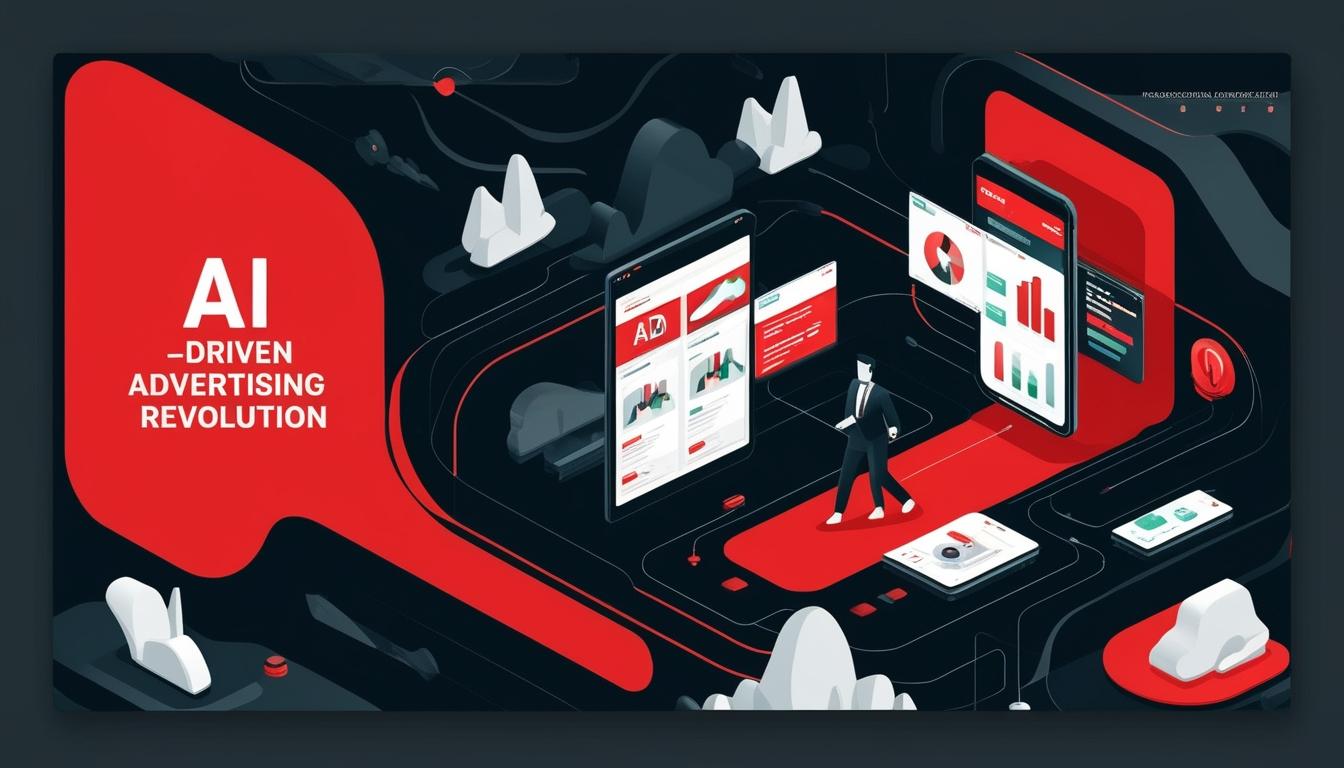
AI has transitioned from a speculative notion to a vital element of advertising, with 60% of marketers already integrating it into their strategies.
In the contemporary landscape of advertising, the role of Artificial Intelligence (AI) has evolved from a speculative concept to an essential tool, significantly shaping the industry’s dynamics. According to a survey by Influencer Marketing Hub, 60% of marketers have already integrated AI into their marketing strategies, highlighting its growing prevalence and necessity.
Marketers are tasked with the challenge of effectively leveraging AI amidst the overwhelming buzz surrounding its capabilities. Those who successfully harness the technology are ideally positioned to advance their competitive edge. Discussions with leading marketers from prominent retail companies underscore the necessity for brands to embrace AI in their advertising initiatives.
AI’s impact has been particularly pronounced in the realm of creative production, where it has notably streamlined the ad creation process. One agency reported a drastic reduction in the time spent on producing ad variants—from 80% to zero—through the adoption of AI tools. Many of these tools are designed for rapid learning, enabling users to become proficient in a weekend. The versatility of AI allows for the creation of various marketing assets, including multi-channel ad iterations from a single image, logo generation, creative animations from static images, responsive app designs, project storyboarding, and complex image creation driven by text prompts. This enhancement in efficiency facilitates a quicker turnaround for businesses, particularly vital during peak seasonal campaigns, where time constraints previously marred marketing effectiveness.
Further analysis indicates that, historically, media execution for many brands has been fraught with challenges such as slow processes and a lack of personalisation. With AI integration, the timeline for bringing a singular ad to market has improved, as previous delays attributed to manual efforts and dependencies on cross-functional teams are increasingly being mitigated.

Performance optimisation has also seen a significant transformation thanks to AI technology, which allows for faster data processing, rapid feedback, and more effective targeting, thereby enhancing revenue-generating potential. Nonetheless, there are cautions surrounding the use of these tools, especially concerns around “black box” scenarios that obscure transparency. Advertisers are encouraged to remain vigilant about which audiences are being targeted and the environments in which their ads appear, to ensure alignment with brand reputation and goals.
In conjunction with performance metrics, a recent study from Gartner suggests that chatbots may become the primary customer service channel for approximately 25% of organisations by 2027. This shift towards AI-assisted customer interactions marks a notable evolution from basic assistants to sophisticated chatbots employing natural language processing (NLP) and large language models (LLMs). These advancements promise to enhance communication between advertisers and AI platforms, enabling real-time responses and more accurate decision-making.
The overall trajectory of AI in advertising indicates a trend towards optimised creative processes, heightened performance, and improved communication between marketers and machines. According to Mike Merna, Senior Director of Commerce Media at Yahoo, success hinges on selecting platforms that ensure transparency, control, and efficiency, without sacrificing quality. As the pace of retail operations accelerates, marketers who embrace these innovations are expected to take the lead in shaping the future of the advertising industry. Merna’s extensive experience in sectors such as consumer packaged goods, healthcare, and retail adds valuable perspective to the ongoing discourse surrounding the advancements and implications of AI in marketing.
Source: Noah Wire Services
- https://martech.org/data-ai-and-advertising-2025-predictions/ – This article discusses how AI is transforming advertising by improving ad experiences, targeting, and efficiency, which aligns with the growing necessity for marketers to leverage AI effectively.
- https://analyzify.com/statsup/ai-marketing – This source provides statistics on AI marketing, including the increasing use of AI automation and its impact on marketing operations, which supports the trend of AI integration in advertising.
- https://www.contentgrip.com/future-ai-marketing/ – This article explores the future of AI in marketing, highlighting advancements in automation, personalization, and decision-making, which are crucial for advertisers to enhance their competitive edge.
- https://www.gartner.com/en – Gartner’s research often covers AI trends and their impact on industries like advertising, including the potential for chatbots to become primary customer service channels.
- https://www.influencermarketinghub.com/ – Influencer Marketing Hub conducts surveys and provides insights into marketing trends, including the integration of AI by marketers, which supports the claim that 60% of marketers have already adopted AI.
- https://www.openai.com/ – OpenAI is a leader in AI technology, including generative AI tools that are transforming content creation and could be used in advertising to streamline ad production.
- https://www.marketingprofs.com/ – MarketingProfs offers insights into marketing strategies and trends, including the role of AI in enhancing efficiency and personalization in advertising.
- https://www.adweek.com/ – Adweek provides news and analysis on advertising trends, including the impact of AI on creative production and performance optimization.
- https://www.adexchanger.com/ – AdExchanger covers the latest developments in digital advertising, including how AI is used for real-time bidding and audience targeting.
- https://www.forrester.com/ – Forrester provides research and analysis on technology trends, including AI’s role in enhancing customer service and marketing operations.
Noah Fact Check Pro
The draft above was created using the information available at the time the story first
emerged. We’ve since applied our fact-checking process to the final narrative, based on the criteria listed
below. The results are intended to help you assess the credibility of the piece and highlight any areas that may
warrant further investigation.
Freshness check
Score:
8
Notes:
The narrative references recent trends and studies, such as a Gartner study suggesting chatbots may become primary customer service channels by 2027. However, it does not provide specific dates for all references, which could indicate some information might be from recent past.
Quotes check
Score:
6
Notes:
The quote from Mike Merna, Senior Director of Commerce Media at Yahoo, is included, but there is no clear indication of its original source or date. It appears to be a unique contribution to this narrative.
Source reliability
Score:
8
Notes:
The narrative originates from Retail Touchpoints, a reputable publication in the retail industry. It cites specific studies and surveys, such as one from Influencer Marketing Hub, adding credibility.
Plausability check
Score:
9
Notes:
The claims about AI’s impact on advertising are plausible and align with current industry trends. The narrative provides logical explanations and examples of how AI enhances efficiency and performance in advertising.
Overall assessment
Verdict (FAIL, OPEN, PASS): PASS
Confidence (LOW, MEDIUM, HIGH): HIGH
Summary:
The narrative is generally well-supported by recent trends and studies, enhancing its credibility. While some specific dates are missing, the information aligns with current industry developments, making it plausible and reliable.







